Yineger Haile, Yewhalaw Delenasaw
Department of Biology, Jimma University, P,O,Box 5195, Jimma, Ethiopia.
J Ethnobiol Ethnomed. 2007 Jun 4;3:24. doi: 10.1186/1746-4269-3-24.
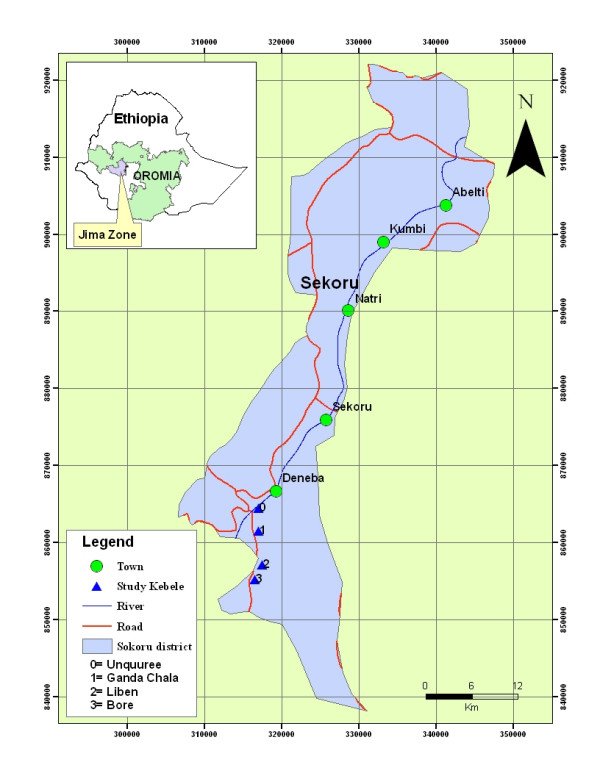
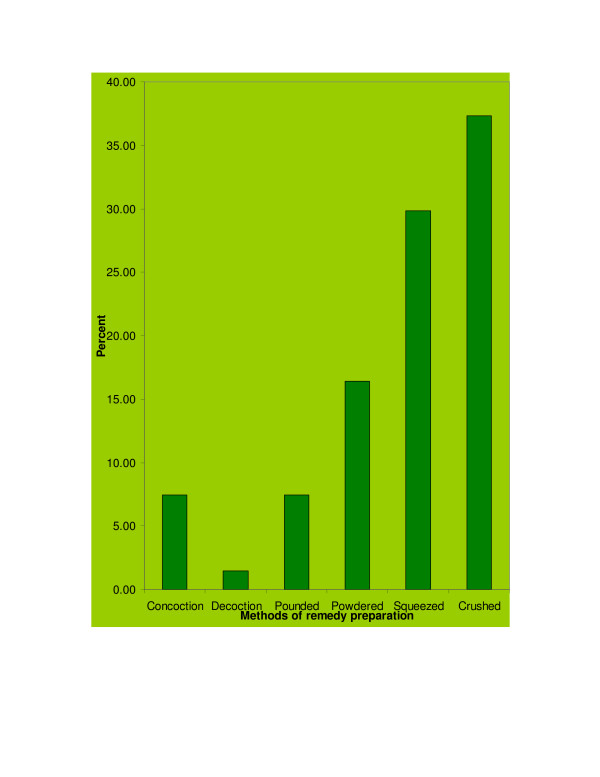
The knowledge and use of medicinal plant species by traditional healers was investigated in Sekoru District, Jimma Zone, Southwestern Ethiopia from December 2005 to November 2006. Traditional healers of the study area were selected randomly and interviewed with the help of translators to gather information on the knowledge and use of medicinal plants used as a remedy for human ailments in the study area. In the current study, it was reported that 27 plant species belonging to 27 genera and 18 families were commonly used to treat various human ailments. Most of these species (85.71%) were wild and harvested mainly for their leaves (64.52%). The most cited ethnomedicinal plant species was Alysicarpus quartinianus A. Rich., whose roots and leaves were reported by traditional healers to be crushed in fresh and applied as a lotion on the lesions of patients of Abiato (Shererit). No significant correlation was observed between the age of traditional healers and the number of species reported and the indigenous knowledge transfer was found to be similar. More than one medicinal plant species were used more frequently than the use of a single species for remedy preparations. Plant parts used for remedy preparations showed significant difference with medicinal plant species abundance in the study area.
2005年12月至2006年11月,在埃塞俄比亚西南部吉马地区的塞科鲁区,对传统治疗师对药用植物物种的知识和使用情况进行了调查。研究区域的传统治疗师被随机挑选出来,并在翻译人员的帮助下接受访谈,以收集有关用作治疗该研究区域人类疾病药物的药用植物的知识和使用情况的信息。在当前的研究中,据报道,属于27个属和18个科的27种植物被普遍用于治疗各种人类疾病。这些物种中的大多数(85.71%)是野生的,主要采集其叶子(64.52%)。引用最多的民族药用植物物种是四棱果链荚豆(Alysicarpus quartinianus A. Rich.),传统治疗师报告说,其根和叶被新鲜碾碎后,作为洗剂涂抹在阿比亚托(谢雷里特)患者的伤口上。在传统治疗师的年龄与报告的物种数量之间未观察到显著相关性,并且发现本土知识的传承情况相似。在制备药物时,使用多种药用植物物种的频率高于使用单一物种。用于制备药物的植物部位与研究区域内药用植物物种的丰富度存在显著差异。