Milescu Mirela, Bosmans Frank, Lee Seungkyu, Alabi AbdulRasheed A, Kim Jae Il, Swartz Kenton J
Molecular Physiology and Biophysics Section, Porter Neuroscience Research Center, National Institute of Neurological Disorders and Stroke, National Institutes of Health, Bethesda, Maryland, USA.
Nat Struct Mol Biol. 2009 Oct;16(10):1080-5. doi: 10.1038/nsmb.1679. Epub 2009 Sep 27.
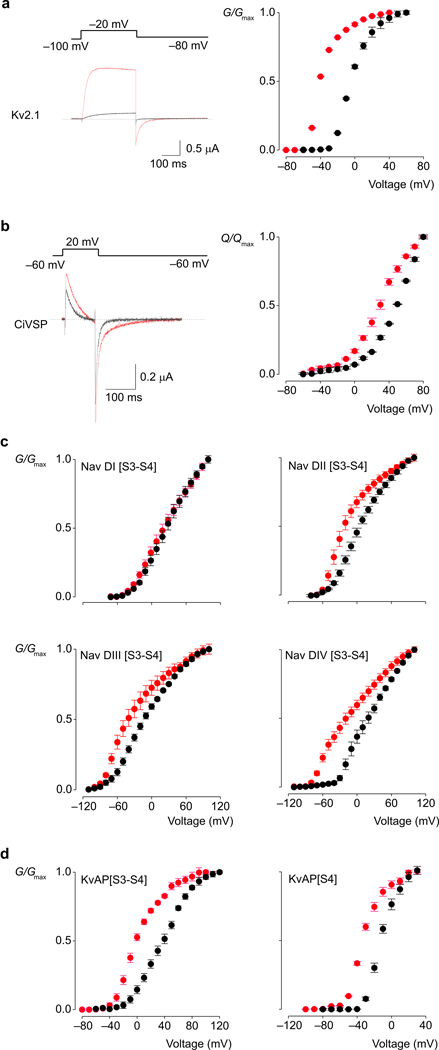
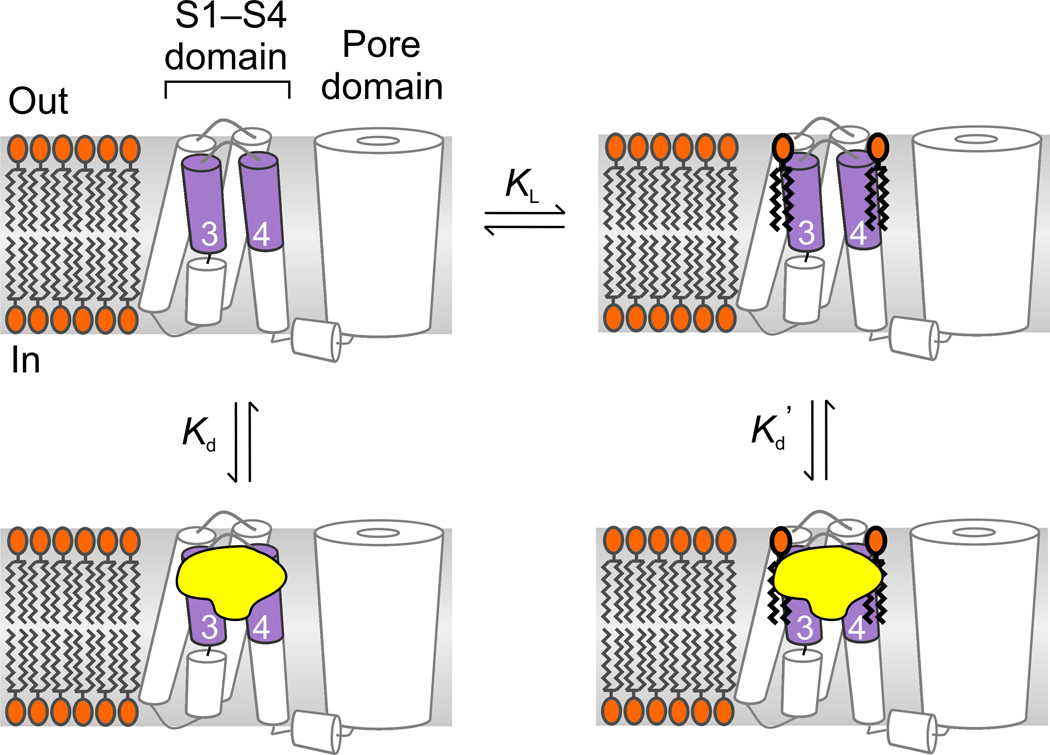
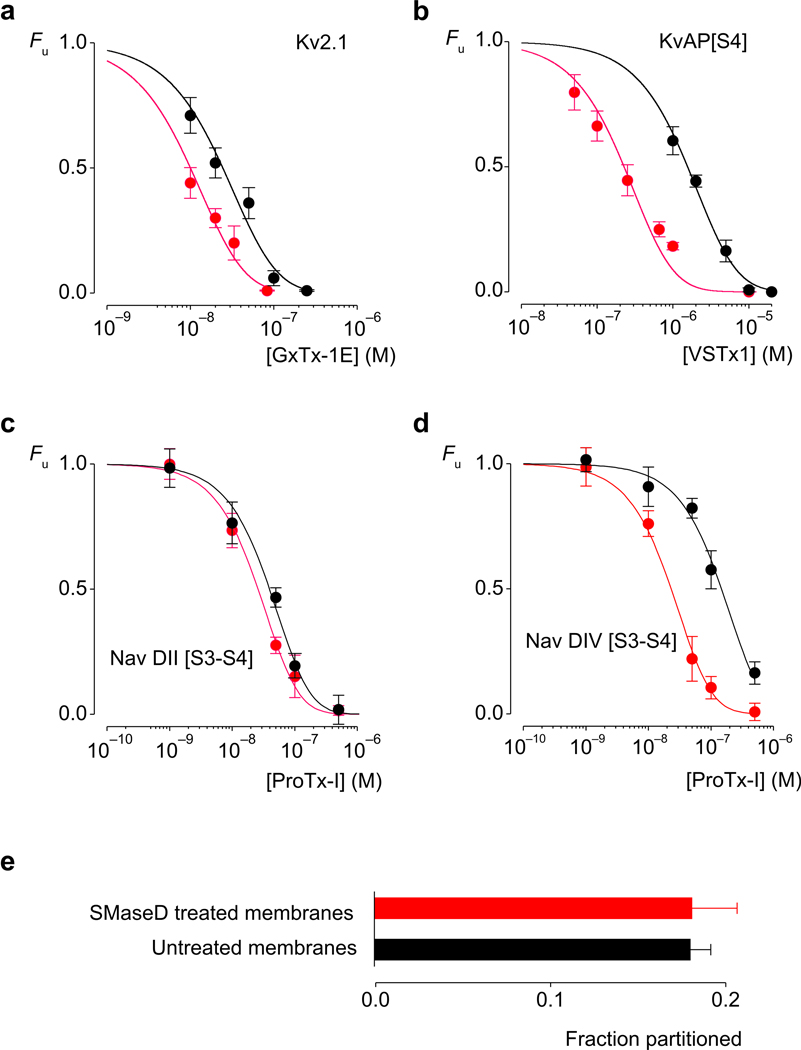
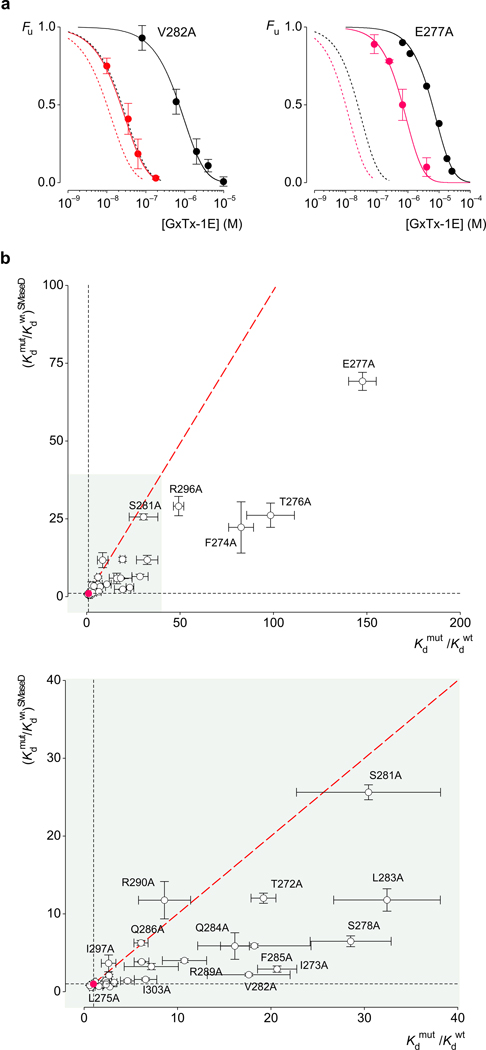
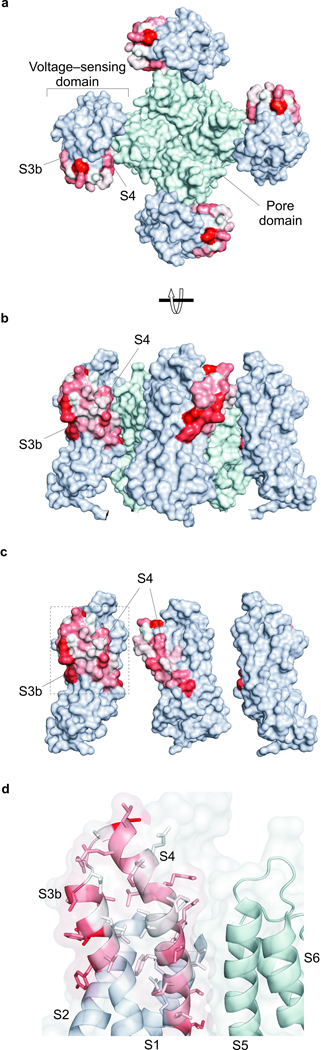
Voltage-activated ion channels open and close in response to changes in voltage, a property that is essential for generating nerve impulses. Studies on voltage-activated potassium (Kv) channels show that voltage-sensor activation is sensitive to the composition of lipids in the surrounding membrane. Here we explore the interaction of lipids with S1-S4 voltage-sensing domains and find that the conversion of the membrane lipid sphingomyelin to ceramide-1-phosphate alters voltage-sensor activation in an S1-S4 voltage-sensing protein lacking an associated pore domain, and that the S3b-S4 paddle motif determines the effects of lipid modification on Kv channels. Using tarantula toxins that bind to paddle motifs within the membrane, we identify mutations in the paddle motif that weaken toxin binding by disrupting lipid-paddle interactions. Our results suggest that lipids bind to voltage-sensing domains and demonstrate that the pharmacological sensitivities of voltage-activated ion channels are influenced by the surrounding lipid membrane.
电压门控离子通道会根据电压变化开启和关闭,这一特性对于产生神经冲动至关重要。对电压门控钾(Kv)通道的研究表明,电压传感器的激活对周围膜中脂质的组成敏感。在这里,我们探索脂质与S1 - S4电压传感结构域的相互作用,发现膜脂鞘磷脂向1 - 磷酸神经酰胺的转化会改变缺乏相关孔道结构域的S1 - S4电压传感蛋白中的电压传感器激活,并且S3b - S4桨状基序决定了脂质修饰对Kv通道的影响。使用与膜内桨状基序结合的狼蛛毒素,我们鉴定出桨状基序中的突变,这些突变通过破坏脂质 - 桨状相互作用削弱毒素结合。我们的结果表明脂质与电压传感结构域结合,并证明电压门控离子通道的药理敏感性受周围脂质膜的影响。