Stojkovic Marija, Zwahlen Marcel, Teggi Antonella, Vutova Kamenna, Cretu Carmen M, Virdone Roberto, Nicolaidou Polyxeni, Cobanoglu Nazan, Junghanss Thomas
Section of Clinical Tropical Medicine, University Hospital Heidelberg, Heidelberg, Germany.
PLoS Negl Trop Dis. 2009 Sep 29;3(9):e524. doi: 10.1371/journal.pntd.0000524.
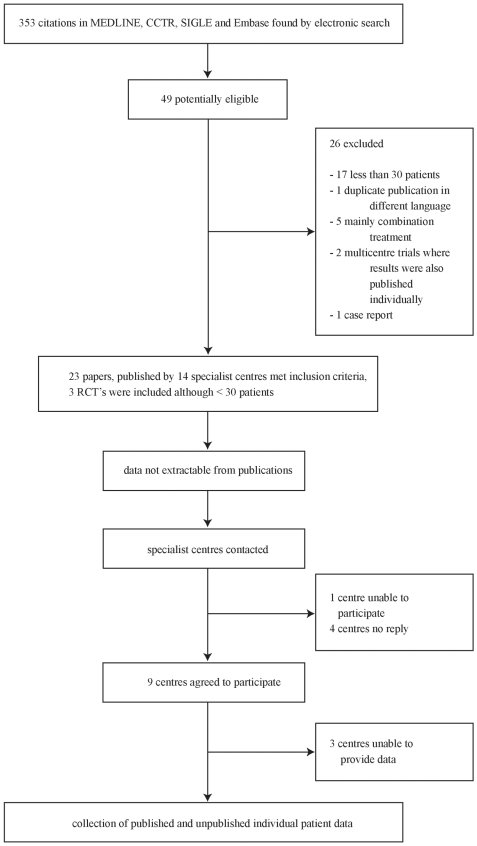
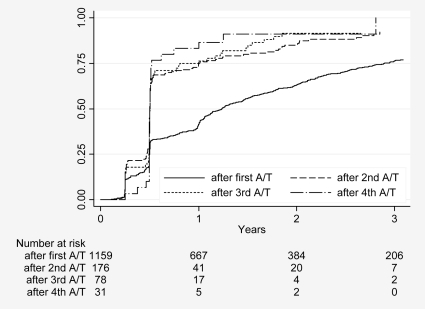
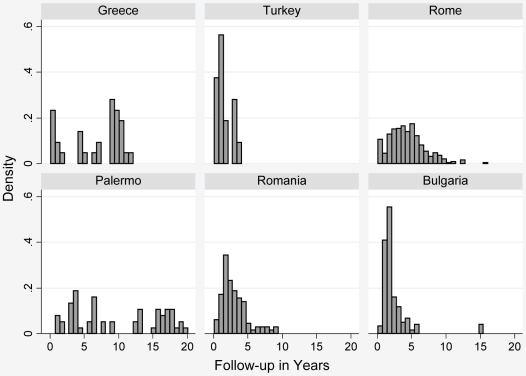
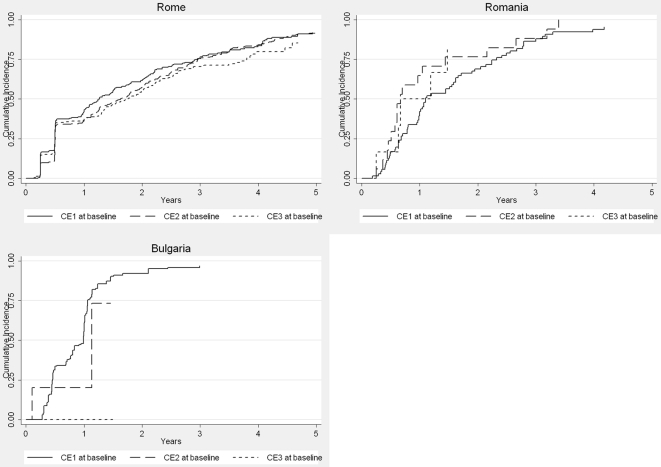
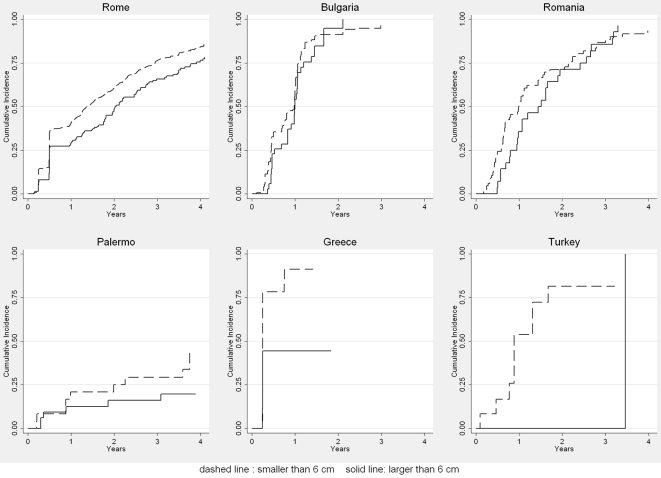
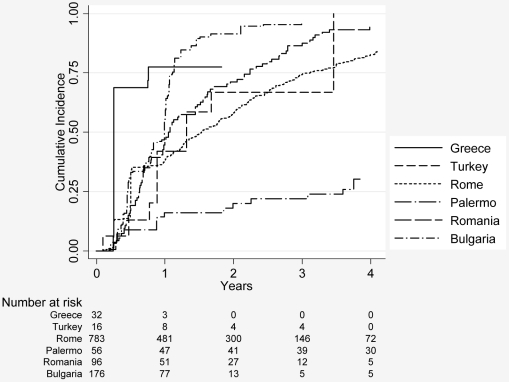
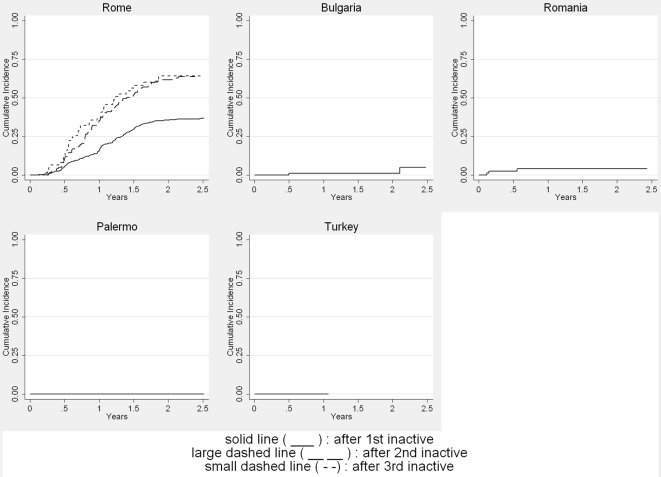
Over the past 30 years, benzimidazoles have increasingly been used to treat cystic echinococcosis (CE). The efficacy of benzimidazoles, however, remains unclear. We systematically searched MEDLINE, EMBASE, SIGLE, and CCTR to identify studies on benzimidazole treatment outcome. A large heterogeneity of methods in 23 reports precluded a meta-analysis of published results. Specialist centres were contacted to provide individual patient data. We conducted survival analyses for cyst response defined as inactive (CE4 or CE5 by the ultrasound-based World Health Organisation [WHO] classification scheme) or as disappeared. We collected data from 711 treated patients with 1,308 cysts from six centres (five countries). Analysis was restricted to 1,159 liver and peritoneal cysts. Overall, 1-2 y after initiation of benzimidazole treatment 50%-75% of active C1 cysts were classified as inactive/disappeared compared to 30%-55% of CE2 and CE3 cysts. Further in analyzing the rate of inactivation/disappearance with regard to cyst size, 50%-60% of cysts <6 cm responded to treatment after 1-2 y compared to 25%-50% of cysts >6 cm. However, 25% of cysts reverted to active status within 1.5 to 2 y after having initially responded and multiple relapses were observed; after the second and third treatment 60% of cysts relapsed within 2 y. We estimated that 2 y after treatment initiation 40% of cysts are still active or become active again. The overall efficacy of benzimidazoles has been overstated in the past. There is an urgent need for a pragmatic randomised controlled trial that compares standardized benzimidazole therapy on responsive cyst stages with the other treatment modalities.
在过去30年里,苯并咪唑越来越多地用于治疗囊型包虫病(CE)。然而,苯并咪唑的疗效仍不明确。我们系统检索了MEDLINE、EMBASE、SIGLE和CCTR,以确定关于苯并咪唑治疗结果的研究。23份报告中方法的巨大异质性使得无法对已发表的结果进行荟萃分析。我们联系了各专业中心以获取个体患者数据。我们对囊肿反应进行了生存分析,将其定义为无活性(根据基于超声的世界卫生组织[WHO]分类方案为CE4或CE5)或消失。我们从六个中心(五个国家)的711例接受治疗的患者中收集了1308个囊肿的数据。分析仅限于1159个肝脏和腹膜囊肿。总体而言,在开始苯并咪唑治疗1 - 2年后,50% - 75%的活跃C1囊肿被分类为无活性/消失,而CE2和CE3囊肿的这一比例为30% - 55%。进一步分析囊肿大小与失活/消失率的关系,1 - 2年后,<6 cm的囊肿有50% - 60%对治疗有反应,而>6 cm的囊肿这一比例为25% - 50%。然而,25%的囊肿在最初有反应后的1.5至2年内恢复为活跃状态,且观察到多次复发;在第二次和第三次治疗后,60%的囊肿在2年内复发。我们估计在开始治疗2年后,40%的囊肿仍处于活跃状态或再次变得活跃。过去苯并咪唑的总体疗效被高估了。迫切需要进行一项务实的随机对照试验,将标准化苯并咪唑疗法在有反应的囊肿阶段与其他治疗方式进行比较。