Division of Pulmonary Biology, Cincinnati Children's Hospital Medical Center, Cincinnati, OH, USA.
Curr Opin Immunol. 2009 Oct;21(5):514-21. doi: 10.1016/j.coi.2009.09.004. Epub 2009 Sep 30.
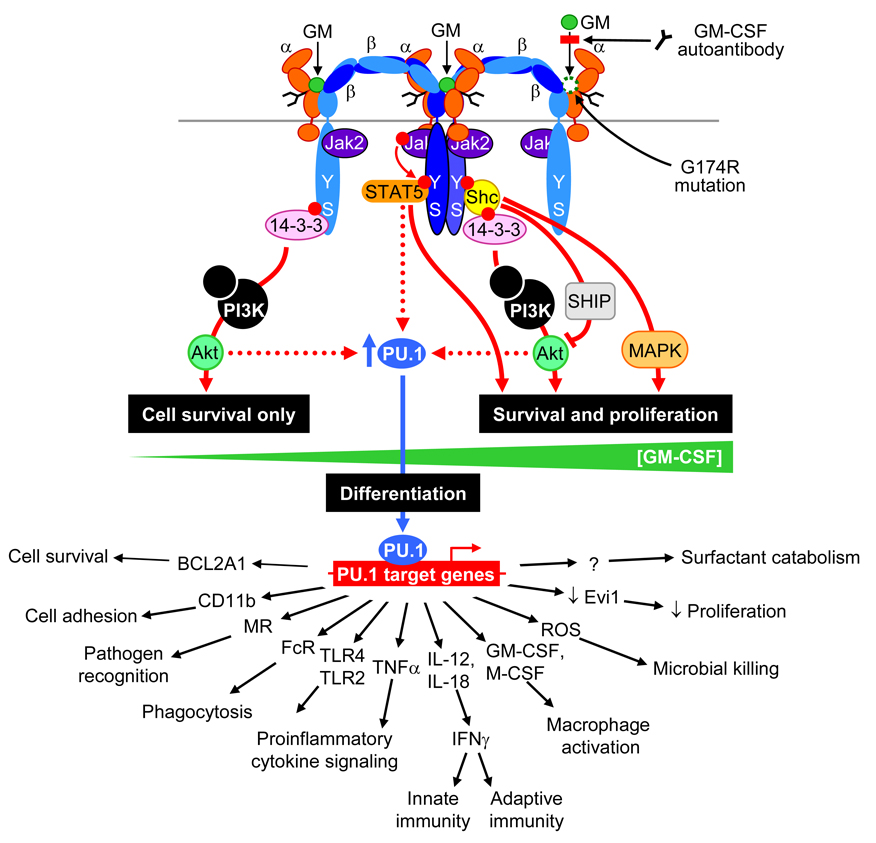
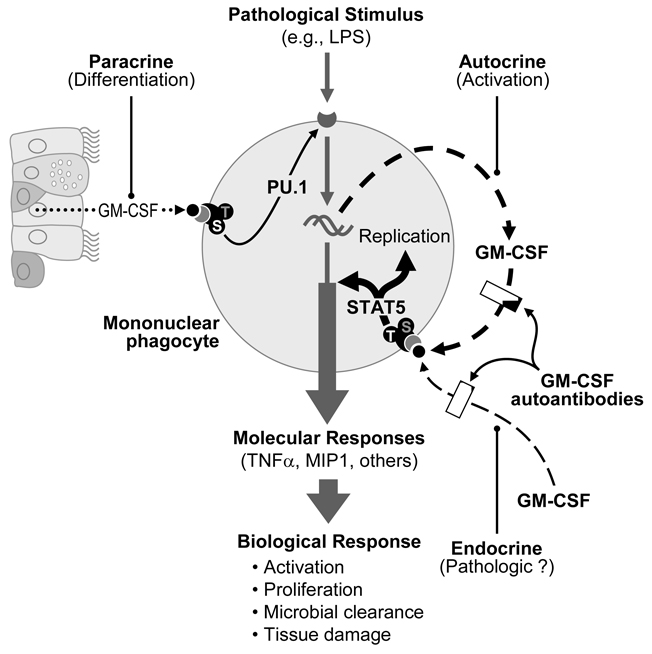
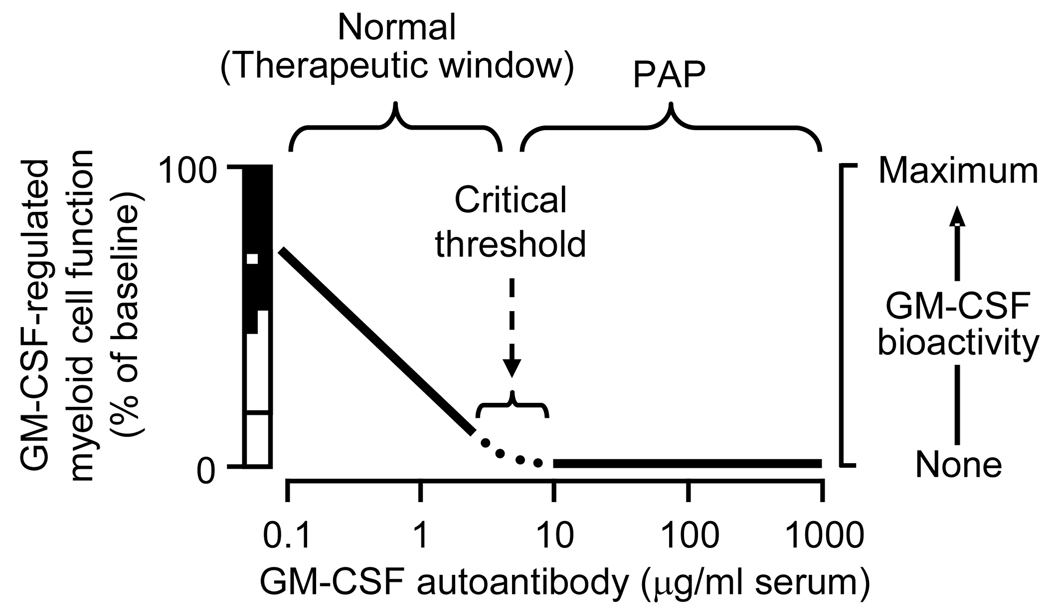
Pulmonary alveolar proteinosis (PAP) is a rare syndrome characterized by accumulation of pulmonary surfactant, respiratory insufficiency, and increased infections. It occurs in various clinical settings that disrupt surfactant catabolism in alveolar macrophages, including a relatively more common autoimmune disease caused by GM-CSF autoantibodies and a rare congenital disease caused by CSF2RA mutations. Recent results demonstrate that GM-CSF is crucial for alveolar macrophage terminal differentiation and immune functions, pulmonary surfactant homeostasis, and lung host defense. GM-CSF is also required to determine the basal functional capacity of circulating neutrophils, including adhesion, phagocytosis, and microbial killing. PAP research has illuminated the crucial role of GM-CSF in innate immunity and led to novel therapy for PAP and the potential use of anti-GM-CSF therapy in other common disorders.
肺泡蛋白沉积症(PAP)是一种罕见的综合征,其特征是肺表面活性物质的积累、呼吸功能不全和感染增加。它发生在各种临床环境中,这些环境会破坏肺泡巨噬细胞中表面活性剂的代谢,包括由 GM-CSF 自身抗体引起的相对更为常见的自身免疫性疾病和由 CSF2RA 突变引起的罕见先天性疾病。最近的研究结果表明,GM-CSF 对肺泡巨噬细胞终末分化和免疫功能、肺表面活性剂稳态以及肺部宿主防御至关重要。GM-CSF 还需要确定循环中性粒细胞的基本功能能力,包括黏附、吞噬和微生物杀伤。PAP 的研究阐明了 GM-CSF 在先天免疫中的关键作用,并为 PAP 的新型治疗方法以及在其他常见疾病中使用抗 GM-CSF 治疗提供了可能性。