Zhou Weiyin, Calciano Margaret A, Jordan Heather, Brenner Michael, Johnson Seth, Wu Darong, Lei Lin, Pallares Diego, Beurdeley Pascale, Rouet Fabien, Gill Pritmohinder S, Bracco Laurent, Soucaille Cyril, Einstein Richard
ExonHit Therapeutics Inc, 217 Perry Parkway, Bldg 5, Gaithersburg, MD, 20877 USA.
BMC Genet. 2009 Oct 5;10:63. doi: 10.1186/1471-2156-10-63.
Commercially available microarrays have been used in many settings to generate expression profiles for a variety of applications, including target selection for disease detection, classification, profiling for pharmacogenomic response to therapeutics, and potential disease staging. However, many commercially available microarray platforms fail to capture transcript diversity produced by alternative splicing, a major mechanism for driving proteomic diversity through transcript heterogeneity.
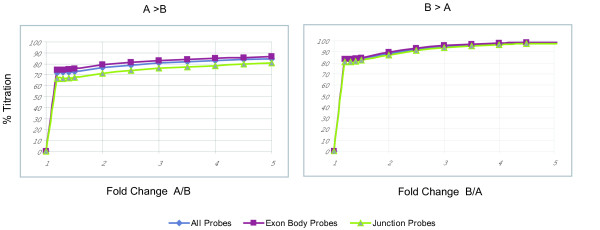
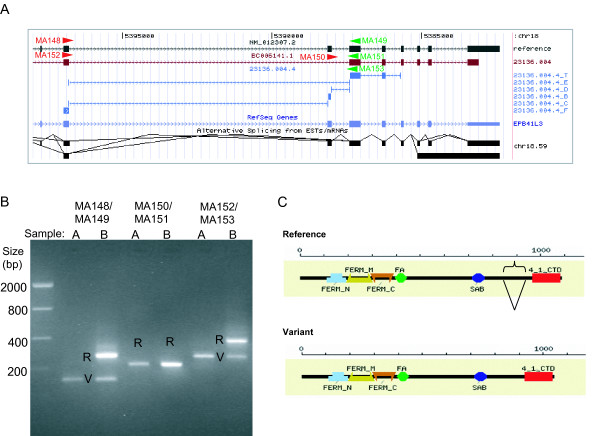
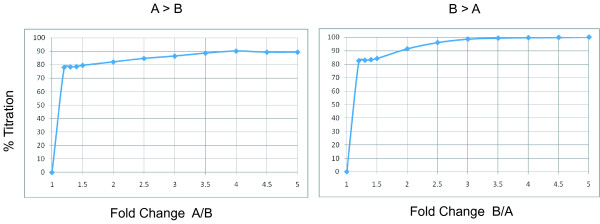
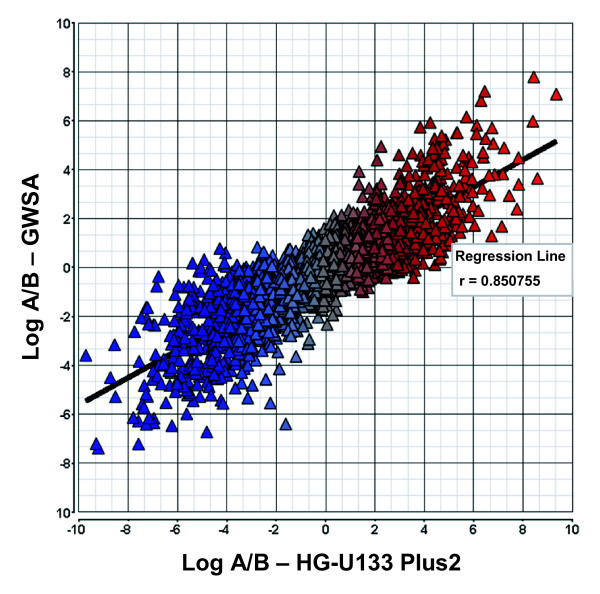
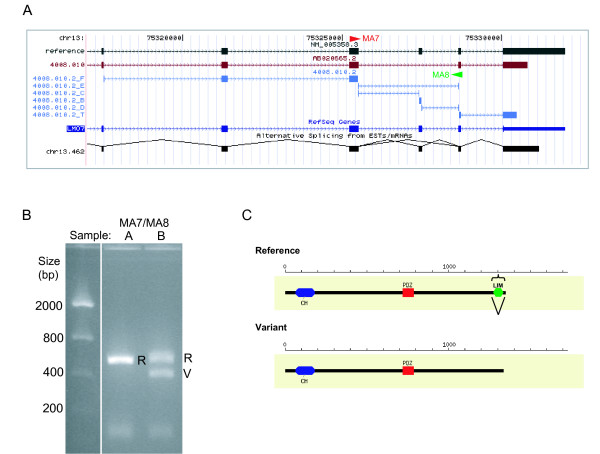
The human Genome-Wide SpliceArray(TM) (GWSA), a novel microarray platform, utilizes an existing probe design concept to monitor such transcript diversity on a genome scale. The human GWSA allows the detection of alternatively spliced events within the human genome through the use of exon body and exon junction probes to provide a direct measure of each transcript, through simple calculations derived from expression data. This report focuses on the performance and validation of the array when measured against standards recently published by the Microarray Quality Control (MAQC) Project. The array was shown to be highly quantitative, and displayed greater than 85% correlation with the HG-U133 Plus 2.0 array at the gene level while providing more extensive coverage of each gene. Almost 60% of splice events among genes demonstrating differential expression of greater than 3 fold also contained extensive splicing alterations. Importantly, almost 10% of splice events within the gene set displaying constant overall expression values had evidence of transcript diversity. Two examples illustrate the types of events identified: LIM domain 7 showed no differential expression at the gene level, but demonstrated deregulation of an exon skip event, while erythrocyte membrane protein band 4.1 -like 3 was differentially expressed and also displayed deregulation of a skipped exon isoform.
Significant changes were detected independent of transcriptional activity, indicating that the controls for transcript generation and transcription are distinct, and require novel tools in order to detect changes in specific transcript quantity. Our results demonstrate that the SpliceArray(TM) design will provide researchers with a robust platform to detect and quantify specific changes not only in overall gene expression, but also at the individual transcript level.
市售微阵列已在多种情况下用于生成各种应用的表达谱,包括疾病检测的靶点选择、分类、药物基因组学对治疗反应的分析以及潜在疾病分期。然而,许多市售微阵列平台无法捕获由可变剪接产生的转录本多样性,可变剪接是通过转录本异质性驱动蛋白质组多样性的主要机制。
新型微阵列平台人类全基因组剪接阵列(GWSA)利用现有的探针设计概念在基因组规模上监测此类转录本多样性。人类GWSA通过使用外显子体和外显子连接探针,能够检测人类基因组内的可变剪接事件,通过从表达数据进行简单计算,直接测量每个转录本。本报告重点关注该阵列相对于微阵列质量控制(MAQC)项目最近发布的标准进行测量时的性能和验证。该阵列显示出高度的定量性,在基因水平上与HG-U133 Plus 2.0阵列的相关性大于85%,同时对每个基因提供更广泛的覆盖。在显示差异表达大于3倍的基因中,近60%的剪接事件也包含广泛的剪接改变。重要的是,在显示总体表达值恒定的基因集中,近10%的剪接事件有转录本多样性的证据。两个例子说明了所识别的事件类型:LIM结构域7在基因水平上没有差异表达,但显示出外显子跳跃事件的失调,而红细胞膜蛋白带4.1样3有差异表达,并且也显示出一个跳过外显子异构体的失调。
检测到独立于转录活性的显著变化,表明转录本产生和转录的调控是不同的,并且需要新的工具来检测特定转录本数量的变化。我们的结果表明,剪接阵列设计将为研究人员提供一个强大的平台,不仅可以检测和量化整体基因表达的特定变化,还可以检测和量化单个转录本水平的特定变化。