Lundgren K, Nordenskjöld B, Landberg G
Department of Laboratory Medicine, Center for Molecular Pathology, Malmö University Hospital, Lund University, Malmö SE-205 02, Sweden.
Br J Cancer. 2009 Nov 17;101(10):1769-81. doi: 10.1038/sj.bjc.6605369. Epub 2009 Oct 20.
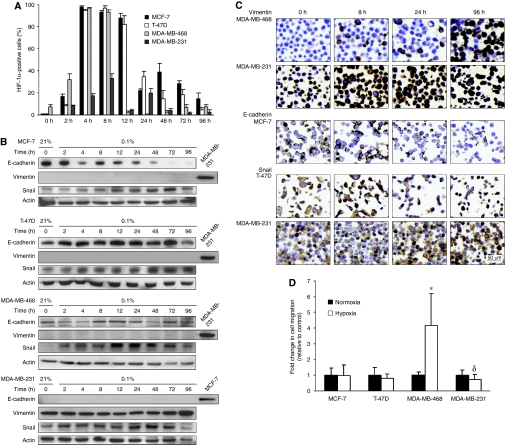
Hypoxia is an element of the tumour microenvironment that impacts upon numerous cellular factors linked to clinical aggressiveness in cancer. One such factor, Snail, a master regulator of the epithelial-mesenchymal transition (EMT), has been implicated in key tumour biological processes such as invasion and metastasis. In this study we set out to investigate regulation of EMT in hypoxia, and the importance of Snail in cell migration and clinical outcome in breast cancer.
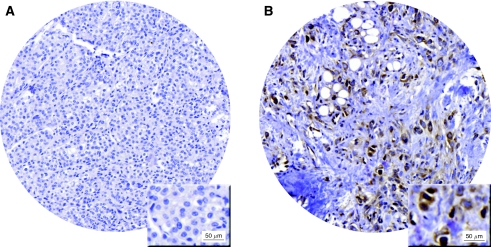
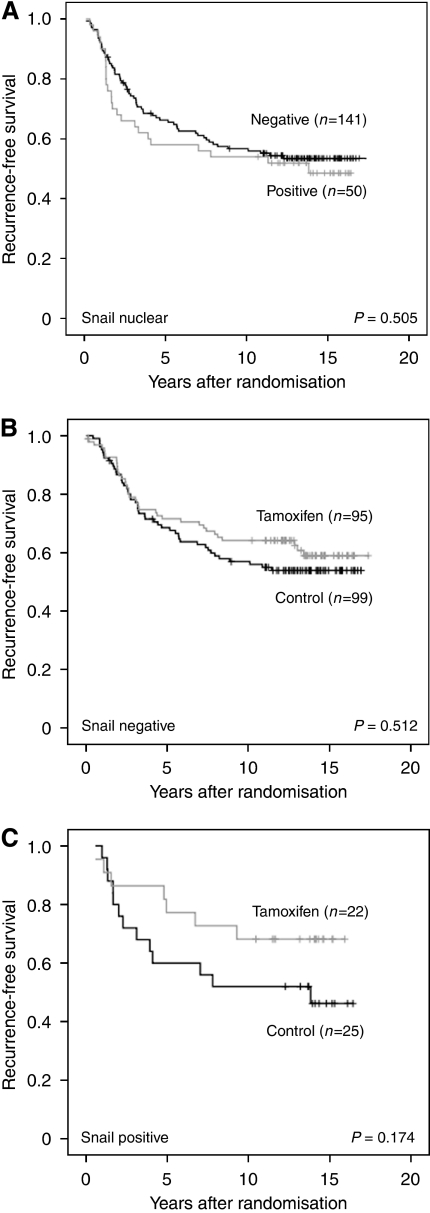
Four breast cancer cell lines were exposed to 0.1% oxygen and expression of EMT markers was monitored. The migratory ability was analysed following Snail overexpression and silencing. Snail expression was assessed in 500 tumour samples from premenopausal breast cancer patients, randomised to either 2 years of tamoxifen or no adjuvant treatment.
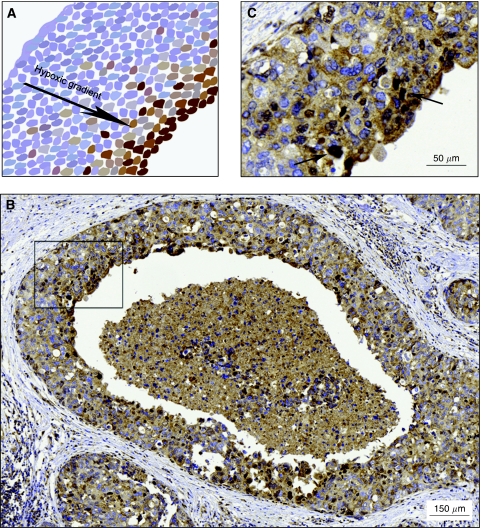
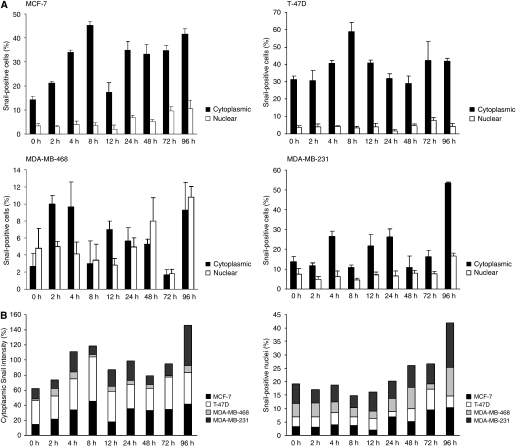
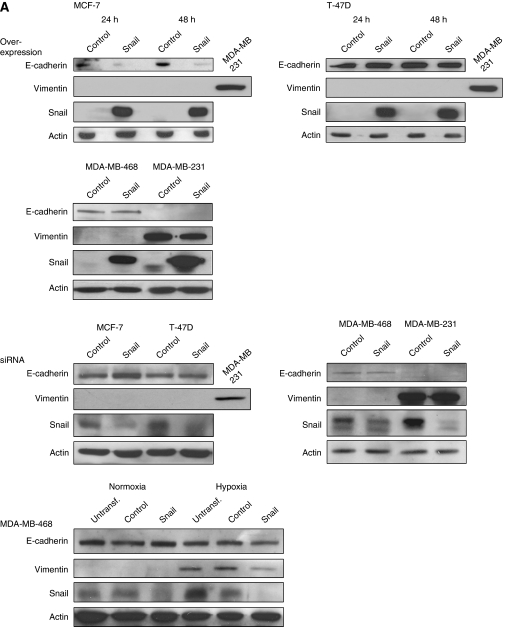
Exposure to 0.1% oxygen resulted in elevated levels of Snail protein, along with changes in vimentin and E-cadherin expression, and in addition increased migration of MDA-MB-468 cells. Overexpression of Snail increased the motility of MCF-7, T-47D and MDA-MB-231 cells, whereas silencing of the protein resulted in decreased migratory propensity of MCF-7, MDA-MB-468 and MDA-MB-231 cells. Moreover, nuclear Snail expression was associated with tumours of higher grade and proliferation rate, but not with disease recurrence. Interestingly, Snail negativity was associated with impaired tamoxifen response (P=0.048).
Our results demonstrate that hypoxia induces Snail expression but generally not a migratory phenotype, suggesting that hypoxic cells are only partially pushed towards EMT. Furthermore, our study supports the link between Snail and clinically relevant features and treatment response.
缺氧是肿瘤微环境的一个要素,它会影响与癌症临床侵袭性相关的众多细胞因子。其中一个因子Snail是上皮-间质转化(EMT)的主要调节因子,与侵袭和转移等关键肿瘤生物学过程有关。在本研究中,我们旨在探究缺氧条件下EMT的调控以及Snail在乳腺癌细胞迁移和临床结局中的重要性。
将四种乳腺癌细胞系暴露于0.1%的氧气中,监测EMT标志物的表达。在Snail过表达和沉默后分析迁移能力。对500例绝经前乳腺癌患者的肿瘤样本进行Snail表达评估,这些患者被随机分为接受两年他莫昔芬治疗或不接受辅助治疗。
暴露于0.1%的氧气导致Snail蛋白水平升高,同时波形蛋白和E-钙黏蛋白表达发生变化,此外还增加了MDA-MB-468细胞的迁移。Snail过表达增加了MCF-7、T-47D和MDA-MB-231细胞的运动性,而该蛋白的沉默导致MCF-7、MDA-MB-468和MDA-MB-231细胞的迁移倾向降低。此外,细胞核Snail表达与更高分级和增殖率的肿瘤相关,但与疾病复发无关。有趣的是,Snail阴性与他莫昔芬反应受损相关(P=0.048)。
我们的结果表明,缺氧诱导Snail表达,但一般不会诱导迁移表型,这表明缺氧细胞仅部分向EMT转变。此外,我们的研究支持了Snail与临床相关特征及治疗反应之间的联系。