Vecsey Christopher G, Baillie George S, Jaganath Devan, Havekes Robbert, Daniels Andrew, Wimmer Mathieu, Huang Ted, Brown Kim M, Li Xiang-Yao, Descalzi Giannina, Kim Susan S, Chen Tao, Shang Yu-Ze, Zhuo Min, Houslay Miles D, Abel Ted
Neuroscience Graduate Group, University of Pennsylvania, Philadelphia, Pennsylvania 19104, USA.
Nature. 2009 Oct 22;461(7267):1122-5. doi: 10.1038/nature08488.
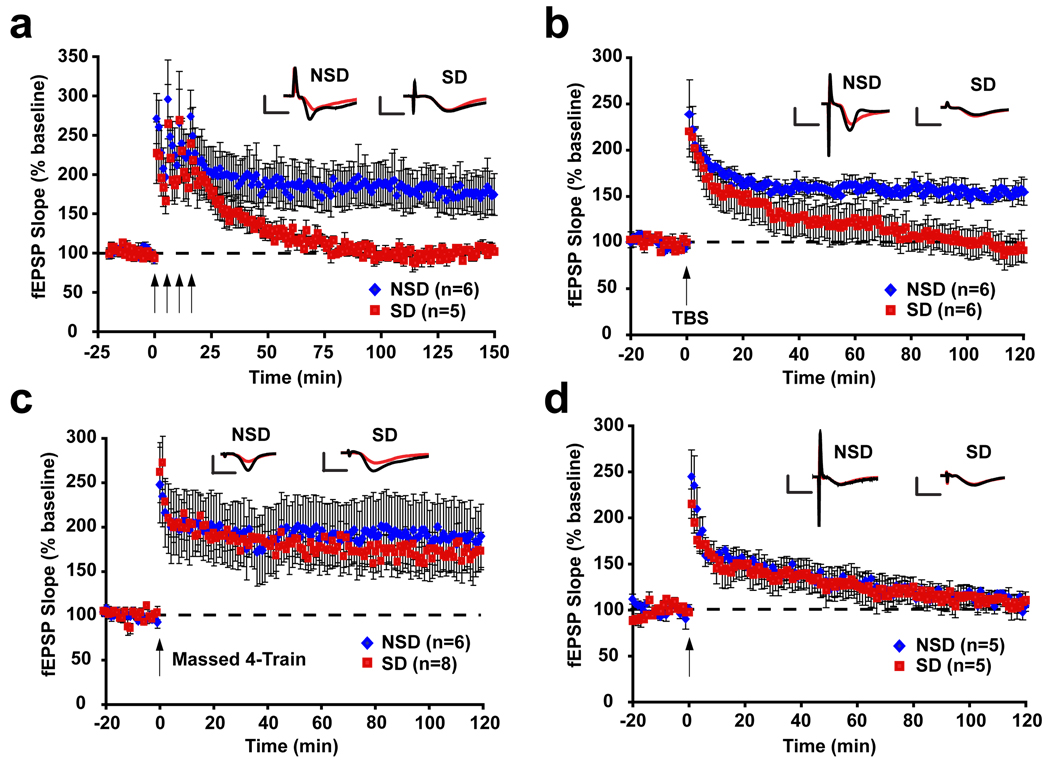
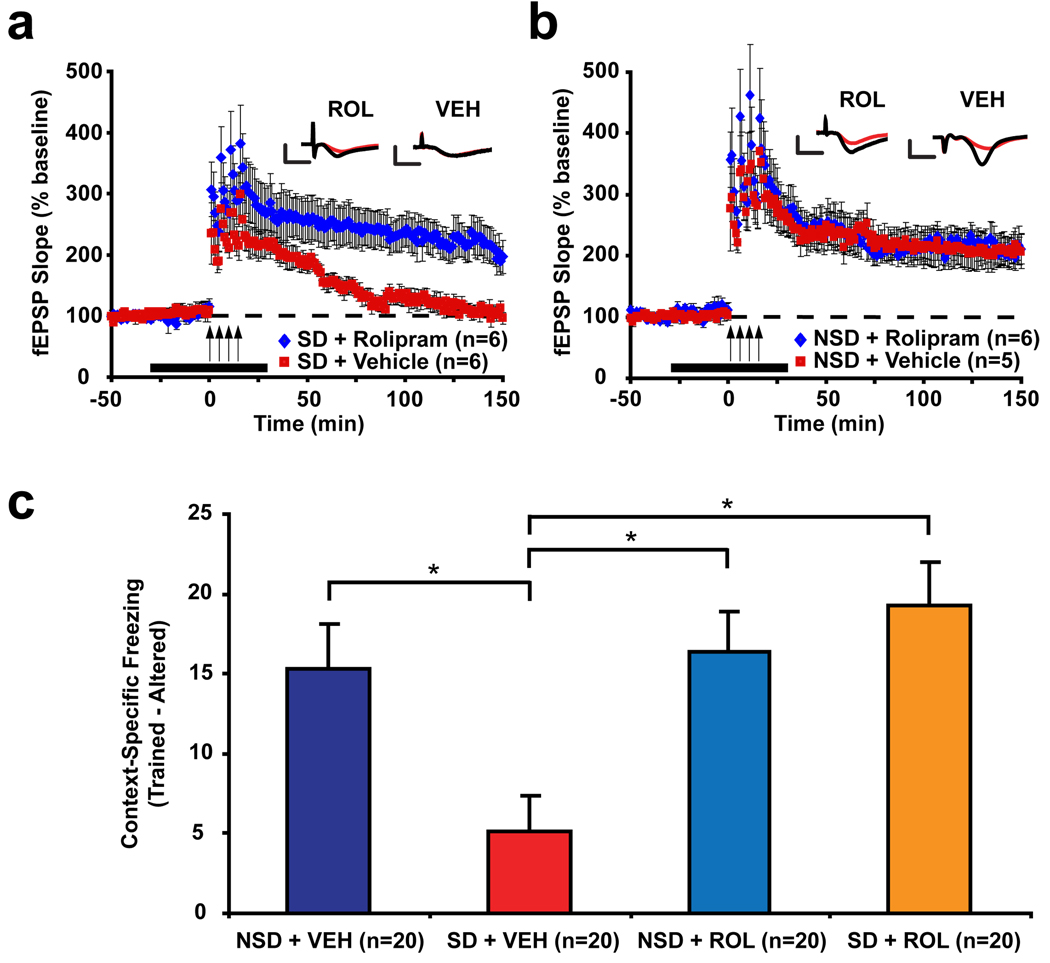
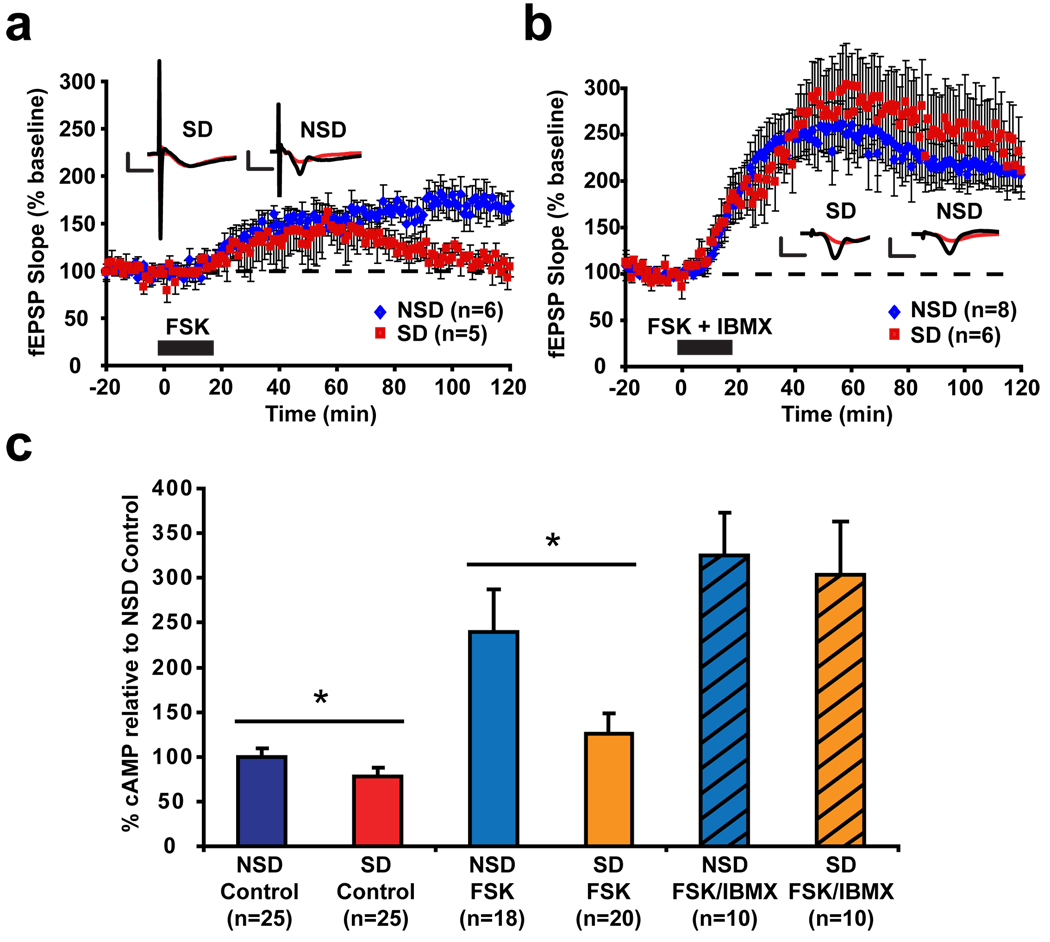
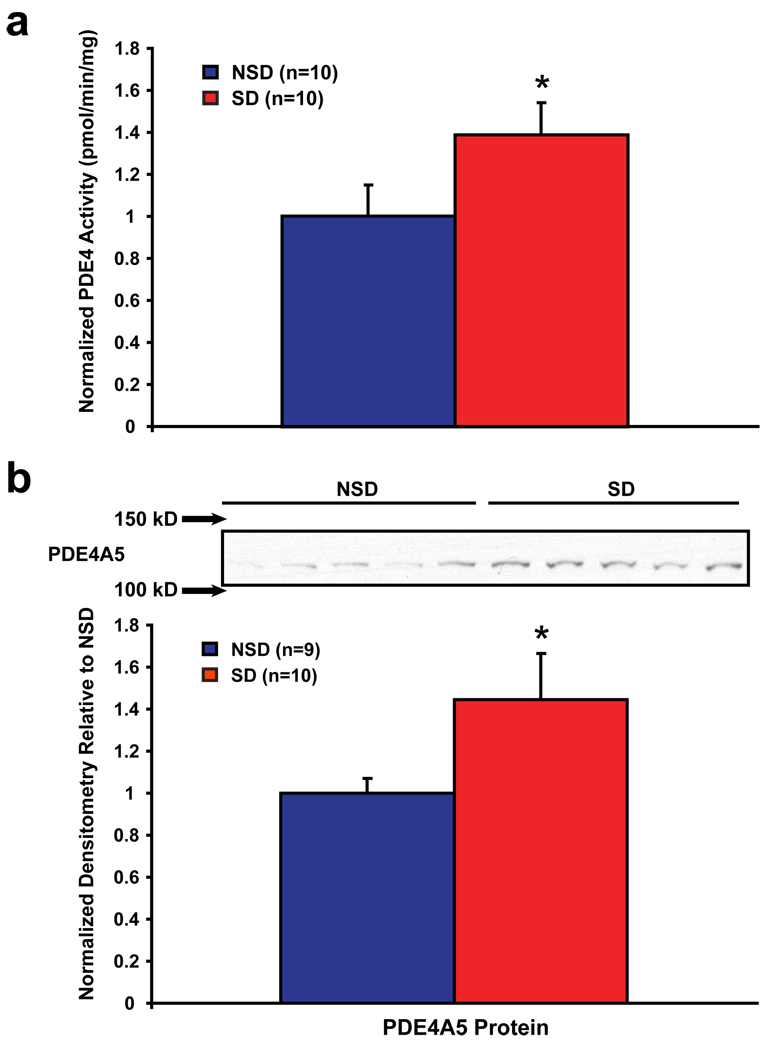
Millions of people regularly obtain insufficient sleep. Given the effect of sleep deprivation on our lives, understanding the cellular and molecular pathways affected by sleep deprivation is clearly of social and clinical importance. One of the major effects of sleep deprivation on the brain is to produce memory deficits in learning models that are dependent on the hippocampus. Here we have identified a molecular mechanism by which brief sleep deprivation alters hippocampal function. Sleep deprivation selectively impaired 3', 5'-cyclic AMP (cAMP)- and protein kinase A (PKA)-dependent forms of synaptic plasticity in the mouse hippocampus, reduced cAMP signalling, and increased activity and protein levels of phosphodiesterase 4 (PDE4), an enzyme that degrades cAMP. Treatment of mice with phosphodiesterase inhibitors rescued the sleep-deprivation-induced deficits in cAMP signalling, synaptic plasticity and hippocampus-dependent memory. These findings demonstrate that brief sleep deprivation disrupts hippocampal function by interfering with cAMP signalling through increased PDE4 activity. Thus, drugs that enhance cAMP signalling may provide a new therapeutic approach to counteract the cognitive effects of sleep deprivation.
数以百万计的人经常睡眠不足。鉴于睡眠剥夺对我们生活的影响,了解受睡眠剥夺影响的细胞和分子途径显然具有社会和临床重要性。睡眠剥夺对大脑的主要影响之一是在依赖海马体的学习模型中产生记忆缺陷。在此,我们确定了一种分子机制,通过该机制短暂的睡眠剥夺会改变海马体功能。睡眠剥夺选择性地损害了小鼠海马体中3',5'-环磷酸腺苷(cAMP)和蛋白激酶A(PKA)依赖性的突触可塑性形式,降低了cAMP信号传导,并增加了磷酸二酯酶4(PDE4)的活性和蛋白水平,PDE4是一种降解cAMP的酶。用磷酸二酯酶抑制剂治疗小鼠可挽救睡眠剥夺诱导的cAMP信号传导、突触可塑性和海马体依赖性记忆缺陷。这些发现表明,短暂的睡眠剥夺通过增加PDE4活性干扰cAMP信号传导,从而破坏海马体功能。因此,增强cAMP信号传导的药物可能提供一种新的治疗方法来对抗睡眠剥夺的认知影响。