Zhao Jincun, Zhao Jingxian, Van Rooijen Nico, Perlman Stanley
Department of Microbiology, University of Iowa, Iowa City, Iowa, USA.
PLoS Pathog. 2009 Oct;5(10):e1000636. doi: 10.1371/journal.ppat.1000636. Epub 2009 Oct 23.
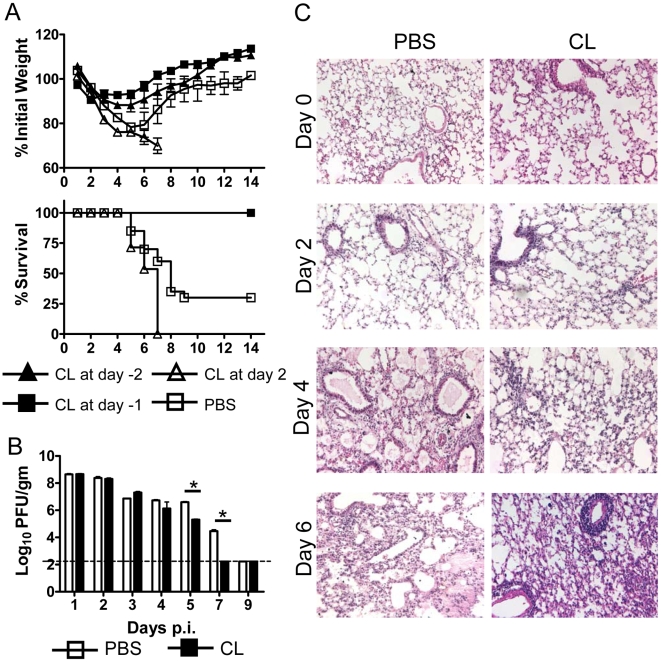
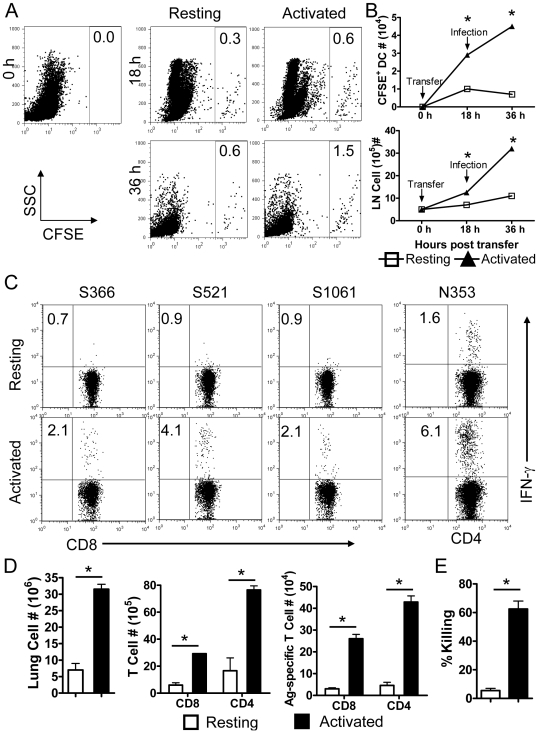
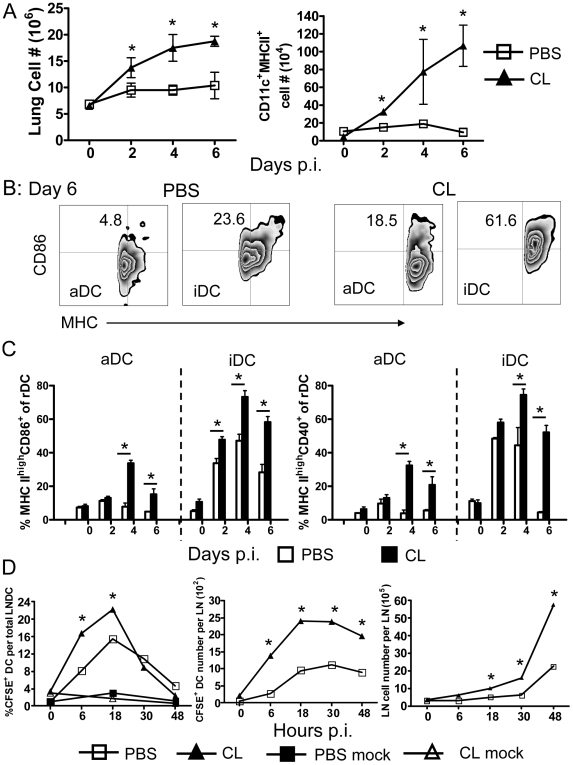
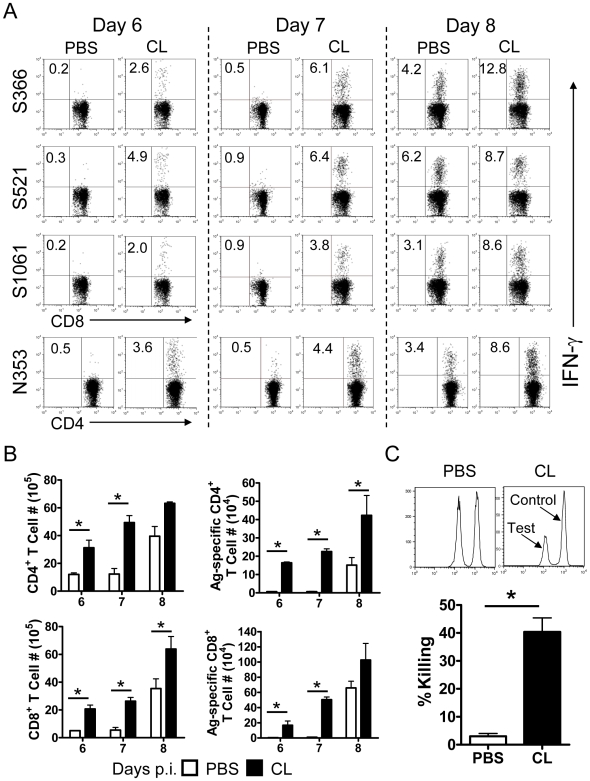
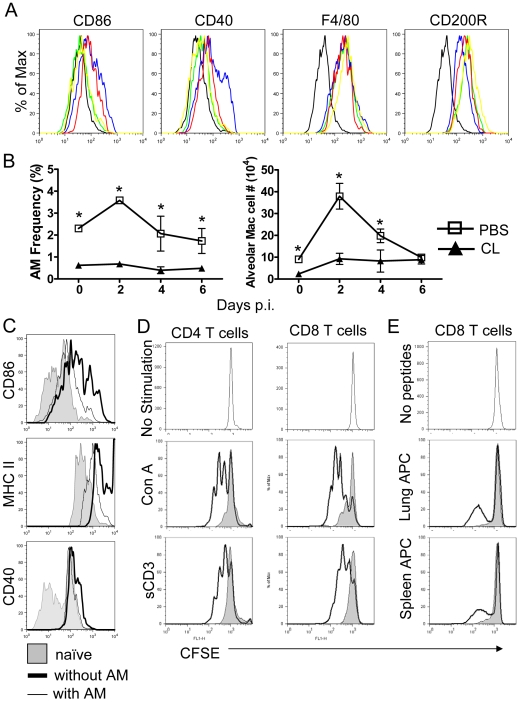
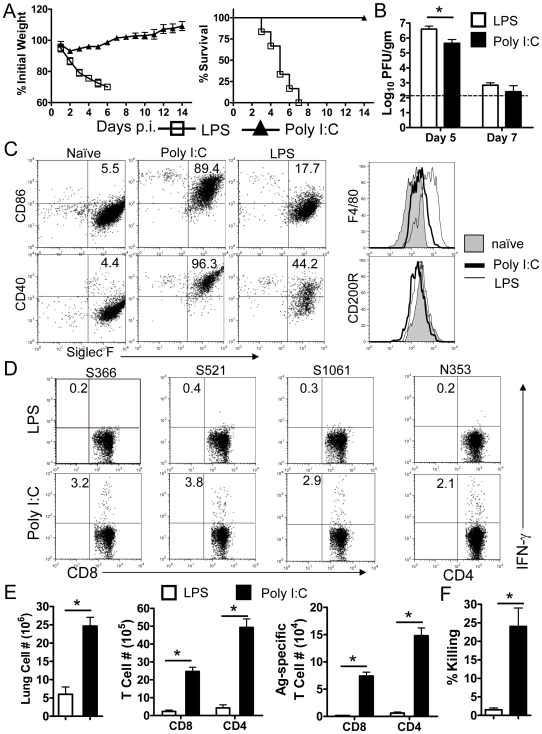
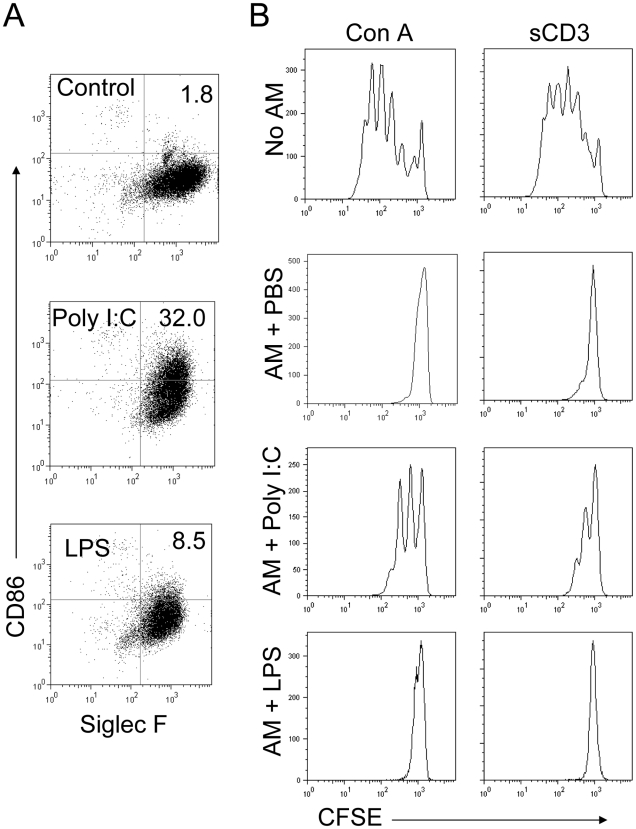
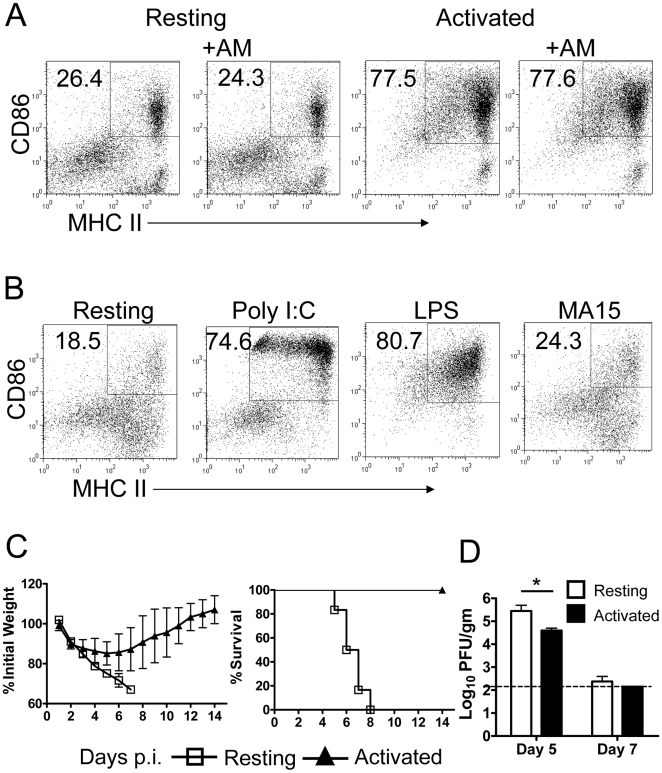
Severe Acute Respiratory Syndrome caused substantial morbidity and mortality during the 2002-2003 epidemic. Many of the features of the human disease are duplicated in BALB/c mice infected with a mouse-adapted version of the virus (MA15), which develop respiratory disease with high morbidity and mortality. Here, we show that severe disease is correlated with slow kinetics of virus clearance and delayed activation and transit of respiratory dendritic cells (rDC) to the draining lymph nodes (DLN) with a consequent deficient virus-specific T cell response. All of these defects are corrected when mice are treated with liposomes containing clodronate, which deplete alveolar macrophages (AM). Inhibitory AMs are believed to prevent the development of immune responses to environmental antigens and allergic responses by interacting with lung dendritic cells and T cells. The inhibitory effects of AM can also be nullified if mice or AMs are pretreated with poly I:C, which directly activate AMs and rDCs through toll-like receptors 3 (TLR3). Further, adoptive transfer of activated but not resting bone marrow-derived dendritic cells (BMDC) protect mice from lethal MA15 infection. These results may be relevant for SARS in humans, which is also characterized by prolonged virus persistence and delayed development of a SARS-CoV-specific immune response in individuals with severe disease.
严重急性呼吸综合征在2002 - 2003年流行期间造成了大量发病和死亡。人类疾病的许多特征在感染了病毒鼠适应株(MA15)的BALB/c小鼠中也有体现,这些小鼠会发展出高发病率和高死亡率的呼吸道疾病。在此,我们表明严重疾病与病毒清除动力学缓慢、呼吸道树突状细胞(rDC)向引流淋巴结(DLN)的激活和转运延迟相关,从而导致病毒特异性T细胞反应不足。当用含有氯膦酸盐的脂质体处理小鼠以耗尽肺泡巨噬细胞(AM)时,所有这些缺陷都得到了纠正。抑制性AM被认为通过与肺树突状细胞和T细胞相互作用来阻止对环境抗原的免疫反应和过敏反应的发展。如果小鼠或AM用聚肌胞苷酸(poly I:C)预处理,AM的抑制作用也可以被消除,poly I:C通过Toll样受体3(TLR3)直接激活AM和rDC。此外,过继转移活化的而非静止的骨髓来源树突状细胞(BMDC)可保护小鼠免受致死性MA15感染。这些结果可能与人类的SARS相关,SARS的特征也是严重疾病个体中病毒持续时间延长和SARS-CoV特异性免疫反应发展延迟。