Desvignes Thomas, Pontarotti Pierre, Fauvel Christian, Bobe Julien
INRA, UR1037 SCRIBE, IFR140, Ouest-Genopole, F-35000 Rennes, France.
BMC Evol Biol. 2009 Oct 23;9:256. doi: 10.1186/1471-2148-9-256.
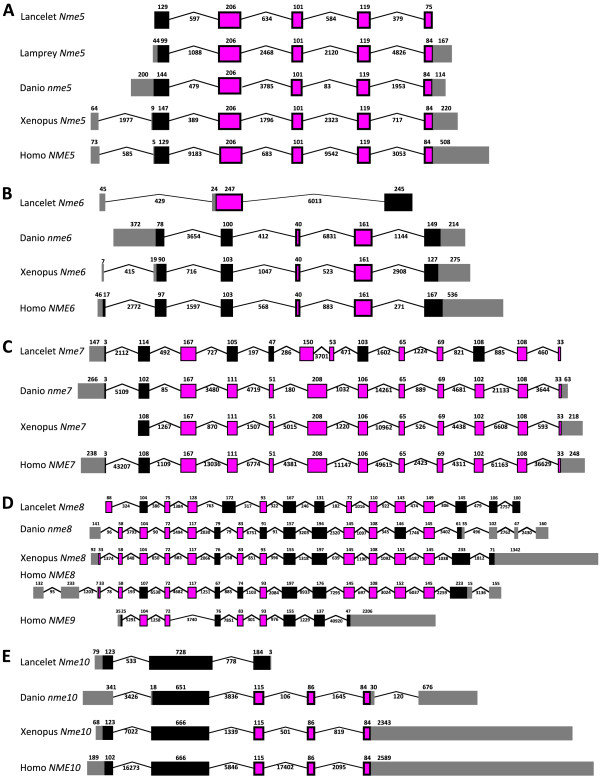
The Nme family, previously known as Nm23 or NDPK, is involved in various molecular processes including tumor metastasis and some members of the family, but not all, exhibit a Nucleoside Diphosphate Kinase (NDPK) activity. Ten genes are known in humans, in which some members have been extensively studied. In non-mammalian species, the Nme protein family has received, in contrast, far less attention. The picture of the vertebrate Nme family remains thus incomplete and orthology relationships with mammalian counterparts were only partially characterized. The present study therefore aimed at characterizing the Nme gene repertoire in vertebrates with special interest for teleosts, and providing a comprehensive overview of the Nme gene family evolutionary history in vertebrates.
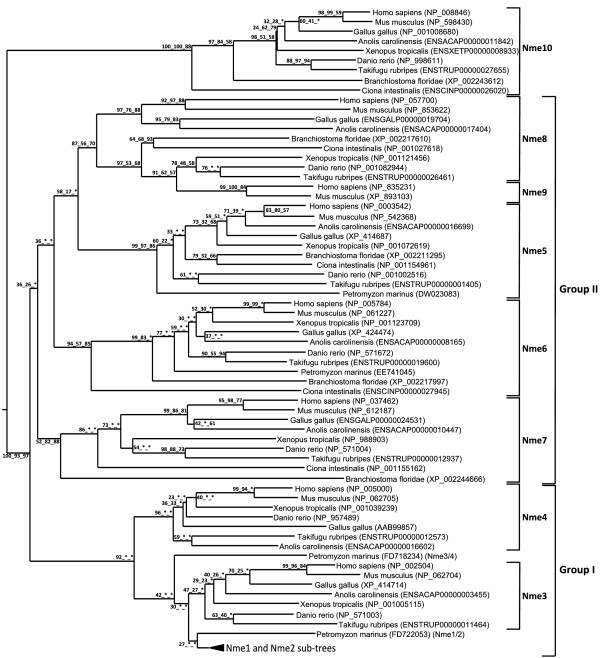
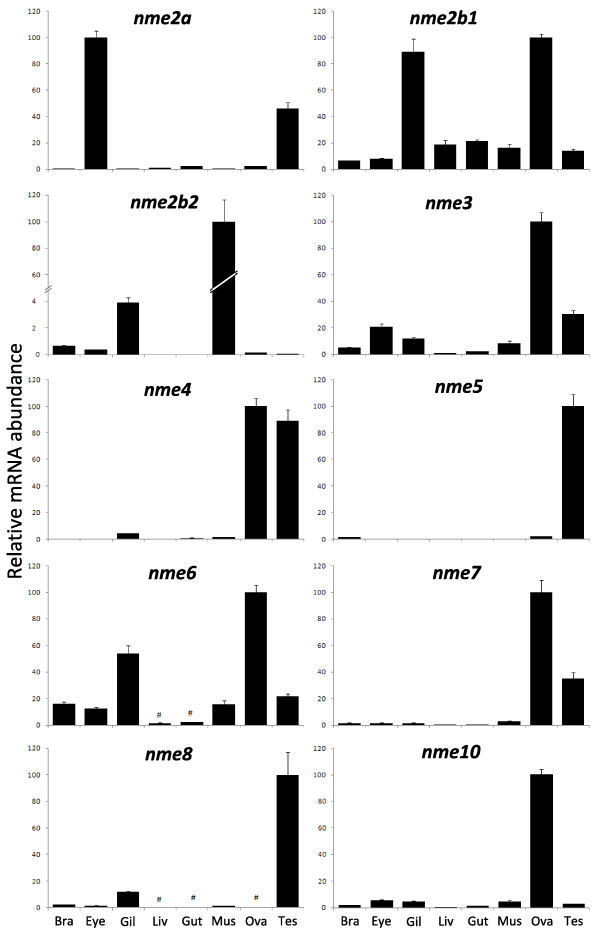
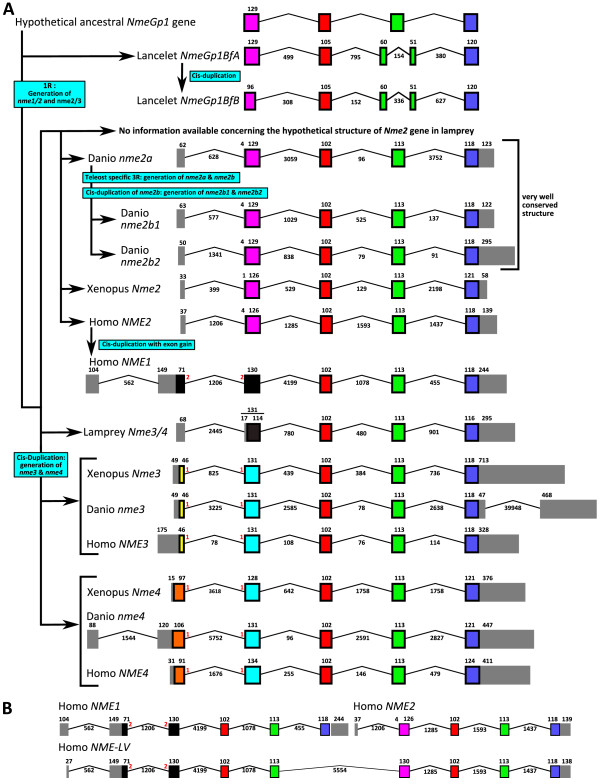
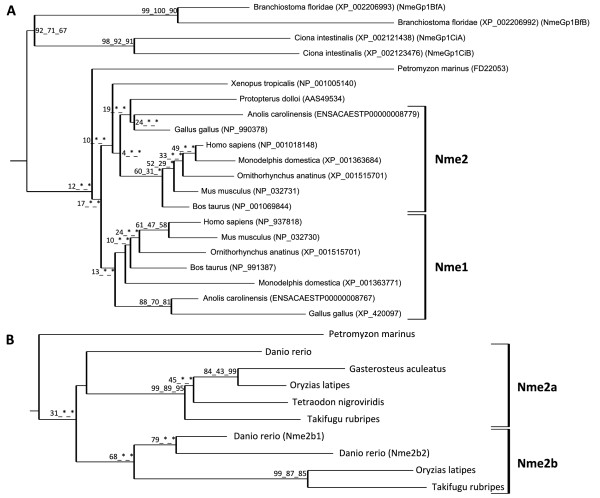
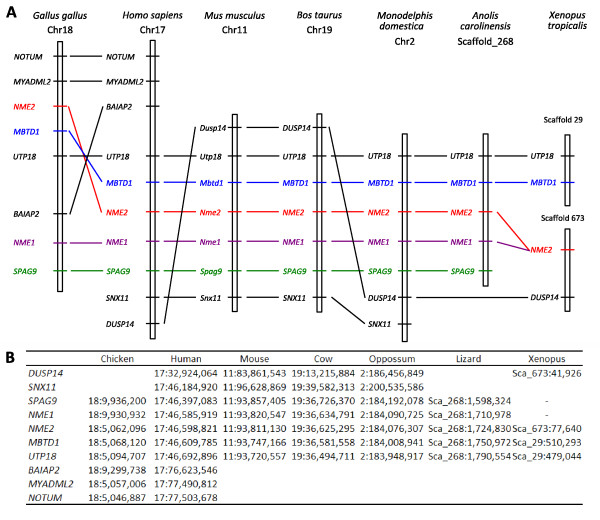
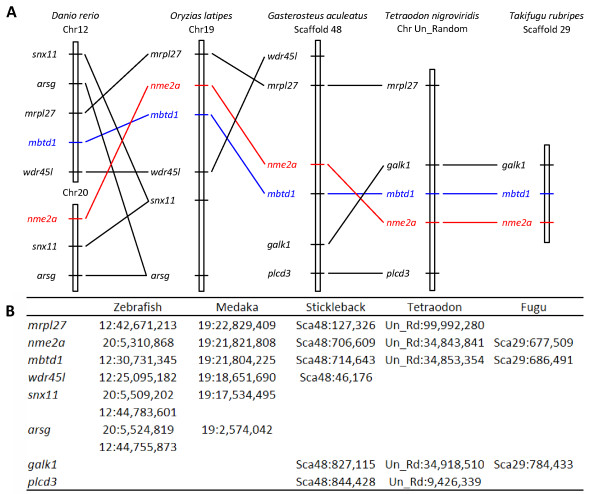
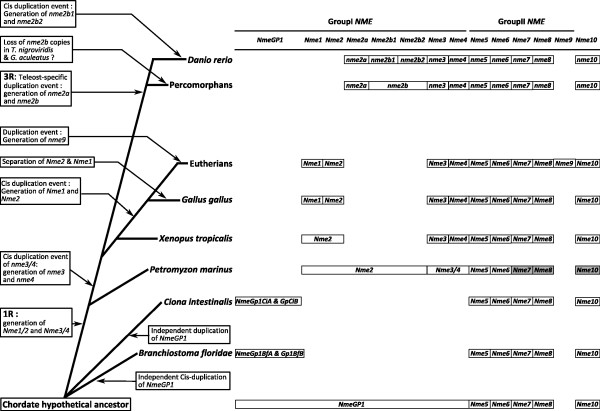
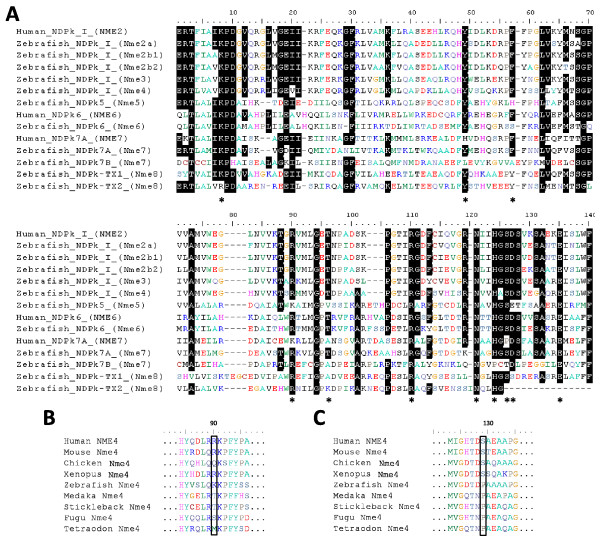
In the present study, we present the evolutionary history of the Nme family in vertebrates and characterize the gene family repertoire for the first time in several non-mammalian species. Our observations show that vertebrate Nme genes can be separated in two evolutionary distinct groups. Nme1, Nme2, Nme3, and Nme4 belong to Group I while vertebrate Nme5, Nme6, Nme7, Nme8, and Nme9 belong to Group II. The position of Nme10 is in contrast more debatable due to its very specific evolutionary history. The present study clearly indicates that Nme5, Nme6, Nme7, and Nme8 originate from duplication events that occurred before the chordate radiation. In contrast, Nme genes of the Group I have a very different evolutionary history as our results suggest that they all arise from a common gene present in the chordate ancestor. In addition, expression patterns of all zebrafish nme transcripts were studied in a broad range of tissues by quantitative PCR and discussed in the light of the function of their mammalian counterparts.
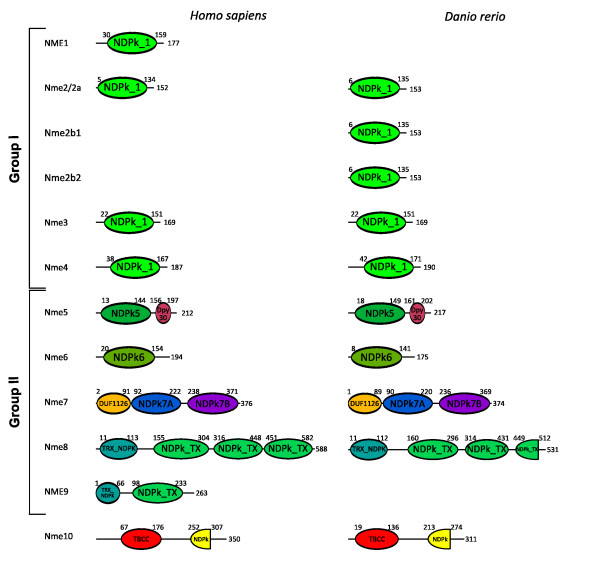
This work offers an evolutionary framework that will pave the way for future studies on vertebrate Nme proteins and provides a unified vertebrate Nme nomenclature that is consistent with the nomenclature in use in mammals. Based on protein structure and expression data, we also provide new insight into molecular functions of Nme proteins among vertebrates and raise intriguing questions on the roles of Nme proteins in gonads.
Nme家族,以前称为Nm23或核苷二磷酸激酶(NDPK),参与包括肿瘤转移在内的各种分子过程,该家族的一些成员(但并非全部)具有核苷二磷酸激酶(NDPK)活性。人类已知有10个基因,其中一些成员已得到广泛研究。相比之下,在非哺乳动物物种中,Nme蛋白家族受到的关注要少得多。因此,脊椎动物Nme家族的情况仍然不完整,与哺乳动物对应物的直系同源关系仅得到部分表征。因此,本研究旨在表征脊椎动物中的Nme基因库,特别关注硬骨鱼,并全面概述脊椎动物中Nme基因家族的进化历史。
在本研究中,我们展示了脊椎动物中Nme家族的进化历史,并首次在几个非哺乳动物物种中表征了该基因家族的基因库。我们的观察结果表明,脊椎动物的Nme基因可分为两个进化上不同的组。Nme1、Nme2、Nme3和Nme4属于第一组,而脊椎动物的Nme5、Nme6、Nme7、Nme8和Nme9属于第二组。由于其非常特殊的进化历史,Nme10的位置更具争议性。本研究清楚地表明,Nme5、Nme6、Nme7和Nme8起源于脊索动物辐射之前发生的复制事件。相比之下,第一组的Nme基因具有非常不同的进化历史,因为我们的结果表明它们都起源于脊索动物祖先中存在的一个共同基因。此外,通过定量PCR研究了所有斑马鱼nme转录本在广泛组织中的表达模式,并根据其哺乳动物对应物的功能进行了讨论。
这项工作提供了一个进化框架,将为未来对脊椎动物Nme蛋白的研究铺平道路,并提供一个与哺乳动物中使用的命名法一致的统一脊椎动物Nme命名法。基于蛋白质结构和表达数据,我们还对脊椎动物中Nme蛋白的分子功能提供了新的见解,并提出了关于Nme蛋白在性腺中作用的有趣问题。