The Department of Molecular Genetics and Microbiology, University of Massachusetts Medical School, Worcester, MA, USA.
Curr Opin Pharmacol. 2009 Dec;9(6):697-701. doi: 10.1016/j.coph.2009.10.004. Epub 2009 Oct 24.
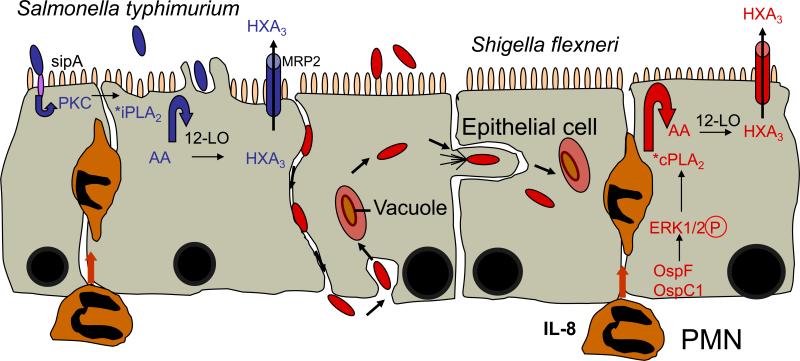
The transmigration of polymorphonuclear leukocytes (PMNs; neutrophils) into the intestinal lumen is a classical phenomenon associated with a wide variety of disease states, including those of both pathogenic and autoimmune/idiopathic origin. While PMNs are highly effective at killing invading pathogens by releasing microbiocidal products, excessive or unnecessary release of these substances can cause substantial damage to the intestinal epithelium. Therefore, it is necessary to understand the underlying mechanisms that lure neutrophils into the lumen allowing them to perform their desired functions, so that researchers may begin to identify which processes may be potential targets for inhibiting the transmigration of PMNs during noninfectious states.
多形核白细胞(PMN;中性粒细胞)向肠腔的迁移是一种与多种疾病状态相关的经典现象,包括病原性和自身免疫/特发性疾病。虽然 PMN 通过释放杀菌产物在杀死入侵病原体方面非常有效,但这些物质的过度或不必要释放会对肠上皮造成实质性损伤。因此,有必要了解吸引中性粒细胞进入肠腔使其发挥预期功能的潜在机制,以便研究人员能够开始确定哪些过程可能是在非感染状态下抑制 PMN 迁移的潜在靶点。