Schürks Markus, Rist Pamela M, Bigal Marcelo E, Buring Julie E, Lipton Richard B, Kurth Tobias
Division of Preventive Medicine, Department of Medicine, Brigham and Women's Hospital, Harvard Medical School, 900 Commonwealth Avenue East, Boston, MA 02215-1204, USA.
BMJ. 2009 Oct 27;339:b3914. doi: 10.1136/bmj.b3914.
To evaluate the association between migraine and cardiovascular disease, including stroke, myocardial infarction, and death due to cardiovascular disease.
Systematic review and meta-analysis.
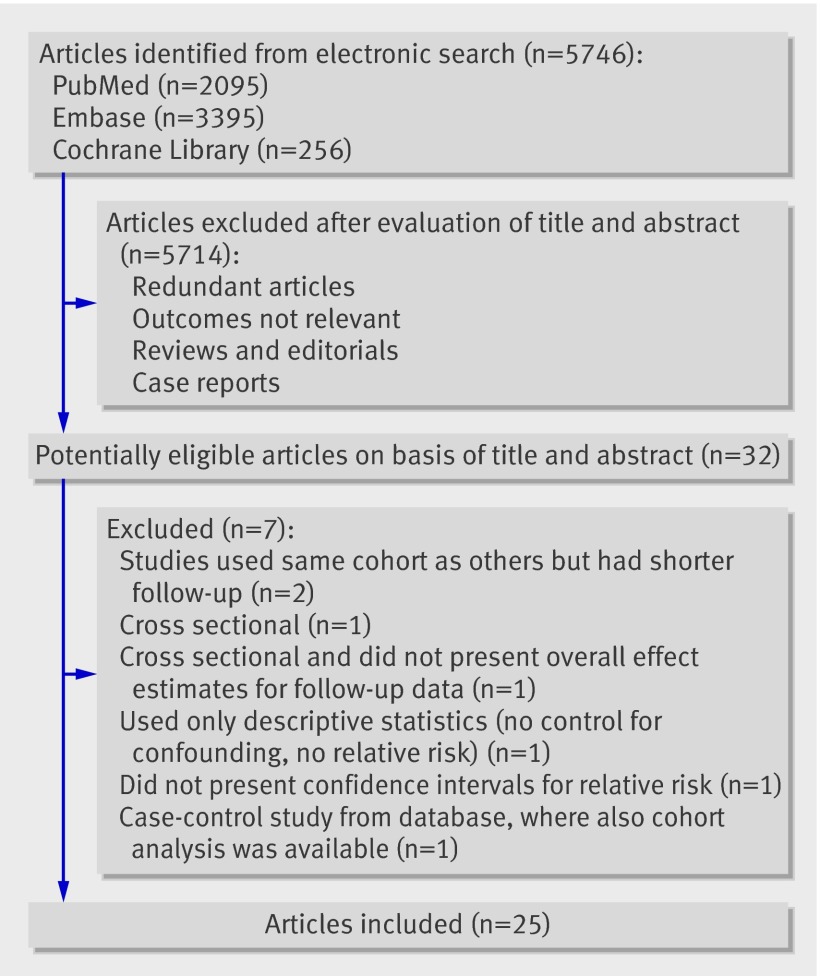
Electronic databases (PubMed, Embase, Cochrane Library) and reference lists of included studies and reviews published until January 2009. Selection criteria Case-control and cohort studies investigating the association between any migraine or specific migraine subtypes and cardiovascular disease. Review methods Two investigators independently assessed eligibility of identified studies in a two step approach. Disagreements were resolved by consensus. Studies were grouped according to a priori categories on migraine and cardiovascular disease.
Two investigators extracted data. Pooled relative risks and 95% confidence intervals were calculated.
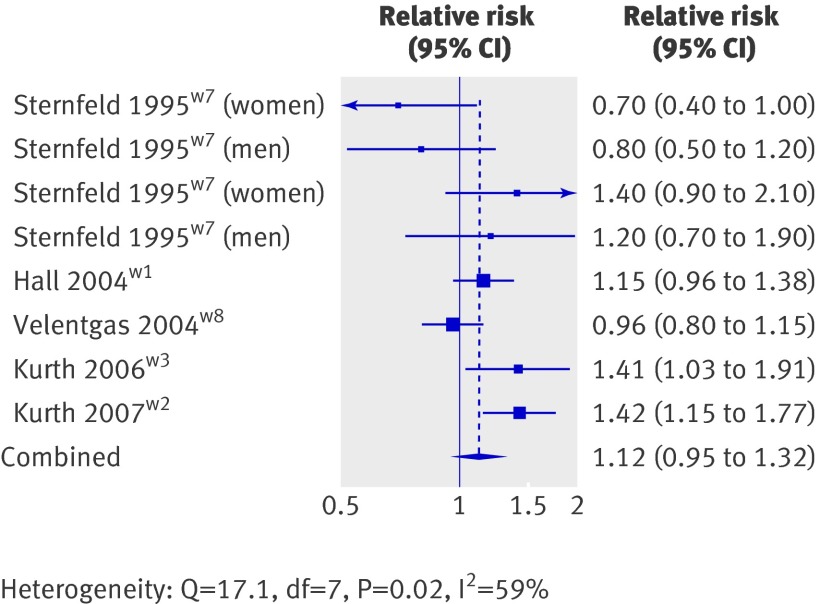
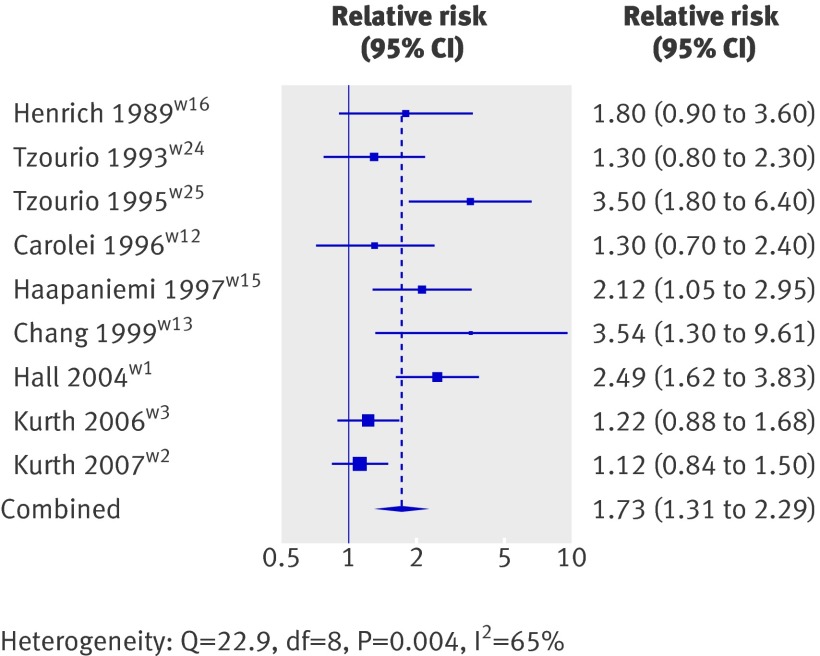
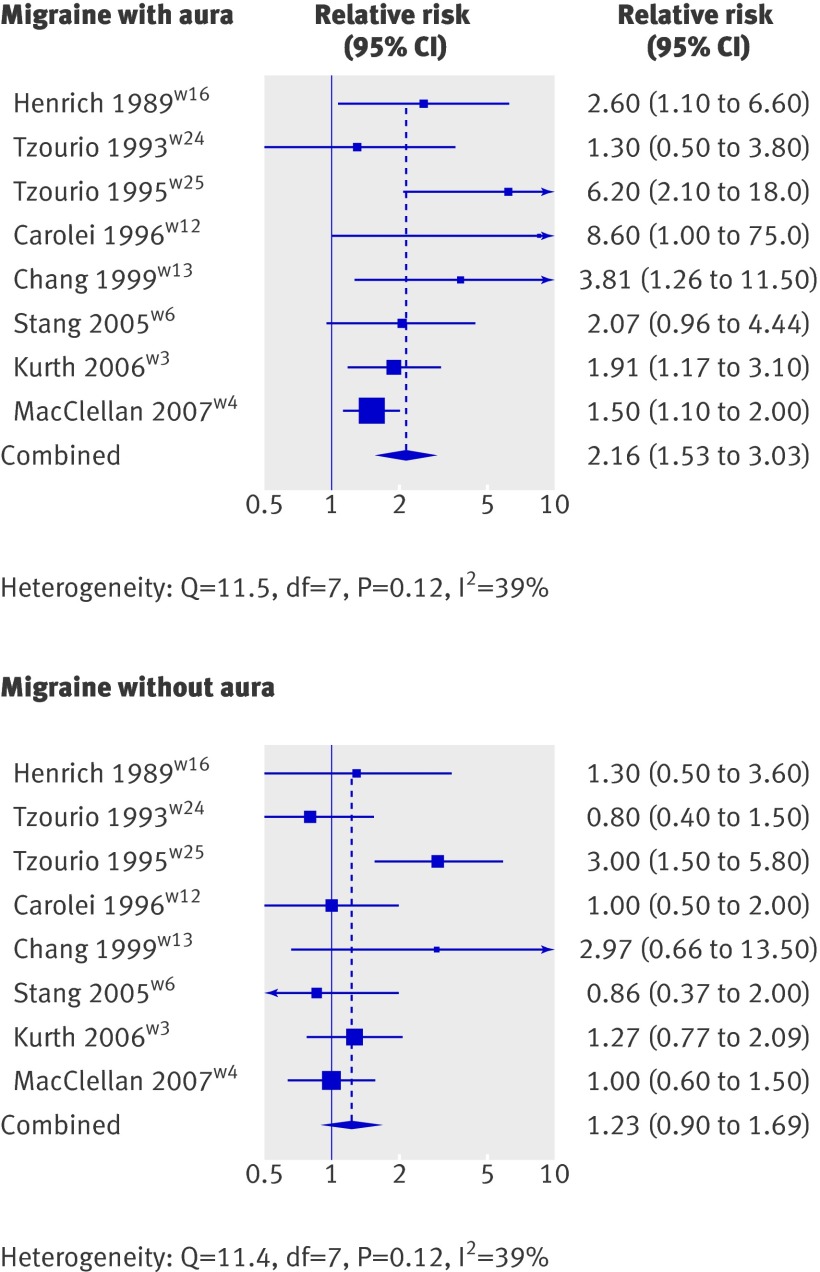
Studies were heterogeneous for participant characteristics and definition of cardiovascular disease. Nine studies investigated the association between any migraine and ischaemic stroke (pooled relative risk 1.73, 95% confidence interval 1.31 to 2.29). Additional analyses indicated a significantly higher risk among people who had migraine with aura (2.16, 1.53 to 3.03) compared with people who had migraine without aura (1.23, 0.90 to 1.69; meta-regression for aura status P=0.02). Furthermore, results suggested a greater risk among women (2.08, 1.13 to 3.84) compared with men (1.37, 0.89 to 2.11). Age less than 45 years, smoking, and oral contraceptive use further increased the risk. Eight studies investigated the association between migraine and myocardial infarction (1.12, 0.95 to 1.32) and five between migraine and death due to cardiovascular disease (1.03, 0.79 to 1.34). Only one study investigated the association between women who had migraine with aura and myocardial infarction and death due to cardiovascular disease, showing a twofold increased risk.
Migraine is associated with a twofold increased risk of ischaemic stroke, which is only apparent among people who have migraine with aura. Our results also suggest a higher risk among women and risk was further magnified for people with migraine who were aged less than 45, smokers, and women who used oral contraceptives. We did not find an overall association between any migraine and myocardial infarction or death due to cardiovascular disease. Too few studies are available to reliably evaluate the impact of modifying factors, such as migraine aura, on these associations.
评估偏头痛与心血管疾病(包括中风、心肌梗死和心血管疾病导致的死亡)之间的关联。
系统评价和荟萃分析。
电子数据库(PubMed、Embase、Cochrane图书馆)以及截至2009年1月发表的纳入研究和综述的参考文献列表。选择标准:调查任何偏头痛或特定偏头痛亚型与心血管疾病之间关联的病例对照研究和队列研究。综述方法:两名研究者采用两步法独立评估所识别研究的合格性。分歧通过共识解决。研究根据偏头痛和心血管疾病的先验类别进行分组。
两名研究者提取数据。计算合并相对风险和95%置信区间。
研究在参与者特征和心血管疾病定义方面存在异质性。九项研究调查了任何偏头痛与缺血性中风之间的关联(合并相对风险1.73,95%置信区间1.31至2.29)。进一步分析表明,有先兆偏头痛患者的风险显著高于无先兆偏头痛患者(2.16,1.53至3.03)(先兆状态的meta回归P = 0.02)。此外,结果表明女性的风险高于男性(2.08,1.13至3.84)(男性为1.37,0.89至2.11)。年龄小于45岁、吸烟和使用口服避孕药会进一步增加风险。八项研究调查了偏头痛与心肌梗死之间的关联(1.12,0.95至1.32),五项研究调查了偏头痛与心血管疾病导致的死亡之间的关联(1.03,0.79至1.34)。只有一项研究调查了有先兆偏头痛女性与心肌梗死和心血管疾病导致的死亡之间的关联,显示风险增加了两倍。
偏头痛与缺血性中风风险增加两倍相关,这仅在有先兆偏头痛患者中明显。我们的结果还表明女性风险更高,且对于年龄小于45岁的偏头痛患者、吸烟者以及使用口服避孕药的女性,风险会进一步放大。我们未发现任何偏头痛与心肌梗死或心血管疾病导致的死亡之间存在总体关联。现有研究数量过少,无法可靠评估诸如偏头痛先兆等修正因素对这些关联的影响。