Dhingra Usha, Hiremath Girish, Menon Venugopal P, Dhingra Pratibha, Sarkar Archana, Sazawal Sunil
Department of International Health, Johns Hopkins Bloomberg School of Public Health, Baltimore, MD 21205, USA.
J Health Popul Nutr. 2009 Oct;27(5):632-9. doi: 10.3329/jhpn.v27i5.3639.
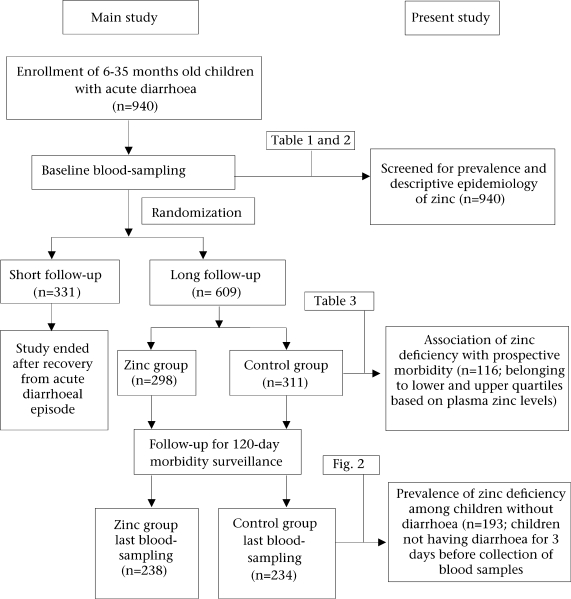
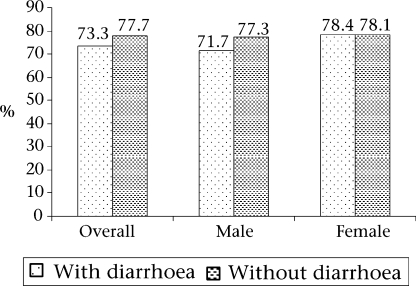
Community-based data relating to factors influencing zinc deficiency among preschool children in India are inadequate. Data of a large, double-blinded, randomized, controlled zinc-supplementation trial were used for assessing the descriptive epidemiology of zinc deficiency among children aged 6-35 months (n = 940). In total, 609 children were followed up for 120 days for information on morbidity. Of these children, 116 from the control group belonging to the upper and the lower 25th quartile of plasma zinc status at baseline were selected for assessing the association of zinc deficiency with prospective morbidity. At baseline, demographic, socioeconomic and dietary information was collected, and anthropometric measurements and levels of plasma zinc were assessed. At baseline, 73.3% of the children were zinc-deficient (plasma zinc < 70 microg/dL), of which 33.8% had levels of plasma zinc below 60 microg/dL. A significantly higher risk of morbidity was prevalent among the subjects with lower plasma zinc compared to those with higher levels of plasma zinc.
印度有关影响学龄前儿童锌缺乏因素的社区数据不足。一项大型双盲随机对照锌补充试验的数据被用于评估6至35个月儿童(n = 940)锌缺乏的描述性流行病学。共有609名儿童接受了120天的随访以获取发病信息。在这些儿童中,从基线时血浆锌水平处于上、下四分位数的对照组中选取了116名儿童,以评估锌缺乏与预期发病率之间的关联。在基线时,收集了人口统计学、社会经济和饮食信息,并评估了人体测量指标和血浆锌水平。基线时,73.3%的儿童锌缺乏(血浆锌<70微克/分升),其中33.8%的儿童血浆锌水平低于60微克/分升。与血浆锌水平较高的受试者相比,血浆锌水平较低的受试者发病风险明显更高。