Instituto Valenciano de Investigaciones Agrarias, Carretera Moncada-Náquera, Km 4.5, Moncada, Valencia, Spain.
J Exp Bot. 2010;61(2):483-90. doi: 10.1093/jxb/erp328. Epub 2009 Nov 13.
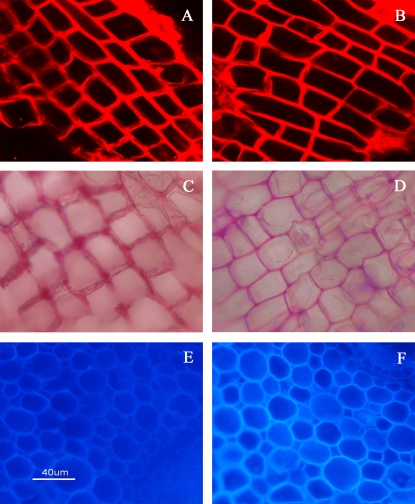
Iron chlorosis is one of the major abiotic stresses affecting fruit trees and other crops in calcareous soils and leads to a reduction in growth and yield. Usual remediation strategies consist of amending iron to soil, which is an expensive practice, or using tolerant cultivars, which are difficult to develop when not available. To understand the mechanisms underlying the associated physiopathy better, and thus develop new strategies to overcome the problems resulting from iron deficiency, the differential gene expression induced by iron deficiency in the susceptible citrus rootstock Poncirus trifoliata (L.) Raf. have been examined. The genes identified are putatively involved in cell wall modification, in determining photosynthesis rate and chlorophyll content, and reducing oxidative stress. Additional studies on cell wall morphology, photosynthesis, and chlorophyll content, as well as peroxidase and catalase activities, support their possible functions in the response to iron deficiency in a susceptible genotype, and the results are discussed.
缺铁症是影响石灰性土壤中果树和其他作物的主要非生物胁迫之一,导致生长和产量下降。常用的修复策略包括向土壤中添加铁,这是一种昂贵的做法,或者使用耐受品种,但在没有这些品种的情况下,开发这些品种是很困难的。为了更好地了解相关生理病理的机制,并因此开发克服缺铁引起的问题的新策略,研究了易感性柑橘砧木枳(Poncirus trifoliata(L.)Raf.)中由缺铁诱导的差异基因表达。鉴定出的基因可能参与细胞壁修饰、确定光合作用速率和叶绿素含量以及降低氧化应激。对细胞壁形态、光合作用和叶绿素含量以及过氧化物酶和过氧化氢酶活性的进一步研究支持了它们在易感基因型对缺铁反应中的可能功能,并对结果进行了讨论。