Department of Genome Sciences, University of Washington, Seattle, Washington, USA.
Nat Genet. 2010 Jan;42(1):30-5. doi: 10.1038/ng.499. Epub 2009 Nov 13.
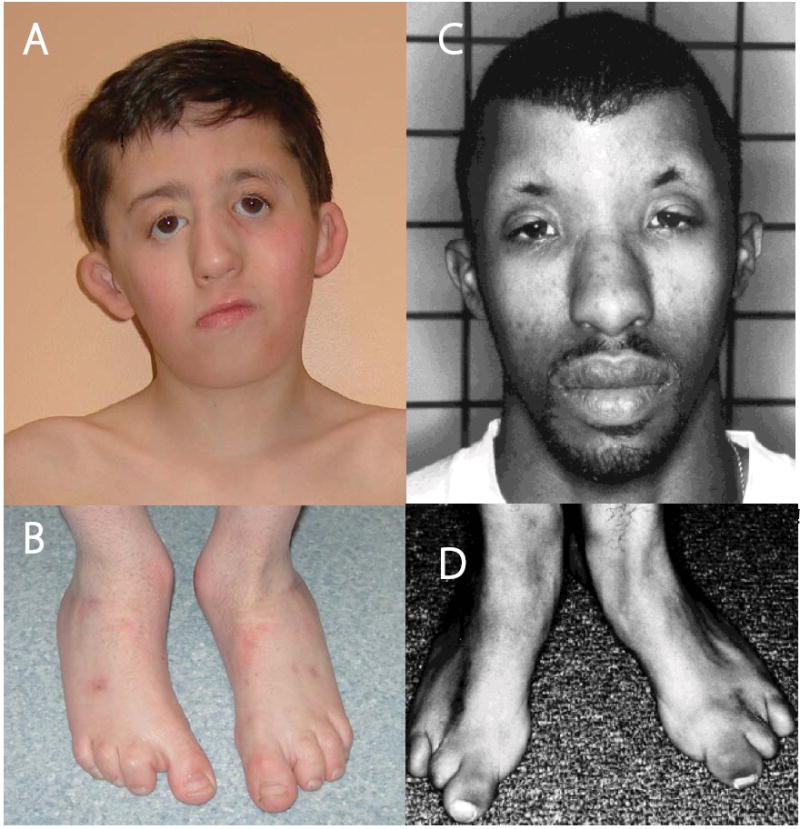
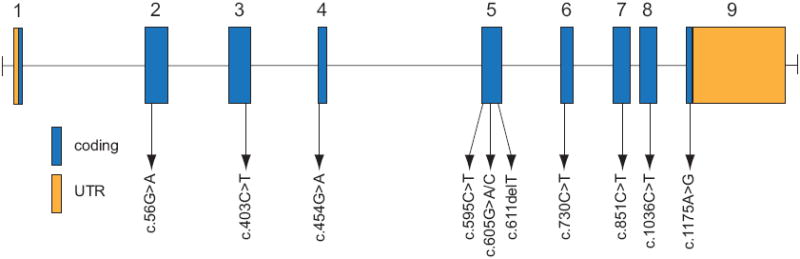
We demonstrate the first successful application of exome sequencing to discover the gene for a rare mendelian disorder of unknown cause, Miller syndrome (MIM%263750). For four affected individuals in three independent kindreds, we captured and sequenced coding regions to a mean coverage of 40x and sufficient depth to call variants at approximately 97% of each targeted exome. Filtering against public SNP databases and eight HapMap exomes for genes with two previously unknown variants in each of the four individuals identified a single candidate gene, DHODH, which encodes a key enzyme in the pyrimidine de novo biosynthesis pathway. Sanger sequencing confirmed the presence of DHODH mutations in three additional families with Miller syndrome. Exome sequencing of a small number of unrelated affected individuals is a powerful, efficient strategy for identifying the genes underlying rare mendelian disorders and will likely transform the genetic analysis of monogenic traits.
我们成功地首次应用外显子组测序来发现一种罕见的孟德尔疾病的基因,米勒综合征(MIM%263750)。对于三个独立家系中的四个受影响个体,我们对编码区域进行了捕获和测序,平均覆盖度为 40x,深度足以在每个目标外显子的大约 97%处调用变体。对公共 SNP 数据库和八个 HapMap 外显子进行过滤,针对每个个体中两个以前未知的变体的基因进行过滤,确定了一个单一的候选基因 DHODH,它编码嘧啶从头生物合成途径中的关键酶。对另外三个米勒综合征家系的 Sanger 测序证实了 DHODH 突变的存在。对少数无关受影响个体的外显子组测序是一种强大、高效的策略,可用于鉴定罕见的孟德尔疾病的基因,并可能改变单基因性状的遗传分析。