State Key Laboratory of Virology, Wuhan Institute of Virology, Chinese Academy of Sciences, Wuhan, China.
PLoS One. 2009 Nov 13;4(11):e7810. doi: 10.1371/journal.pone.0007810.
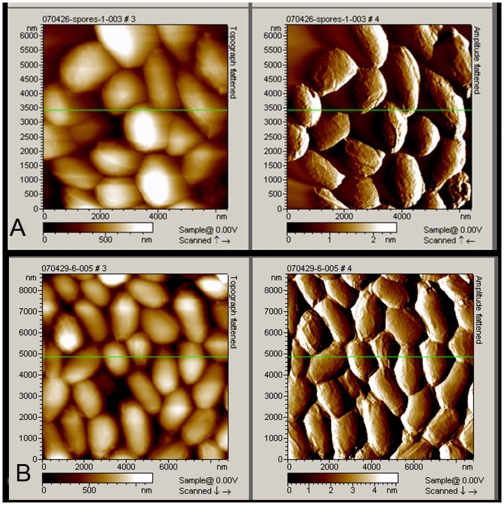
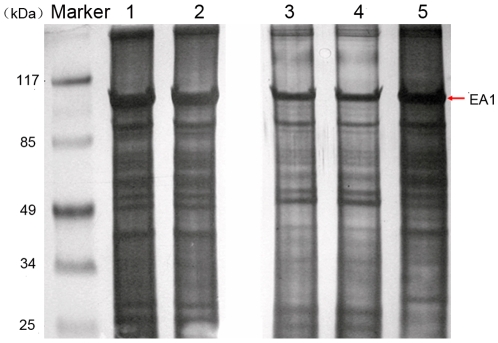
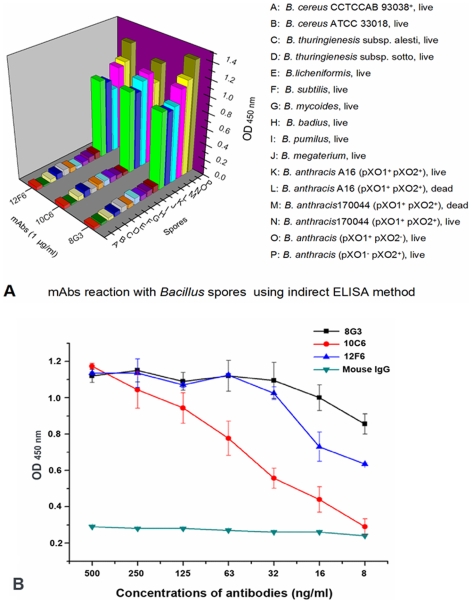
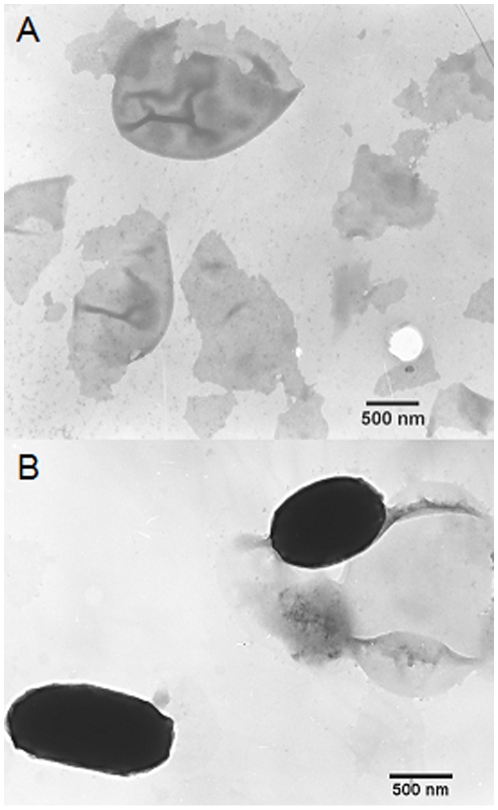
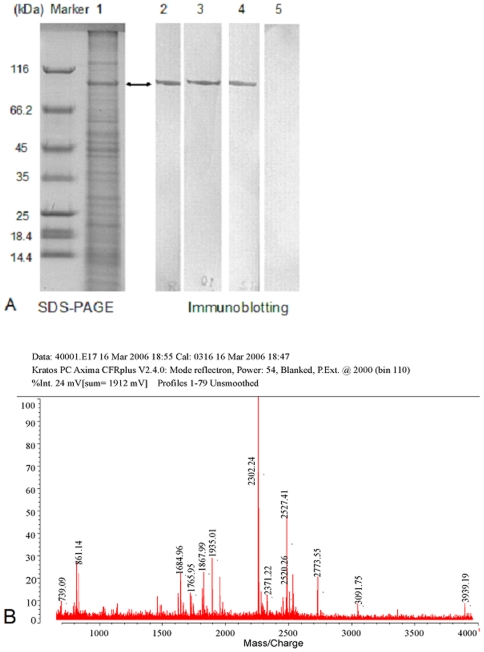
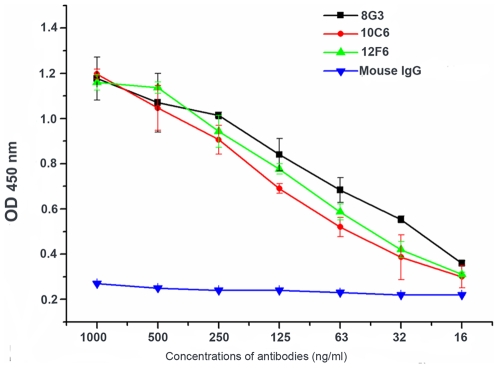
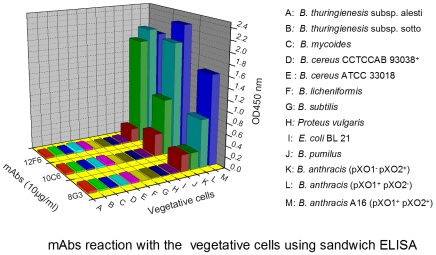
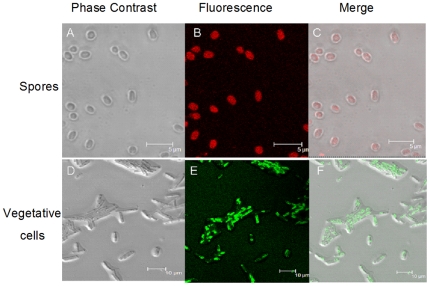
Bacillus anthracis, the causative agent of anthrax disease, could be used as a biothreat reagent. It is vital to develop a rapid, convenient method to detect B. anthracis. In the current study, three high affinity and specificity monoclonal antibodies (mAbs, designated 8G3, 10C6 and 12F6) have been obtained using fully washed B. anthracis spores as an immunogen. These mAbs, confirmed to direct against EA1 protein, can recognize the surface of B. anthracis spores and intact vegetative cells with high affinity and species-specificity. EA1 has been well known as a major S-layer component of B. anthracis vegetative cells, and it also persistently exists in the spore preparations and bind tightly to the spore surfaces even after rigorous washing. Therefore, these mAbs can be used to build a new and rapid immunoassay for detection of both life forms of B. anthracis, either vegetative cells or spores.
炭疽杆菌是炭疽病的病原体,可用作生物威胁试剂。因此,开发一种快速、便捷的方法来检测炭疽杆菌至关重要。在本研究中,我们使用经过充分清洗的炭疽杆菌孢子作为免疫原,获得了三种高亲和力和特异性的单克隆抗体(mAb),分别命名为 8G3、10C6 和 12F6。这些 mAb 被证实可与 EA1 蛋白结合,能特异性地识别炭疽杆菌孢子和完整营养细胞的表面,具有高亲和力。EA1 已被证实是炭疽杆菌营养细胞的主要 S 层成分,即使经过严格的清洗,它也能在孢子制剂中持续存在,并紧密结合在孢子表面。因此,这些 mAb 可用于建立一种新的快速免疫检测方法,用于检测炭疽杆菌的两种生命形态,无论是营养细胞还是孢子。