Division of Biology, California Institute of Technology, Pasadena, CA, USA.
PLoS One. 2009 Nov 13;4(11):e7757. doi: 10.1371/journal.pone.0007757.
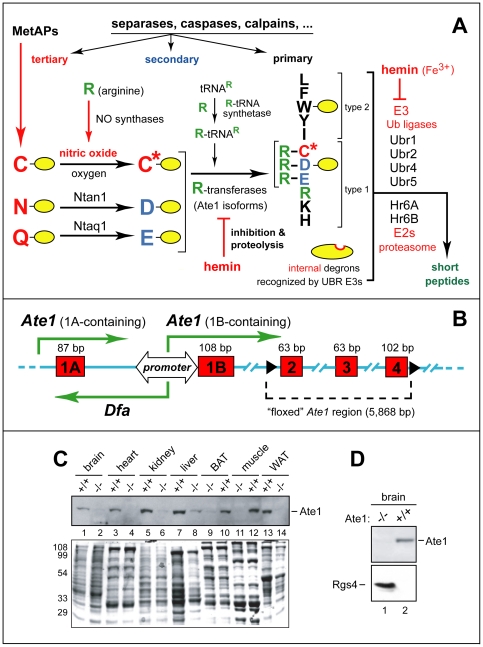
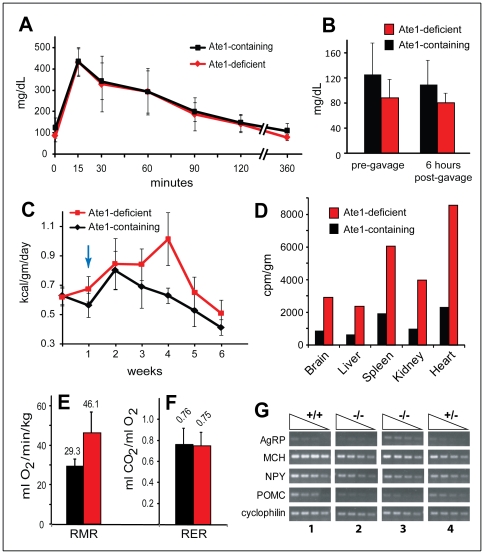
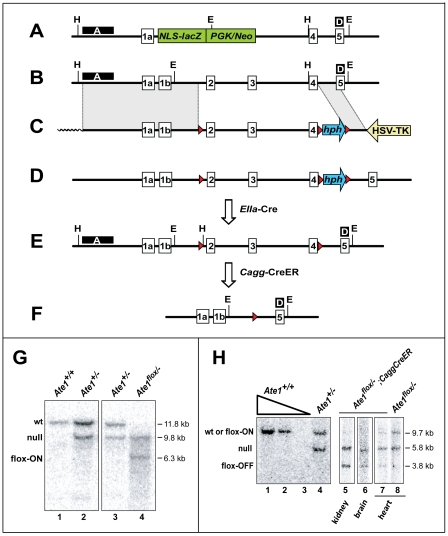
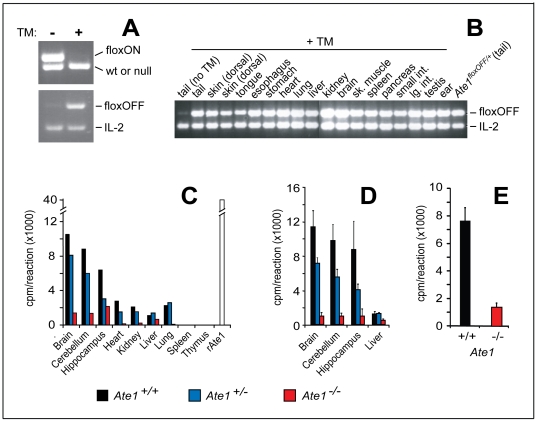
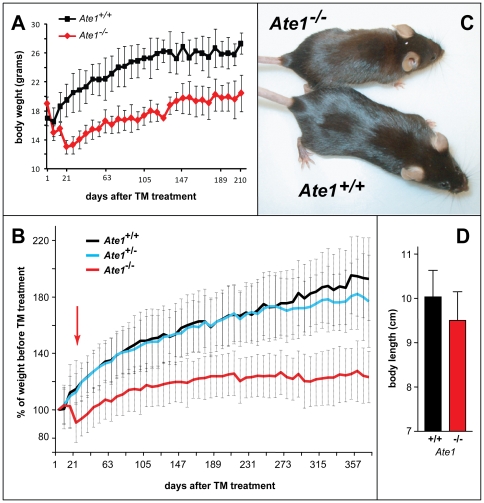
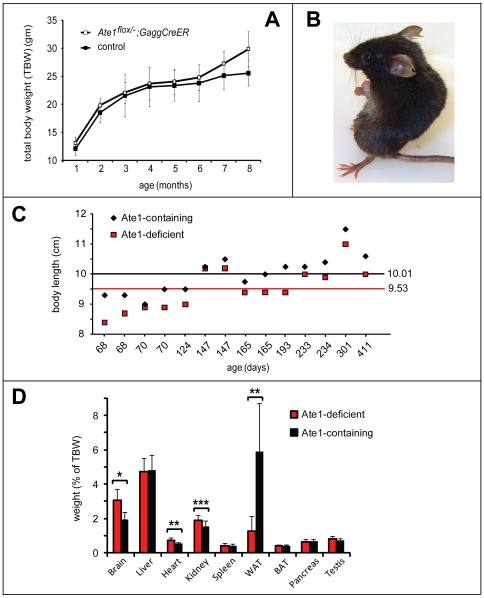
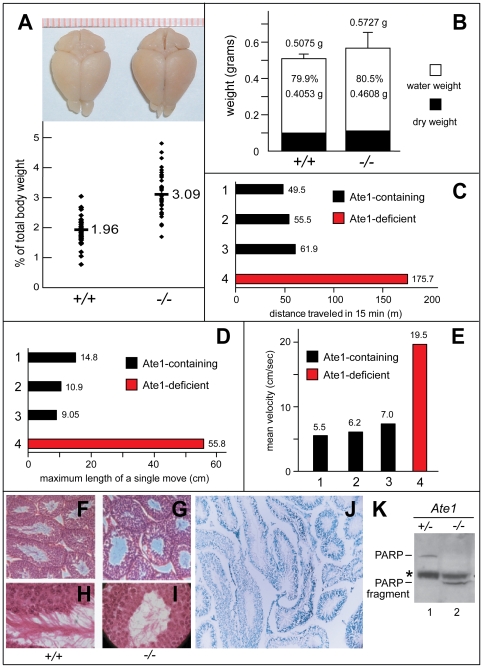
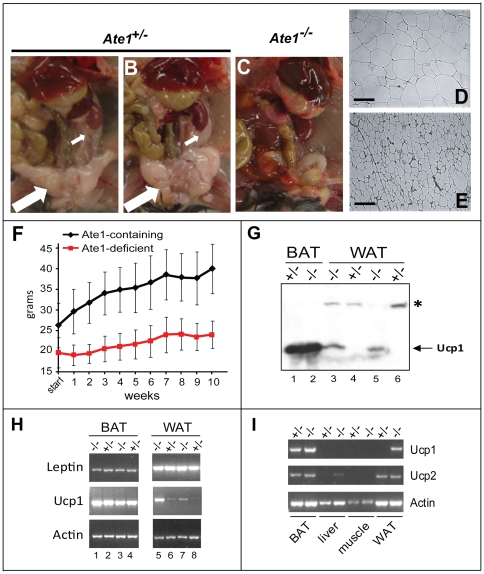
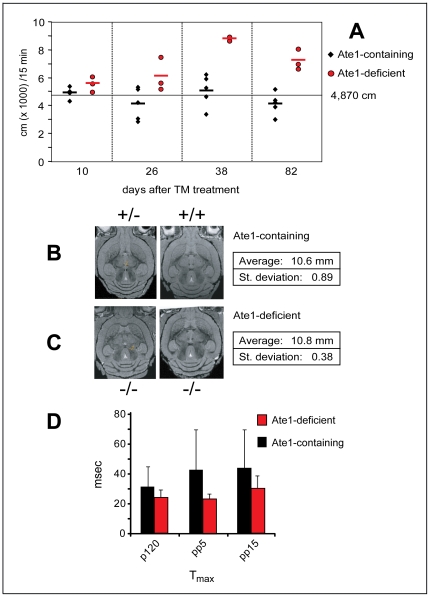
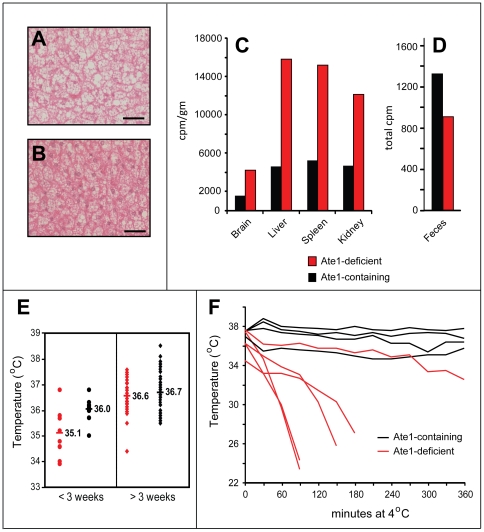
In the N-end rule pathway of protein degradation, the destabilizing activity of N-terminal Asp, Glu or (oxidized) Cys residues requires their conjugation to Arg, which is recognized directly by pathway's ubiquitin ligases. N-terminal arginylation is mediated by the Ate1 arginyltransferase, whose physiological substrates include the Rgs4, Rgs5 and Rgs16 regulators of G proteins. Here, we employed the Cre-lox technique to uncover new physiological functions of N-terminal arginylation in adult mice. We show that postnatal deletion of mouse Ate1 (its unconditional deletion is embryonic lethal) causes a rapid decrease of body weight and results in early death of approximately 15% of Ate1-deficient mice. Despite being hyperphagic, the surviving Ate1-deficient mice contain little visceral fat. They also exhibit an increased metabolic rate, ectopic induction of the Ucp1 uncoupling protein in white fat, and are resistant to diet-induced obesity. In addition, Ate1-deficient mice have enlarged brains, an enhanced startle response, are strikingly hyperkinetic, and are prone to seizures and kyphosis. Ate1-deficient males are also infertile, owing to defects in Ate1(-/-) spermatocytes. The remarkably broad range of specific biological processes that are shown here to be perturbed by the loss of N-terminal arginylation will make possible the dissection of regulatory circuits that involve Ate1 and either its known substrates, such as Rgs4, Rgs5 and Rgs16, or those currently unknown.
在蛋白质降解的 N 端规则途径中,N 端 Asp、Glu 或(氧化)Cys 残基的不稳定活性需要与 Arg 缀合,这直接被途径的泛素连接酶识别。N 端精氨酸化由 Ate1 精氨酸转移酶介导,其生理底物包括 G 蛋白的 Rgs4、Rgs5 和 Rgs16 调节剂。在这里,我们采用 Cre-lox 技术来揭示成年小鼠中 N 端精氨酸化的新生理功能。我们表明,小鼠 Ate1 的出生后缺失(其无条件缺失是胚胎致死的)导致体重迅速下降,并导致约 15%的 Ate1 缺陷小鼠早期死亡。尽管 Ate1 缺陷小鼠摄食过度,但它们几乎没有内脏脂肪。它们还表现出代谢率增加、白色脂肪中 Ucp1 解偶联蛋白的异位诱导,并且对饮食诱导的肥胖具有抗性。此外,Ate1 缺陷小鼠大脑增大,惊吓反应增强,表现出明显的多动,易发生癫痫发作和脊柱后凸。Ate1 缺陷雄性也不育,这是由于 Ate1(-/-)精母细胞缺陷所致。这里显示的 N 端精氨酸化缺失所扰乱的特定生物学过程的范围非常广泛,这将使得可以剖析涉及 Ate1 及其已知底物(如 Rgs4、Rgs5 和 Rgs16)或目前未知底物的调节回路。