Norwegian Directorate of Health, Oslo, Norway.
PLoS One. 2009 Nov 13;4(11):e7828. doi: 10.1371/journal.pone.0007828.
To answer five research questions: Do Norwegian physicians know about the three important aspects of EBM? Do they use EBM methods in their clinical practice? What are their attitudes towards EBM? Has EBM in their opinion changed medical practice during the last 10 years? Do they use EBM based information sources?
Cross sectional survey in 2006.
Norway.
966 doctors who responded to a questionnaire (70% response rate).
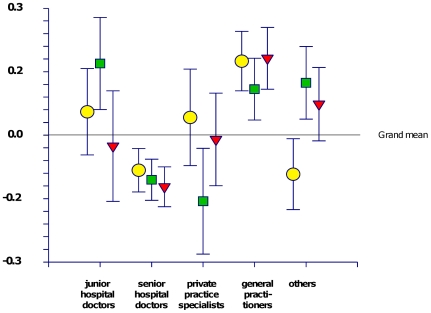
In total 87% of the physicians mentioned the use of randomised clinical trials as a key aspect of EBM, while 53% of them mentioned use of clinical expertise and only 19% patients' values. 40% of the respondents reported that their practice had always been evidence-based. Many respondents experienced difficulties in using EBM principles in their clinical practice because of lack of time and difficulties in searching EBM based literature. 80% agreed that EBM helps physicians towards better practice and 52% that it improves patients' health. As reasons for changes in medical practice 86% of respondents mentioned medical progress, but only 39% EBM.
The results of the study indicate that Norwegian physicians have a limited knowledge of the key aspects of EBM but a positive attitude towards the concept. They had limited experience in the practice of EBM and were rather indifferent to the impact of EBM on medical practice. For solving a patient problem, physicians would rather consult a colleague than searching evidence based resources such as the Cochrane Library.
回答五个研究问题:挪威医生是否了解循证医学的三个重要方面?他们在临床实践中是否使用循证医学方法?他们对循证医学的态度如何?在过去的十年中,他们认为循证医学是否改变了医疗实践?他们是否使用循证医学信息源?
2006 年的横断面调查。
挪威。
966 名回应问卷的医生(70%的回应率)。
总的来说,87%的医生提到随机临床试验是循证医学的关键方面,而 53%的医生提到使用临床专业知识,只有 19%的医生提到患者的价值观。40%的受访者报告说,他们的实践一直是基于证据的。许多受访者在临床实践中应用循证医学原则时遇到困难,因为缺乏时间和难以搜索循证医学文献。80%的人同意循证医学有助于医生更好地实践,52%的人认为它能改善患者的健康。86%的受访者将医疗进步列为医疗实践改变的原因,但只有 39%的人将循证医学列为原因。
研究结果表明,挪威医生对循证医学的关键方面知之甚少,但对循证医学的概念持积极态度。他们在实践循证医学方面经验有限,对循证医学对医疗实践的影响也漠不关心。在解决患者问题时,医生更愿意咨询同事,而不是搜索循证医学资源,如 Cochrane 图书馆。