Neural Development Unit, UCL Institute of Child Health, London WC1N 1EH, UK.
J Pathol. 2010 Jan;220(2):217-30. doi: 10.1002/path.2643.
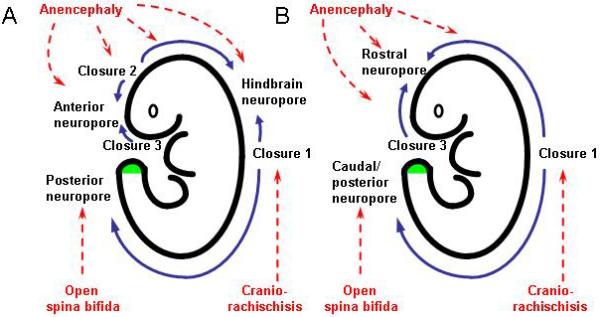
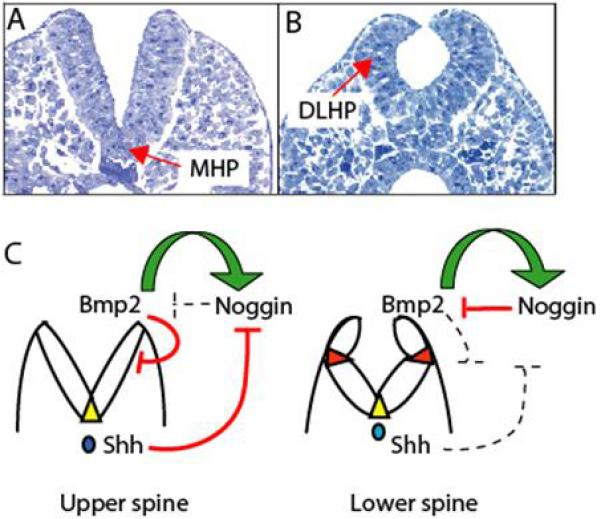
Congenital defects of neural tube closure (neural tube defects; NTDs) are among the commonest and most severe disorders of the fetus and newborn. Disturbance of any of the sequential events of embryonic neurulation produce NTDs, with the phenotype (eg anencephaly, spina bifida) varying depending on the region of neural tube that remains open. While mutation of > 200 genes is known to cause NTDs in mice, the pattern of occurrence in humans suggests a multifactorial polygenic or oligogenic aetiology. This emphasizes the importance of gene-gene and gene-environment interactions in the origins of these defects. A number of cell biological functions are essential for neural tube closure, with defects of the cytoskeleton, cell cycle and molecular regulation of cell viability prominent among the mouse NTD mutants. Many transcriptional regulators and proteins that affect chromatin structure are also required for neural tube closure, although the downstream molecular pathways regulated by these proteins is unknown. Some key signalling pathways for NTDs have been identified: over-activation of sonic hedgehog signalling and loss of function in the planar cell polarity (non-canonical Wnt) pathway are potent causes of NTD, with requirements also for retinoid and inositol signalling. Folic acid supplementation is an effective method for primary prevention of a proportion of NTDs in both humans and mice, although the embryonic mechanism of folate action remains unclear. Folic acid-resistant cases can be prevented by inositol supplementation in mice, raising the possibility that this could lead to an additional preventive strategy for human NTDs in future.
神经管闭合缺陷(神经管缺陷;NTDs)是胎儿和新生儿最常见和最严重的疾病之一。胚胎神经管形成过程中的任何一个连续事件的干扰都会导致 NTDs,其表型(例如无脑畸形、脊柱裂)因神经管未闭合的区域而异。虽然已知 >200 个基因的突变会导致小鼠发生 NTDs,但人类的发病模式表明这是一种多因素遗传或寡基因遗传病因。这强调了基因-基因和基因-环境相互作用在这些缺陷起源中的重要性。许多细胞生物学功能对于神经管闭合是必不可少的,其中细胞骨架、细胞周期和细胞存活的分子调节缺陷在小鼠 NTD 突变体中尤为突出。许多影响染色质结构的转录调节因子和蛋白质也需要用于神经管闭合,尽管这些蛋白质调节的下游分子途径尚不清楚。已经确定了一些 NTD 的关键信号通路: sonic hedgehog 信号的过度激活和平面细胞极性(非经典 Wnt)途径的功能丧失是 NTD 的有力原因,还需要视黄酸和肌醇信号。叶酸补充是预防人类和小鼠部分 NTD 的有效方法,尽管叶酸作用的胚胎机制仍不清楚。在小鼠中补充肌醇可以预防叶酸耐药病例,这增加了未来可能为人类 NTDs 提供额外预防策略的可能性。