Department of Gastroenterology and Hepatology, Erasmus MC, University Medical Center Rotterdam, The Netherlands.
J Cell Mol Med. 2010 Jan;14(1-2):181-97. doi: 10.1111/j.1582-4934.2009.00977.x. Epub 2009 Nov 19.
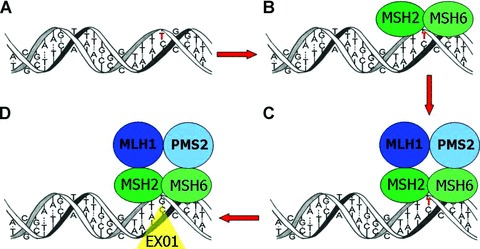
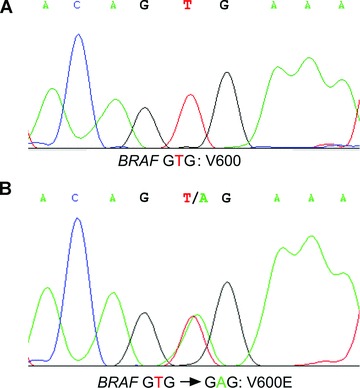
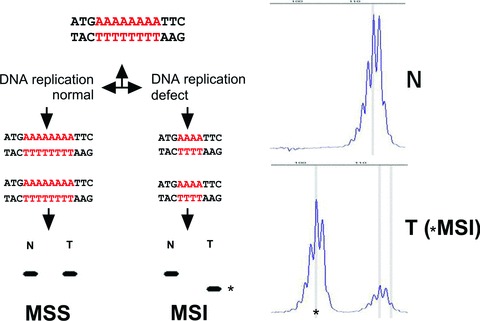
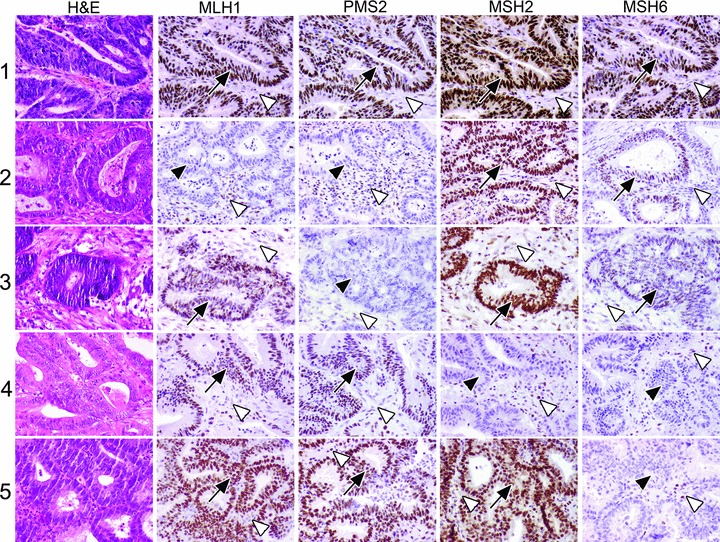
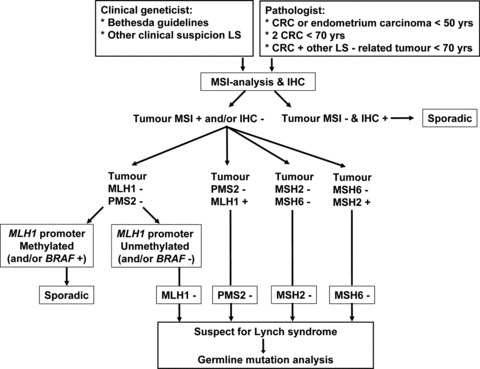
Lynch syndrome (LS) is caused by mutations in mismatch repair genes and is characterized by a high cumulative risk for the development of mainly colorectal carcinoma and endometrial carcinoma. Early detection of LS is important since surveillance can reduce morbidity and mortality. However, the diagnosis of LS is complicated by the absence of a pre-morbid phenotype and germline mutation analysis is expensive and time consuming. Therefore it is standard practice to precede germline mutation analysis by a molecular diagnostic work-up of tumours, guided by clinical and pathological criteria, to select patients for germline mutation analysis. In this review we address these molecular analyses, the central role for the pathologist in the selection of patients for germline diagnostics of LS, as well as the molecular basis of LS.
林奇综合征(LS)是由错配修复基因的突变引起的,其特征是主要结直肠癌和子宫内膜癌的发展累积风险较高。早期发现 LS 很重要,因为监测可以降低发病率和死亡率。然而,LS 的诊断比较复杂,因为缺乏发病前的表型,而种系突变分析既昂贵又耗时。因此,标准的做法是在进行种系突变分析之前,根据临床和病理标准,对肿瘤进行分子诊断,以选择需要进行种系突变分析的患者。在这篇综述中,我们讨论了这些分子分析、病理学家在选择 LS 种系诊断患者方面的核心作用,以及 LS 的分子基础。