Australian National University Emeritus Faculty, ACT, Australia.
Virol J. 2009 Nov 24;6:207. doi: 10.1186/1743-422X-6-207.
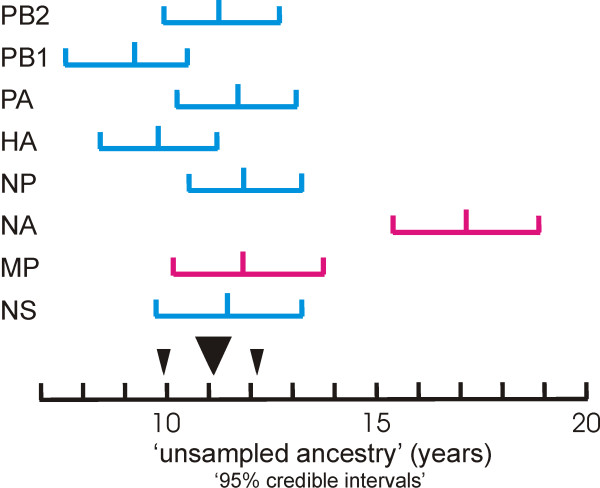
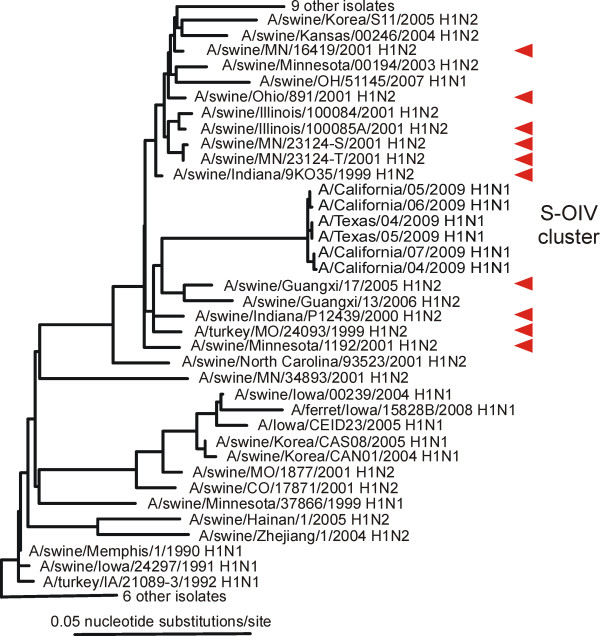
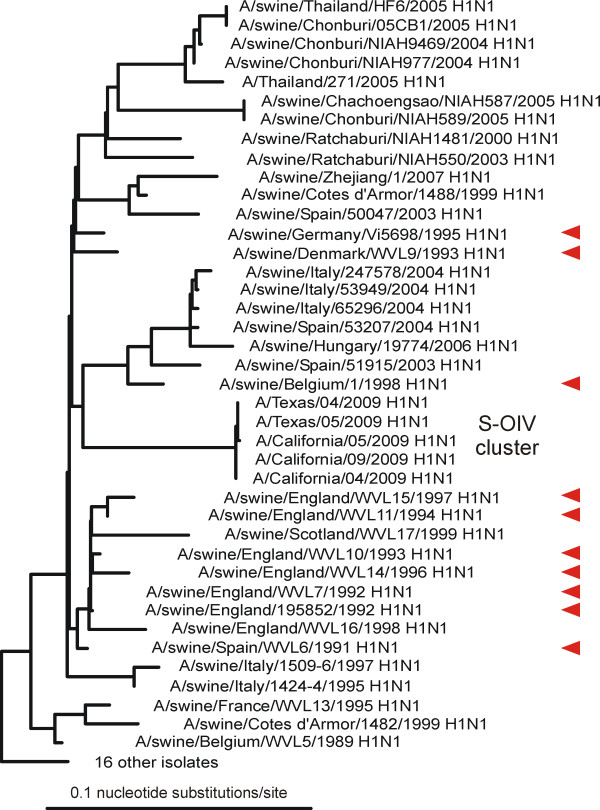
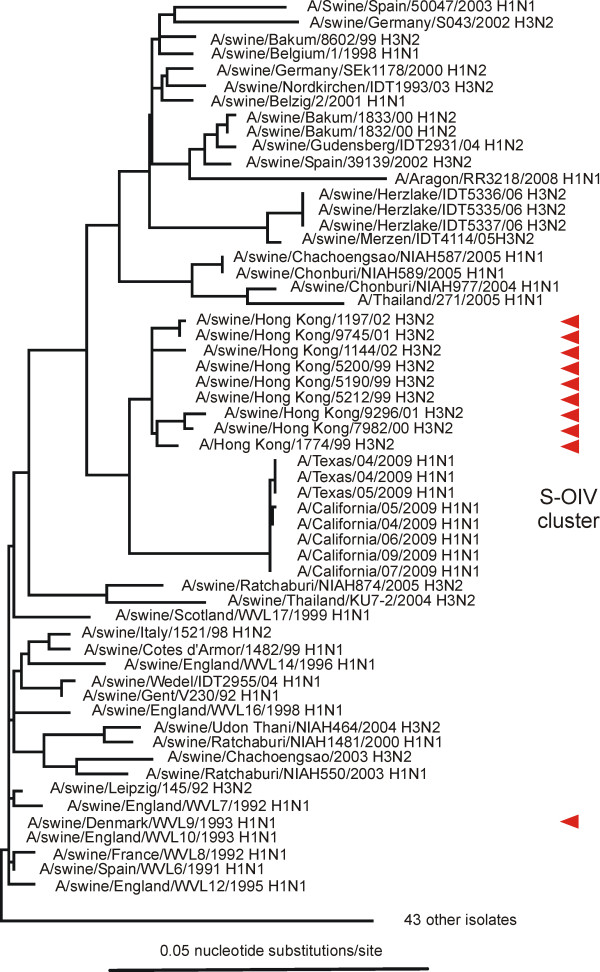
The swine-origin influenza A (H1N1) virus that appeared in 2009 and was first found in human beings in Mexico, is a reassortant with at least three parents. Six of the genes are closest in sequence to those of H1N2 'triple-reassortant' influenza viruses isolated from pigs in North America around 1999-2000. Its other two genes are from different Eurasian 'avian-like' viruses of pigs; the NA gene is closest to H1N1 viruses isolated in Europe in 1991-1993, and the MP gene is closest to H3N2 viruses isolated in Asia in 1999-2000. The sequences of these genes do not directly reveal the immediate source of the virus as the closest were from isolates collected more than a decade before the human pandemic started. The three parents of the virus may have been assembled in one place by natural means, such as by migrating birds, however the consistent link with pig viruses suggests that human activity was involved. We discuss a published suggestion that unsampled pig herds, the intercontinental live pig trade, together with porous quarantine barriers, generated the reassortant. We contrast that suggestion with the possibility that laboratory errors involving the sharing of virus isolates and cultured cells, or perhaps vaccine production, may have been involved. Gene sequences from isolates that bridge the time and phylogenetic gap between the new virus and its parents will distinguish between these possibilities, and we suggest where they should be sought. It is important that the source of the new virus be found if we wish to avoid future pandemics rather than just trying to minimize the consequences after they have emerged. Influenza virus is a very significant zoonotic pathogen. Public confidence in influenza research, and the agribusinesses that are based on influenza's many hosts, has been eroded by several recent events involving the virus. Measures that might restore confidence include establishing a unified international administrative framework coordinating surveillance, research and commercial work with this virus, and maintaining a registry of all influenza isolates.
2009 年出现在墨西哥并首次在人类身上发现的猪源甲型 H1N1 流感病毒是一种重配病毒,至少有三个亲本。其六个基因与 1999 年至 2000 年在北美分离的 H1N2“三重重配”流感病毒的序列最为接近。另外两个基因来自不同的欧亚“禽源”猪病毒;NA 基因与 1991 年至 1993 年在欧洲分离的 H1N1 病毒最为接近,MP 基因与 1999 年至 2000 年在亚洲分离的 H3N2 病毒最为接近。这些基因的序列并不能直接揭示病毒的直接来源,因为最接近的病毒分离株是在人类大流行开始前十多年采集的。病毒的三个亲本可能是通过自然方式(如迁徙鸟类)组装在一起的,但与猪病毒的一致联系表明,人类活动也参与其中。我们讨论了一种已发表的观点,即未采样的猪群、跨洲际活猪贸易以及薄弱的检疫屏障共同产生了这种重配病毒。我们将这种观点与实验室错误(涉及病毒分离株和培养细胞的共享,或者可能是疫苗生产)的可能性进行了对比。来自于在新病毒与其亲本之间的时间和系统发育间隙处的病毒分离株的基因序列将区分这两种可能性,并且我们提出了应在何处寻找这些序列。如果我们希望避免未来的大流行,而不仅仅是在大流行出现后尽力将其影响最小化,那么找到新病毒的来源就非常重要。流感病毒是一种非常重要的人畜共患病病原体。由于最近发生的几起涉及该病毒的事件,公众对流感研究和以流感的许多宿主为基础的农业综合企业的信心已经受到侵蚀。可能恢复信心的措施包括建立一个统一的国际行政框架,协调对该病毒的监测、研究和商业工作,以及维护所有流感分离株的登记册。