Vázquez-Chona Félix R, Lu Lu, Williams Robert W, Geisert Eldon E
Moran Eye Center, University of Utah, Salt Lake City, UT 84132, USA.
Gene Regul Syst Bio. 2008 Feb 14;1:327-48.
The present study predicts and tests genetic networks that modulate gene expression during the retinal wound-healing response.
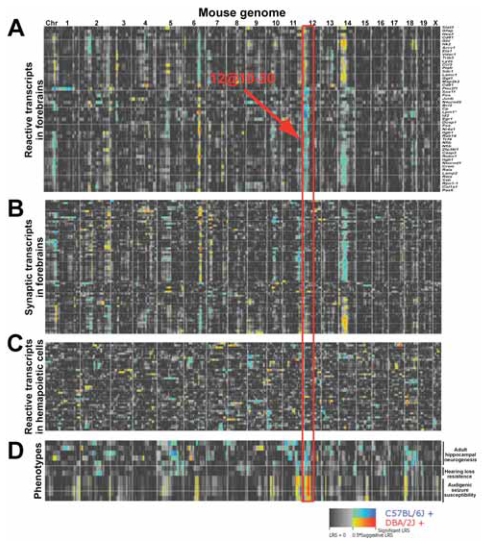
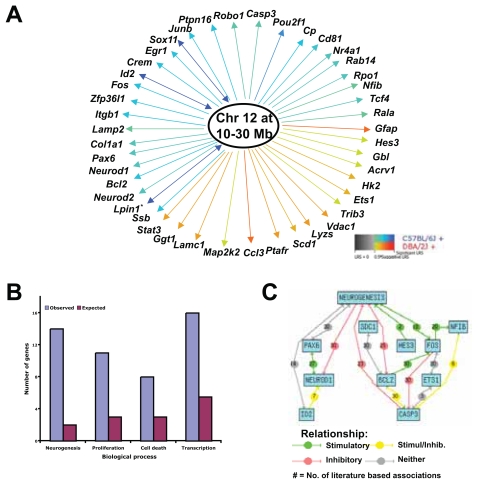
Upstream modulators and target genes were defined using meta-analysis and bioinformatic approaches. Quantitative trait loci (QTLs) for retinal acute phase genes (Vazquez-Chona et al. 2005) were defined using QTL analysis of CNS gene expression (Chesler et al. 2005). Candidate modulators were defined using computational analysis of gene and motif sequences. The effect of candidate genes on wound healing was tested using animal models of gene expression.
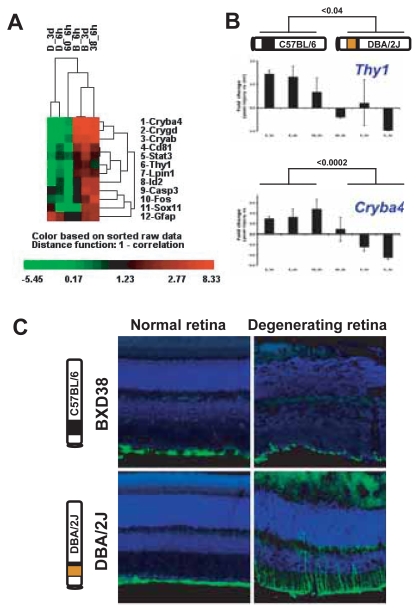
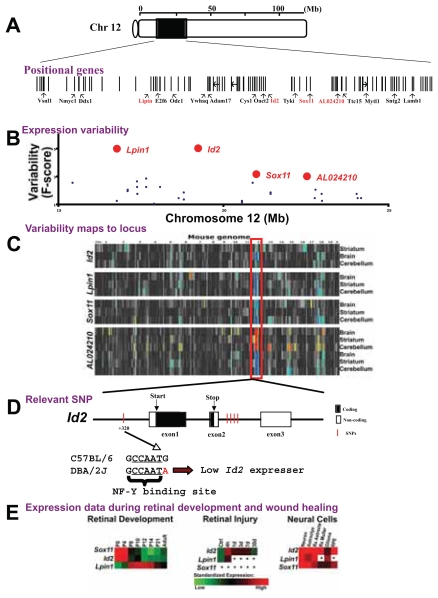
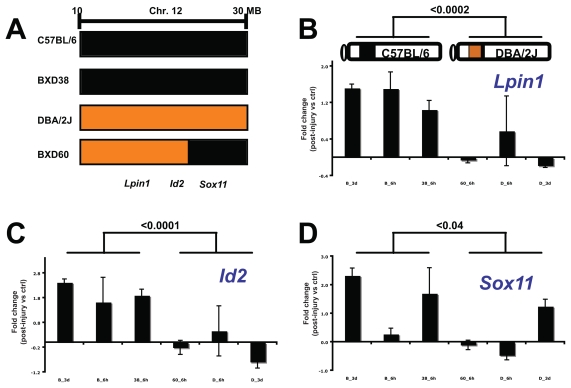
A network of early wound-healing genes is modulated by a locus on chromosome 12. The genetic background of the locus altered the wound-healing response of the retina. The C57BL/6 allele conferred enhanced expression of neuronal marker Thy1 and heat-shock-like crystallins, whereas the DBA/2J allele correlated with greater levels of the classic marker of retinal stress, glial fibrillary acidic protein (GFAP). Id2 and Lpin1 are candidate upstream modulators as they strongly correlated with the segregation of DBA/2J and C57BL/6 alleles, and their dosage levels correlated with the enhanced expression of survival genes (Thy1 and crystallin genes).
We defined a genetic network associated with the retinal acute injury response. Using genetic linkage analysis of natural transcript variation, we identified regulatory loci and can didate modulators that control transcript levels of acute phase genes. Our results support the convergence of gene expression profiling, QTL analysis, and bioinformatics as a rational approach to discover molecular pathways controlling retinal wound healing.
本研究预测并测试在视网膜伤口愈合反应过程中调节基因表达的遗传网络。
使用荟萃分析和生物信息学方法定义上游调节因子和靶基因。通过对中枢神经系统基因表达进行数量性状基因座(QTL)分析(Chesler等人,2005年)来定义视网膜急性期基因的QTL(Vazquez-Chona等人,2005年)。使用基因和基序序列的计算分析来定义候选调节因子。使用基因表达动物模型测试候选基因对伤口愈合的影响。
一个早期伤口愈合基因网络受12号染色体上一个位点的调节。该位点的遗传背景改变了视网膜的伤口愈合反应。C57BL/6等位基因使神经元标志物Thy1和热休克样晶状体蛋白的表达增强,而DBA/2J等位基因与视网膜应激经典标志物胶质纤维酸性蛋白(GFAP)的更高水平相关。Id2和Lpin1是候选上游调节因子,因为它们与DBA/2J和C57BL/6等位基因的分离密切相关,并且它们的剂量水平与存活基因(Thy1和晶状体蛋白基因)的增强表达相关。
我们定义了一个与视网膜急性损伤反应相关的遗传网络。通过对自然转录本变异进行遗传连锁分析,我们鉴定了控制急性期基因转录水平的调控位点和候选调节因子。我们的结果支持将基因表达谱分析、QTL分析和生物信息学相结合,作为发现控制视网膜伤口愈合分子途径的合理方法。