Angelaki Dora E, Klier Eliana M, Snyder Lawrence H
Department of Neurobiology, Washington University School of Medicine, St. Louis, MO 63110, USA.
Neuron. 2009 Nov 25;64(4):448-61. doi: 10.1016/j.neuron.2009.11.010.
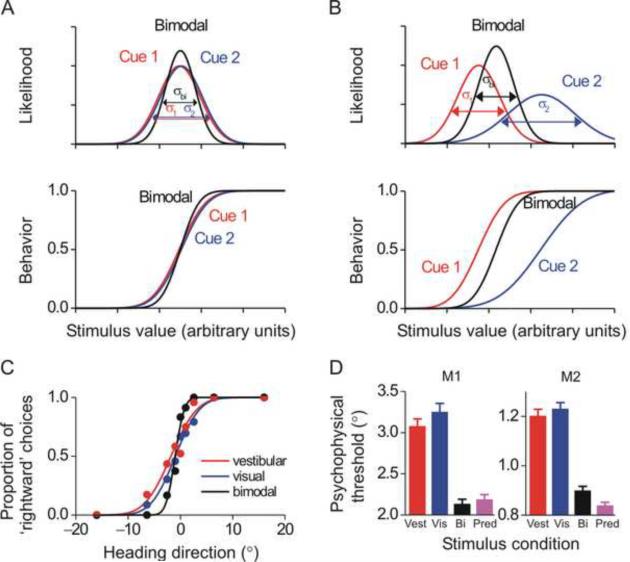
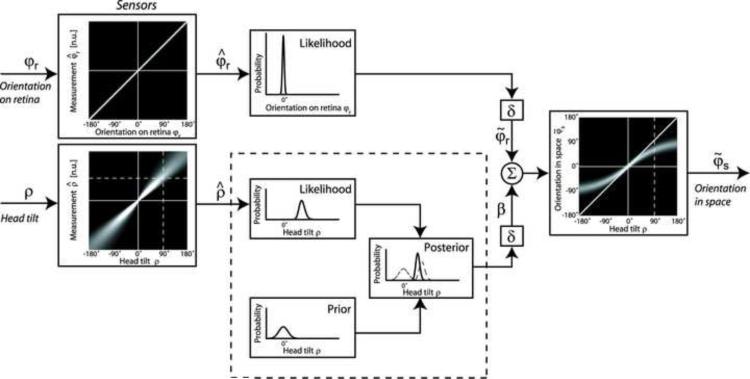
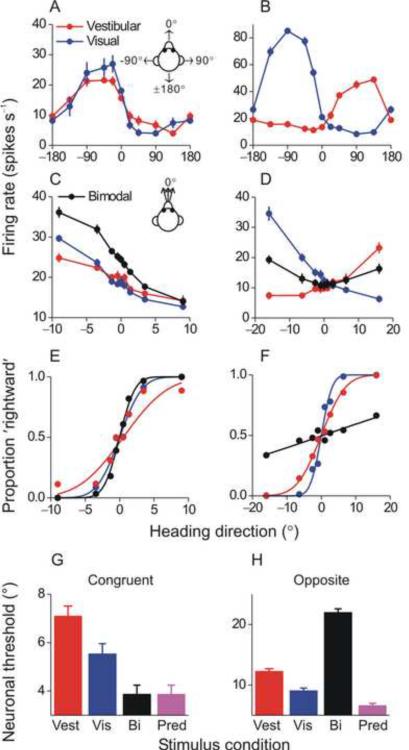
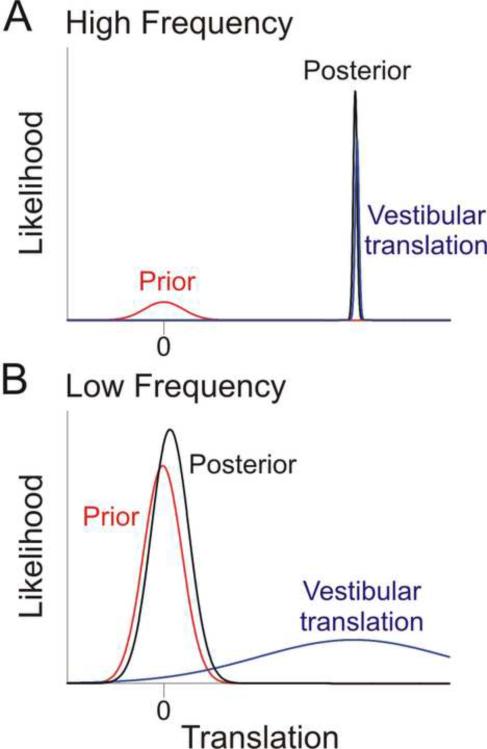
The vestibular system helps maintain equilibrium and clear vision through reflexes, but it also contributes to spatial perception. In recent years, research in the vestibular field has expanded to higher-level processing involving the cortex. Vestibular contributions to spatial cognition have been difficult to study because the circuits involved are inherently multisensory. Computational methods and the application of Bayes theorem are used to form hypotheses about how information from different sensory modalities is combined together with expectations based on past experience in order to obtain optimal estimates of cognitive variables like current spatial orientation. To test these hypotheses, neuronal populations are being recorded during active tasks in which subjects make decisions based on vestibular and visual or somatosensory information. This review highlights what is currently known about the role of vestibular information in these processes, the computations necessary to obtain the appropriate signals, and the benefits that have emerged thus far.
前庭系统通过反射帮助维持平衡和清晰的视觉,但它也有助于空间感知。近年来,前庭领域的研究已扩展到涉及皮层的高级处理。前庭对空间认知的贡献一直难以研究,因为所涉及的神经回路本质上是多感官的。计算方法和贝叶斯定理的应用被用于形成关于不同感觉模态的信息如何与基于过去经验的期望相结合,以便获得诸如当前空间方位等认知变量的最佳估计的假设。为了检验这些假设,在主动任务中记录神经元群体,在这些任务中,受试者根据前庭、视觉或体感信息做出决策。本综述强调了目前已知的前庭信息在这些过程中的作用、获得适当信号所需的计算以及迄今为止所产生的益处。