Centro de Estudios Científicos, Valdivia, Chile.
Curr Genomics. 2009 Jun;10(4):259-68. doi: 10.2174/138920209788488508.
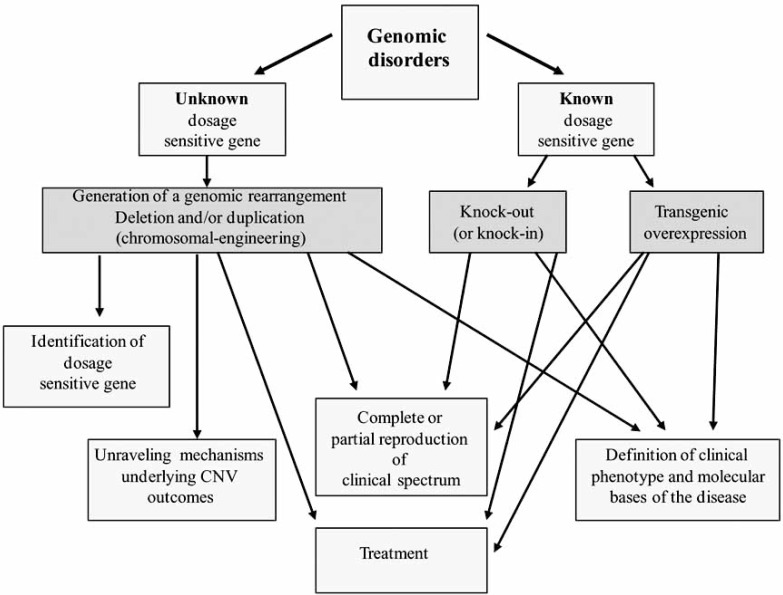
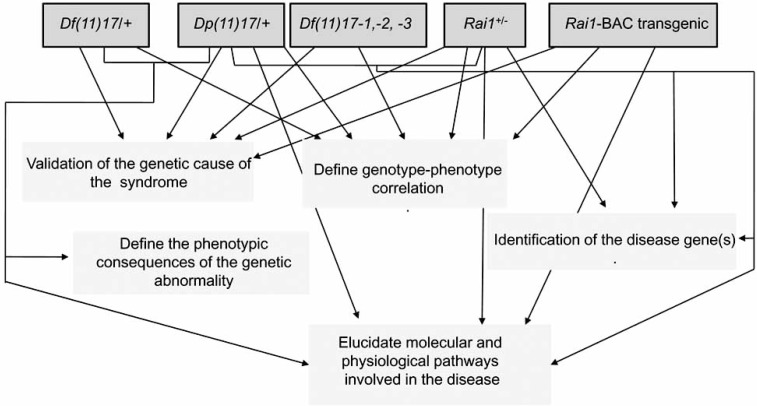
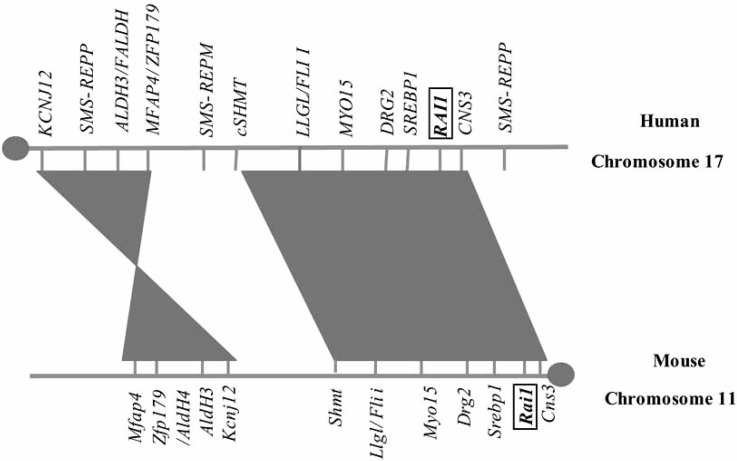
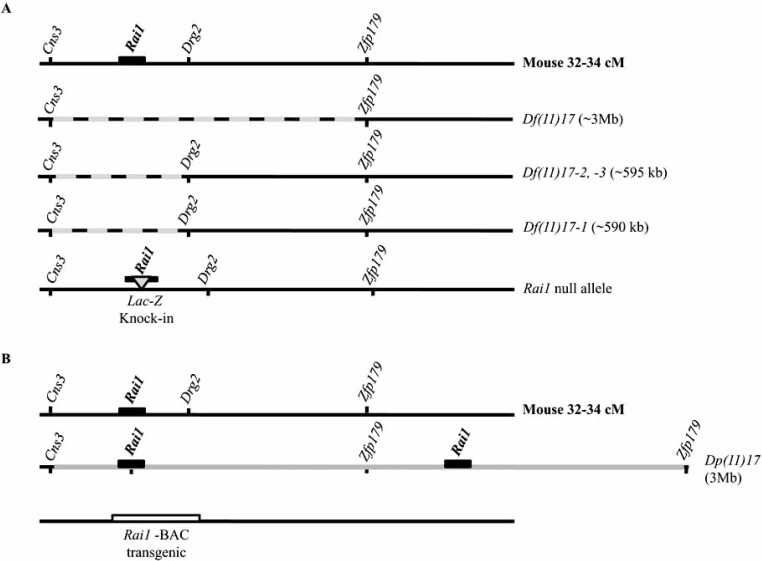
Each human's genome is distinguished by extra and missing DNA that can be "benign" or powerfully impact everything from development to disease. In the case of genomic disorders DNA rearrangements, such as deletions or duplications, correlate with a clinical specific phenotype. The clinical presentations of genomic disorders were thought to result from altered gene copy number of physically linked dosage sensitive genes. Genomic disorders are frequent diseases (~1 per 1,000 births). Smith-Magenis syndrome (SMS) and Potocki-Lupski syndrome (PTLS) are genomic disorders, associated with a deletion and a duplication, of 3.7 Mb respectively, within chromosome 17 band p11.2. This region includes 23 genes. Both syndromes have complex and distinctive phenotypes including multiple congenital and neurobehavioral abnormalities. Human chromosome 17p11.2 is syntenic to the 32-34 cM region of murine chromosome 11. The number and order of the genes are highly conserved. In this review, we will exemplify how genomic disorders can be modeled in mice and the advantages that such models can give in the study of genomic disorders in particular and gene copy number variation (CNV) in general. The contributions of the SMS and PTLS animal models in several aspects ranging from more specific ones, as the definition of the clinical aspects of the human clinical spectrum, the identification of dosage sensitive genes related to the human syndromes, to the more general contributions as the definition of genetic locus impacting obesity and behavior and the elucidation of general mechanisms related to the pathogenesis of gene CNV are discussed.
每个人的基因组都有额外和缺失的 DNA,这些 DNA 可以是“良性的”,也可以对从发育到疾病的一切产生强大影响。在基因组疾病的情况下,DNA 重排,如缺失或重复,与特定的临床表型相关。基因组疾病的临床表现被认为是由于物理连锁的剂量敏感基因的拷贝数改变所致。基因组疾病是常见疾病(~每 1000 例出生中有 1 例)。Smith-Magenis 综合征(SMS)和 Potocki-Lupski 综合征(PTLS)是基因组疾病,分别与 17 号染色体 p11.2 带的 3.7Mb 缺失和重复相关。该区域包括 23 个基因。这两种综合征都具有复杂而独特的表型,包括多种先天性和神经行为异常。人类 17 号染色体 p11.2 与小鼠 11 号染色体 32-34cM 区域同源。基因的数量和顺序高度保守。在这篇综述中,我们将举例说明如何在小鼠中模拟基因组疾病,以及此类模型在研究基因组疾病特别是基因拷贝数变异(CNV)方面的优势。SMS 和 PTLS 动物模型在从更具体的方面(如定义人类临床谱的临床方面,鉴定与人类综合征相关的剂量敏感基因)到更一般的方面(如定义影响肥胖和行为的遗传基因座以及阐明与基因 CNV 发病机制相关的一般机制)的多个方面都有贡献。