Institute of Zoology, Slovak Academy of Sciences, Dúbravská cesta 9, 84506 Bratislava, Slovakia.
Peptides. 2010 Mar;31(3):429-41. doi: 10.1016/j.peptides.2009.11.022. Epub 2009 Nov 29.
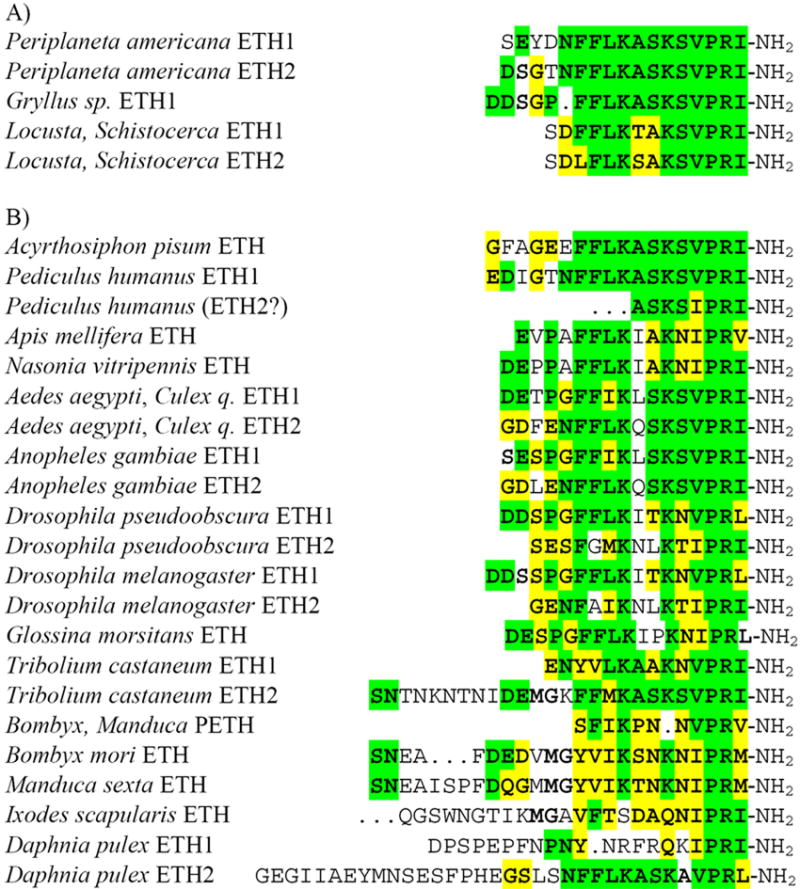
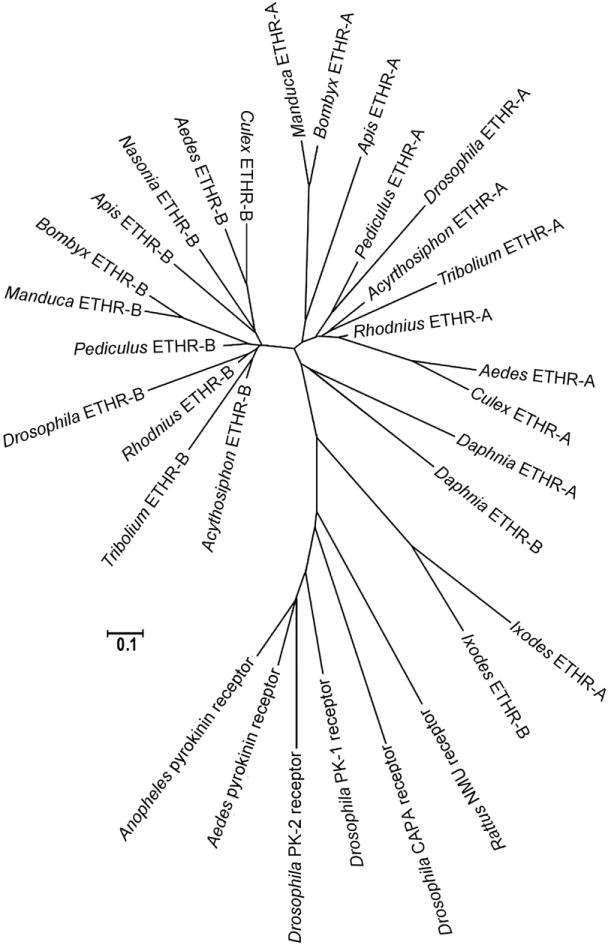
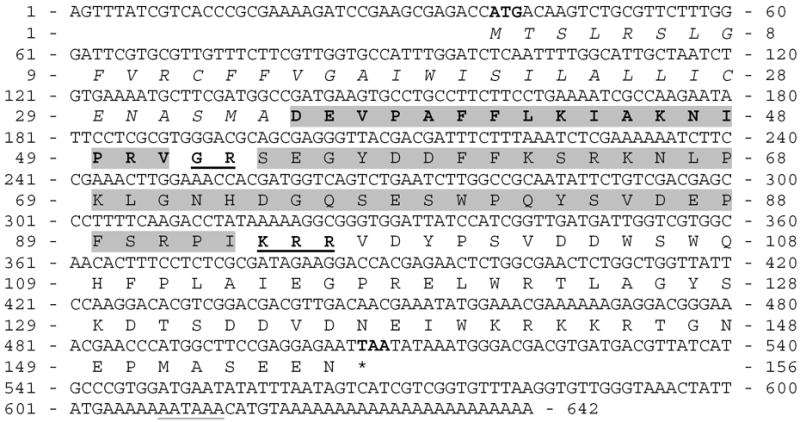
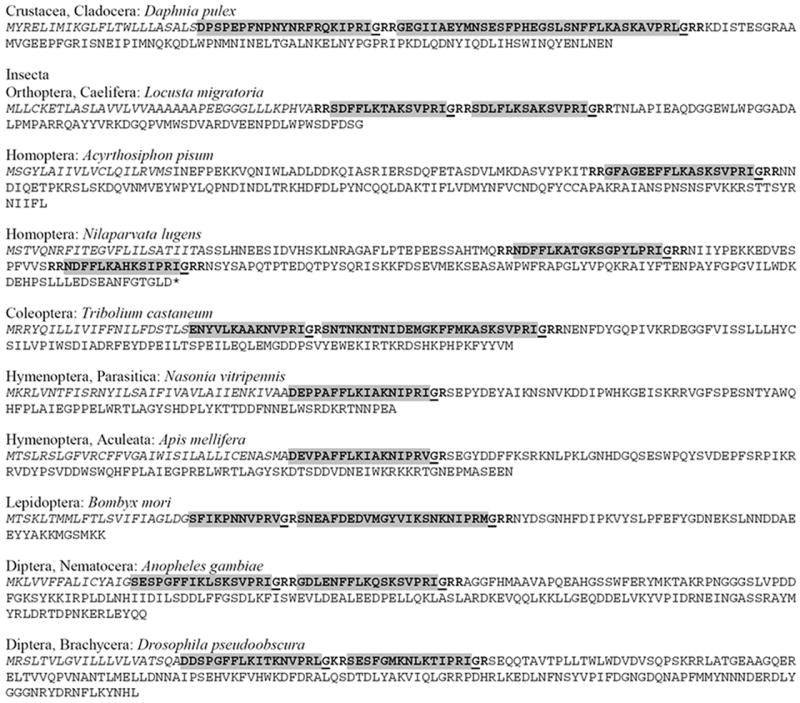
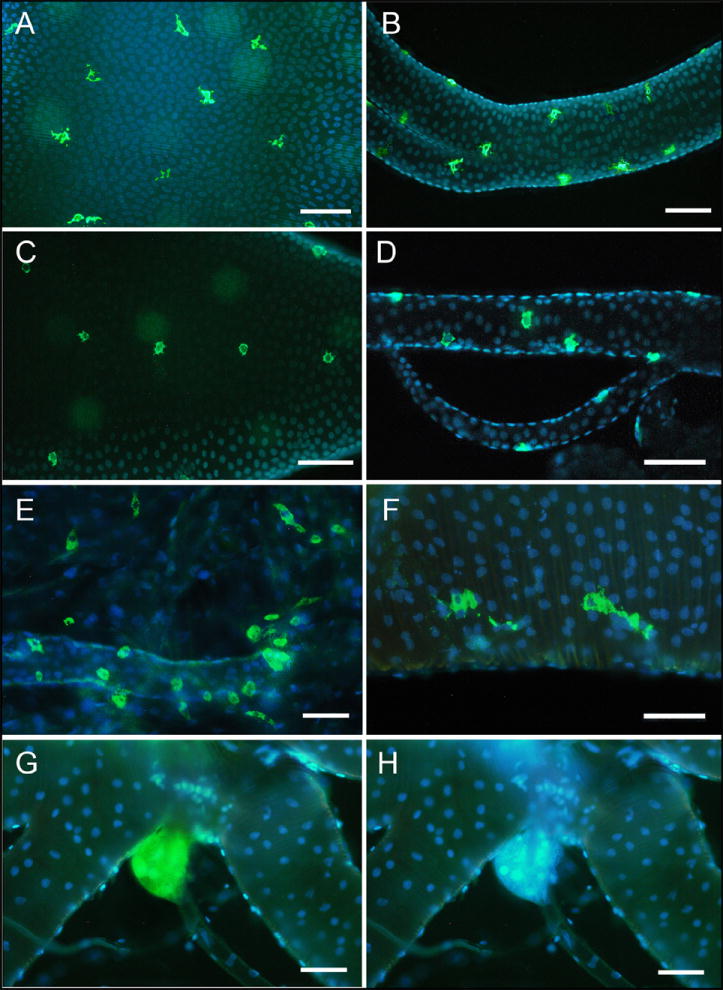
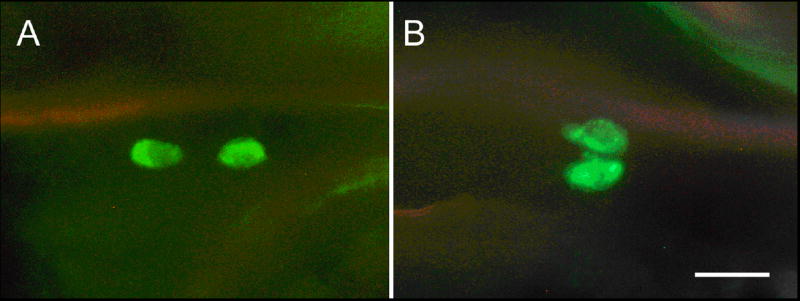
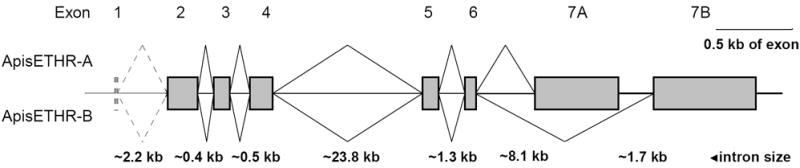
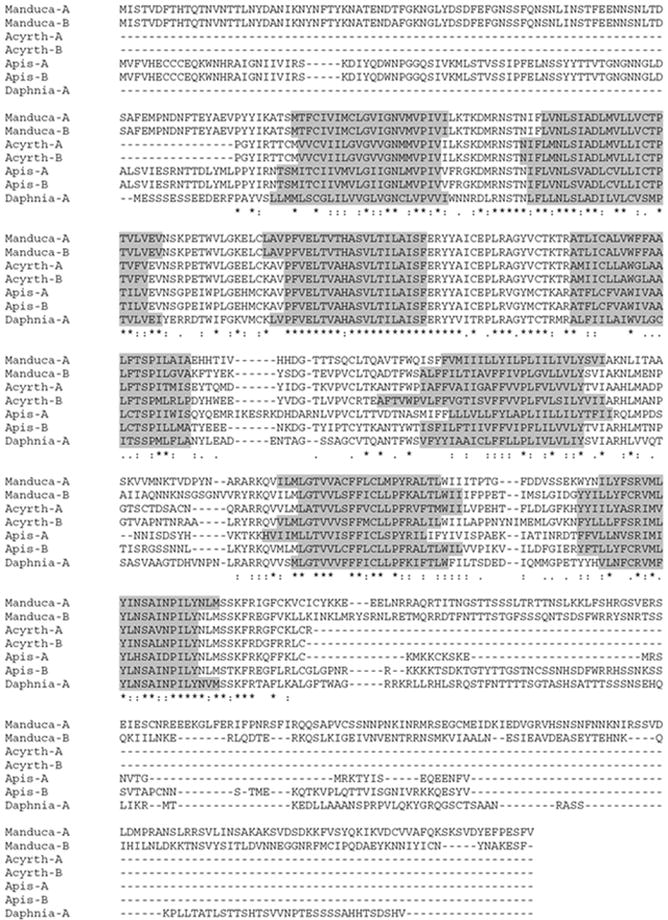
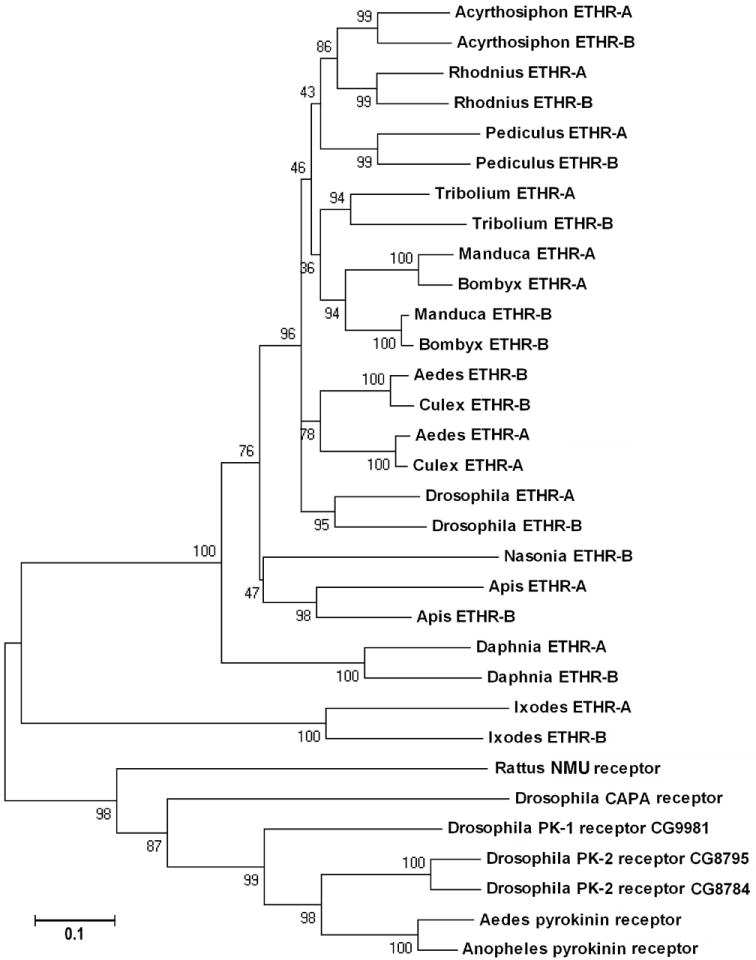
Ecdysis triggering hormones (ETHs) from endocrine Inka cells initiate the ecdysis sequence through action on central neurons expressing ETH receptors (ETHR) in model moth and dipteran species. We used various biochemical, molecular and BLAST search techniques to detect these signaling molecules in representatives of diverse arthropods. Using peptide isolation from tracheal extracts, cDNA cloning or homology searches, we identified ETHs in a variety of hemimetabolous and holometabolous insects. Most insects produce two related ETHs, but only a single active peptide was isolated from the cricket and one peptide is encoded by the eth gene of the honeybee, parasitic wasp and aphid. Immunohistochemical staining with antiserum to Manduca PETH revealed Inka cells on tracheal surface of diverse insects. In spite of conserved ETH sequences, comparison of natural and the ETH-induced ecdysis sequence in the honeybee and beetle revealed considerable species-specific differences in pre-ecdysis and ecdysis behaviors. DNA sequences coding for putative ETHR were deduced from available genomes of several hemimetabolous and holometabolous insects. In all insects examined, the ethr gene encodes two subtypes of the receptor (ETHR-A and ETHR-B). Phylogenetic analysis showed that these receptors fall into a family of closely related GPCRs. We report for the first time the presence of putative ETHs and ETHRs in genomes of other arthropods, including the tick (Arachnida) and water flea (Crustacea). The possible source of ETH in ticks was detected in paired cells located in all pedal segments. Our results provide further evidence of structural and functional conservation of ETH-ETHR signaling.
蜕皮触发激素 (ETHs) 由内分泌 Inka 细胞分泌,通过作用于表达 ETH 受体 (ETHR) 的中枢神经元启动蜕皮序列,这在模式鳞翅目和双翅目昆虫中得到了证实。我们使用各种生化、分子和 BLAST 搜索技术,在不同节肢动物代表中检测这些信号分子。通过从气管提取物中分离肽、cDNA 克隆或同源搜索,我们在各种半变态和全变态昆虫中鉴定出了 ETHs。大多数昆虫产生两种相关的 ETH,但从蟋蟀中仅分离出一种活性肽,并且在蜜蜂、寄生蜂和蚜虫的 eth 基因中编码一种肽。用抗 Manduca PETH 的抗血清进行免疫组织化学染色显示,各种昆虫的气管表面都有 Inka 细胞。尽管 ETH 序列保守,但比较蜜蜂和甲虫中天然和 ETH 诱导的蜕皮序列发现,蜕皮前和蜕皮行为存在相当大的种间差异。从几种半变态和全变态昆虫的现有基因组中推导出了编码推定 ETHR 的 DNA 序列。在所检查的所有昆虫中,ethr 基因编码两种受体亚型 (ETHR-A 和 ETHR-B)。系统发育分析表明,这些受体属于密切相关的 GPCR 家族。我们首次报道了其他节肢动物(包括蜱虫 [蛛形纲] 和水蚤 [甲壳纲])基因组中推定的 ETH 和 ETHR 的存在。在所有足段都有配对细胞的蜱虫中检测到了 ETH 的可能来源。我们的研究结果进一步证明了 ETH-ETHR 信号的结构和功能保守性。