Chemisches und Veterinäruntersuchungsamt (CVUA) Karlsruhe, Karlsruhe, Germany.
PLoS One. 2009 Dec 2;4(12):e8127. doi: 10.1371/journal.pone.0008127.
Phthalates are synthetic compounds with a widespread field of applications. For example, they are used as plasticizers in PVC plastics and food packaging, or are added to personal care products. Diethyl phthalate (DEP) may be used to denature alcohol, e.g., for cosmetic purposes. Public health concerns of phthalates include carcinogenic, teratogenic, hepatotoxic and endocrine effects. The aim of this study was to develop and validate a method for determining phthalates in alcohol samples and to provide a risk assessment for consumers of such products.
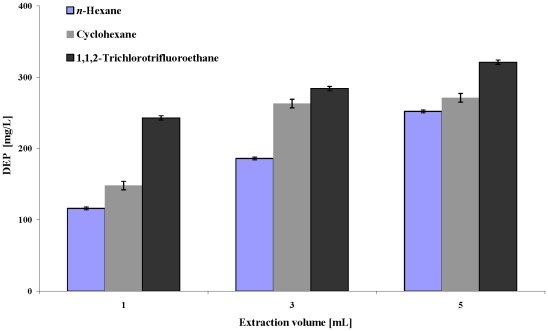
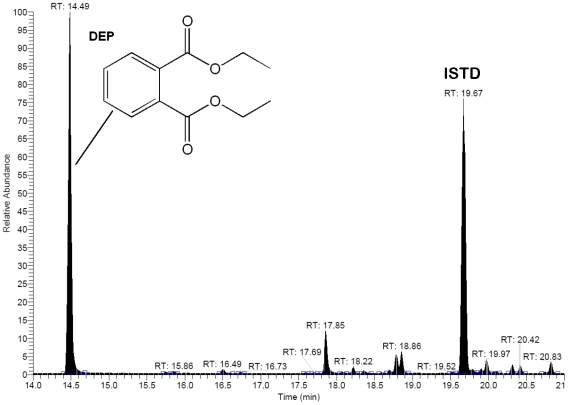
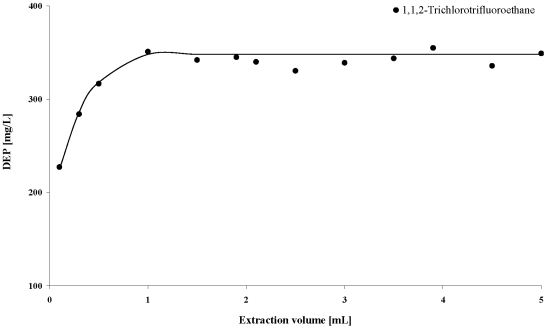
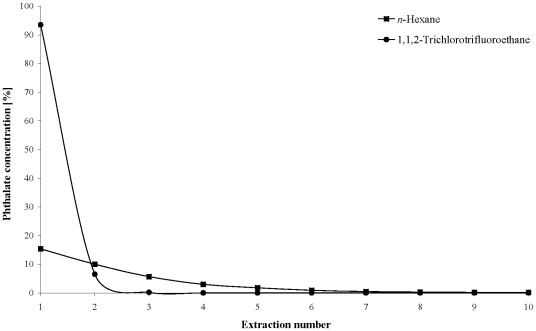
METHODOLOGY/PRINCIPAL FINDINGS: A liquid-liquid extraction procedure was optimized by varying the following parameters: type of extraction solvent (cyclohexane, n-hexane, 1,1,2-trichlorotrifluoroethane), the ratio extraction solvent/sample volume (1 ratio 1 to 50 ratio 1) and the number of extraction repetitions (1-10). The best extraction yield (99.9%) was achieved with the solvent 1,1,2-trichlorotrifluoroethane, an extraction solvent volume/sample volume ratio of 10 ratio 1 and a double extraction. For quantification, gas chromatography/mass spectrometry with deuterated internal standards was used. The investigated samples were alcoholic beverages and unrecorded alcohol products from different countries (n = 257). Two unrecorded alcohol samples from Lithuania contained diethyl phthalate in concentrations of 608 mg/L and 210 mg/L.
CONCLUSIONS/SIGNIFICANCE: The consumption of the phthalate-positive unrecorded alcohols would exceed tolerable daily intakes as derived from animal experiments. Both positive samples were labelled as cosmetic alcohol, but had clearly been offered for human consumption. DEP seems to be unsuitable as a denaturing agent as it has no effect on the organoleptic properties of ethanol. In light of our results that DEP might be consumed by humans in unrecorded alcohols, the prohibition of its use as a denaturing agent should be considered.
邻苯二甲酸酯是一种用途广泛的合成化合物。例如,它们被用作聚氯乙烯塑料和食品包装中的增塑剂,或添加到个人护理产品中。邻苯二甲酸二乙酯 (DEP) 可能被用于变性酒精,例如用于美容目的。邻苯二甲酸酯对公共健康的影响包括致癌、致畸、肝毒性和内分泌干扰等。本研究旨在开发和验证一种用于测定酒精样品中邻苯二甲酸酯的方法,并为使用此类产品的消费者提供风险评估。
方法/主要发现:通过改变以下参数优化了液-液萃取程序:萃取溶剂的类型(环己烷、正己烷、1,1,2-三氯三氟乙烷)、萃取溶剂/样品体积比(1 比 1 至 50 比 1)和萃取重复次数(1-10 次)。使用溶剂 1,1,2-三氯三氟乙烷、萃取溶剂/样品体积比为 10 比 1 和两次萃取可获得最佳萃取产率(99.9%)。用于定量分析的方法是使用氘代内标物的气相色谱/质谱法。研究的样品为来自不同国家的酒精饮料和未记录的酒精产品(n = 257)。来自立陶宛的两个未记录的酒精样品中含有浓度为 608 mg/L 和 210 mg/L 的邻苯二甲酸二乙酯。
结论/意义:消费含有邻苯二甲酸酯的未记录酒精将超过动物实验得出的可耐受每日摄入量。两个阳性样品都被标记为化妆品酒精,但显然是供人类消费的。DEP 似乎不适合用作变性剂,因为它对乙醇的感官特性没有影响。鉴于我们的研究结果表明,DEP 可能会被人类在未记录的酒精中消费,应考虑禁止将其用作变性剂。