Department of Molecular Microbiology, Groningen Biomolecular Sciences and Biotechnology Institute, University of Groningen, Kerklaan 30, 9751 NN Haren, The Netherlands.
Extremophiles. 2010 Jan;14(1):87-98. doi: 10.1007/s00792-009-0290-y. Epub 2009 Dec 2.
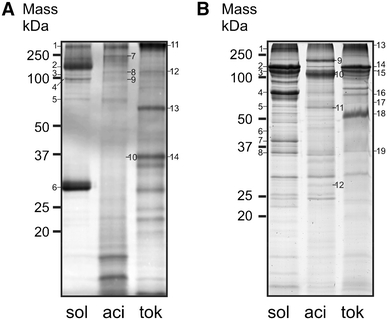
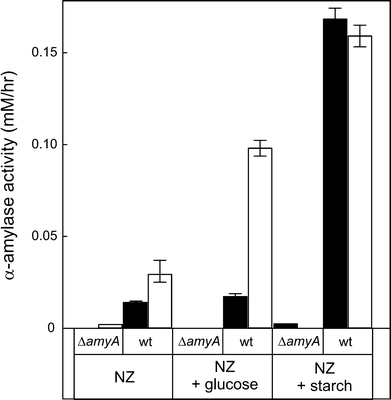
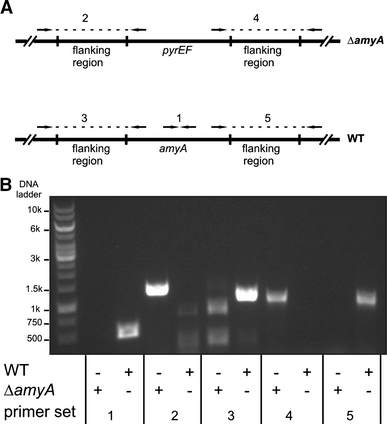
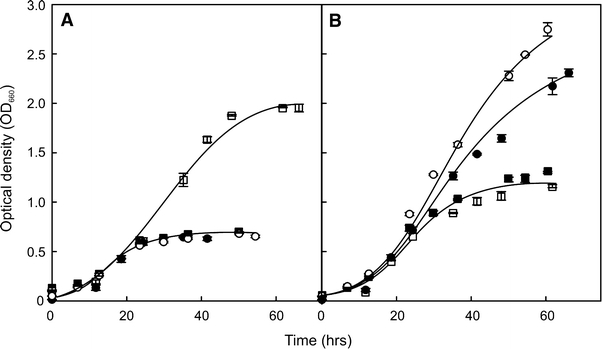
Although a large number of potentially secreted proteins can be predicted on the basis of genomic distribution of signal sequence-bearing proteins, protein secretion in Archaea has barely been studied. A proteomic inventory and comparison of the growth medium proteins in three hyperthermoacidophiles, i.e., Sulfolobus solfataricus, S. acidocaldarius and S. tokodaii, indicates that only few proteins are freely secreted into the growth medium and that the majority originates from cell envelope bound forms. In S. acidocaldarius both cell-associated and secreted alpha-amylase activities are detected. Inactivation of the amyA gene resulted in a complete loss of activity, suggesting that the same protein is responsible for the a-amylase activity at both locations. It is concluded that protein secretion in Sulfolobus is a limited process, and it is suggested that the S-layer may act as a barrier for the free diffusion of folded proteins into the medium.
尽管可以根据信号序列携带蛋白的基因组分布预测大量潜在分泌蛋白,但古菌中的蛋白分泌机制研究甚少。对三种嗜热嗜酸古菌(即:Sulfolobus solfataricus、S. acidocaldarius 和 S. tokodaii)的生长培养基蛋白进行的蛋白质组学编目和比较表明,只有少数蛋白可自由分泌到培养基中,且大部分蛋白来源于细胞包膜结合形式。在 S. acidocaldarius 中检测到细胞相关和分泌的α-淀粉酶活性。amyA 基因失活导致活性完全丧失,表明相同的蛋白负责两个部位的α-淀粉酶活性。结论是 Sulfolobus 的蛋白分泌是一个有限的过程,并提出 S-层可能作为折叠蛋白自由扩散到培养基中的障碍。