Cerchietti Leandro C, Lopes Eloisi C, Yang Shao Ning, Hatzi Katerina, Bunting Karen L, Tsikitas Lucas A, Mallik Alka, Robles Ana I, Walling Jennifer, Varticovski Lyuba, Shaknovich Rita, Bhalla Kapil N, Chiosis Gabriela, Melnick Ari
Division of Hematology and Oncology, Weill Cornell Medical College of Cornell University, New York, New York, USA.
Nat Med. 2009 Dec;15(12):1369-76. doi: 10.1038/nm.2059. Epub 2009 Nov 22.
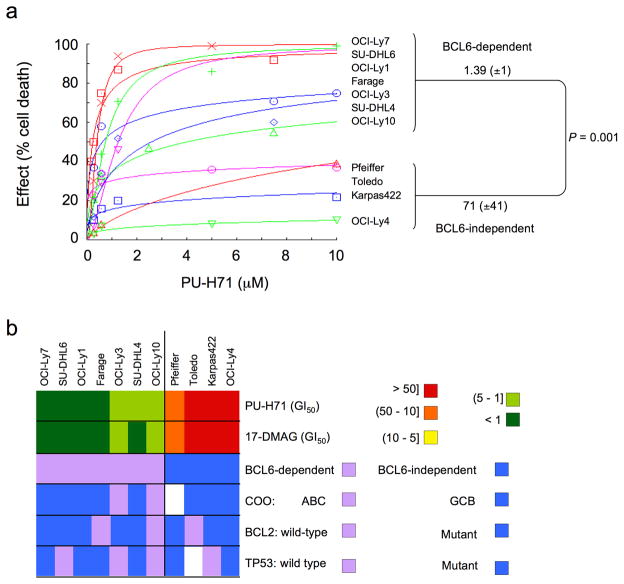
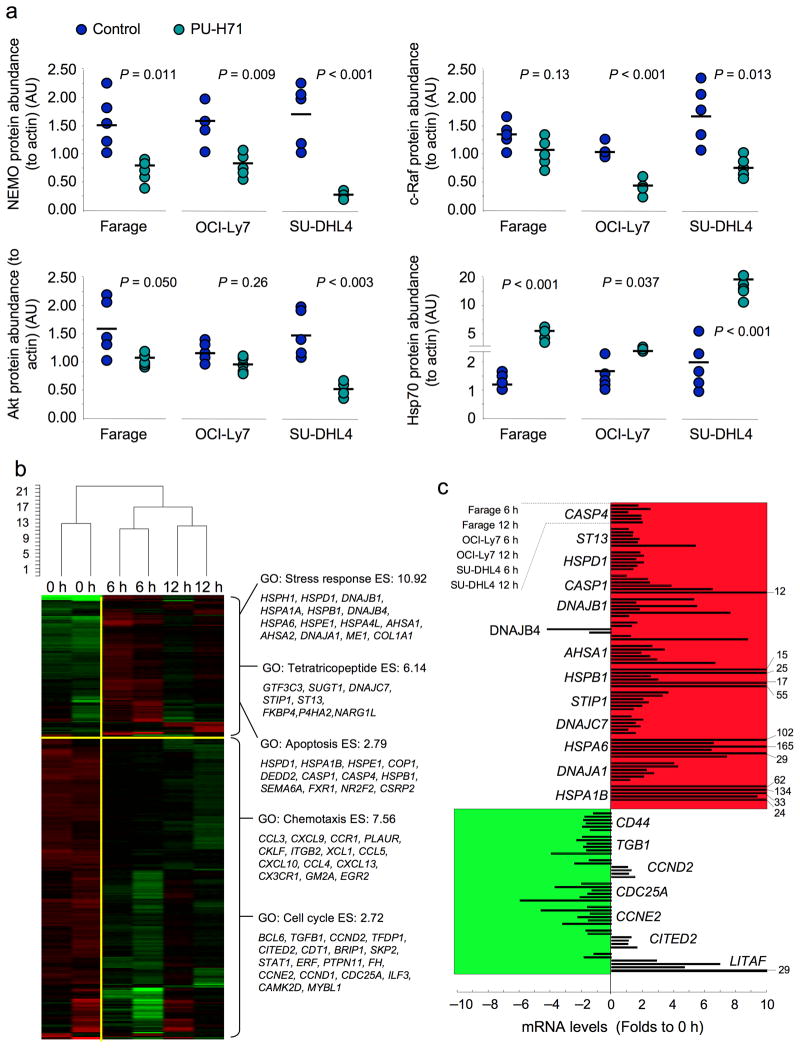
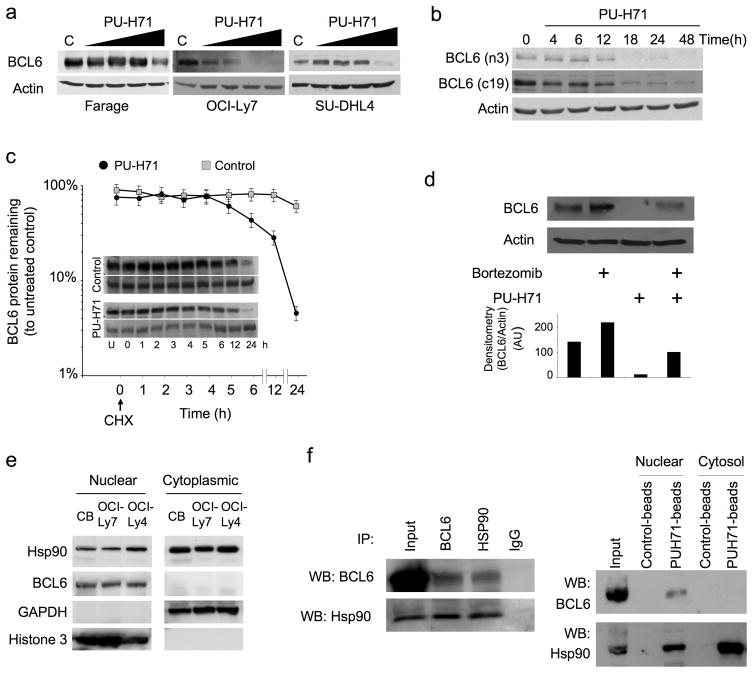
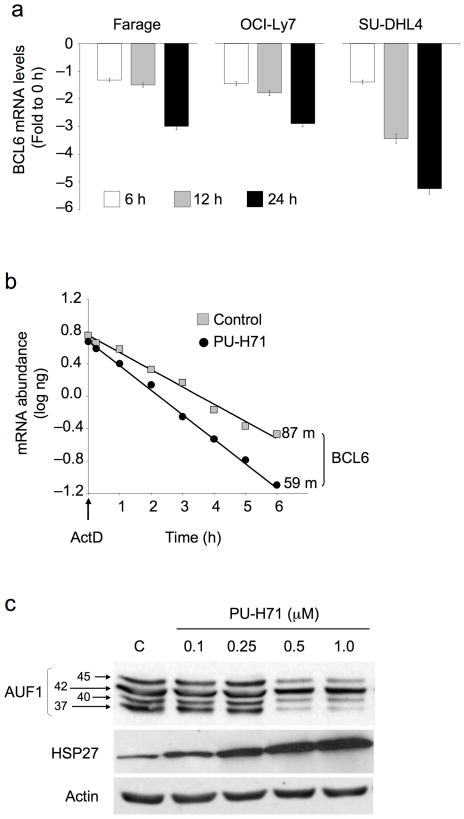
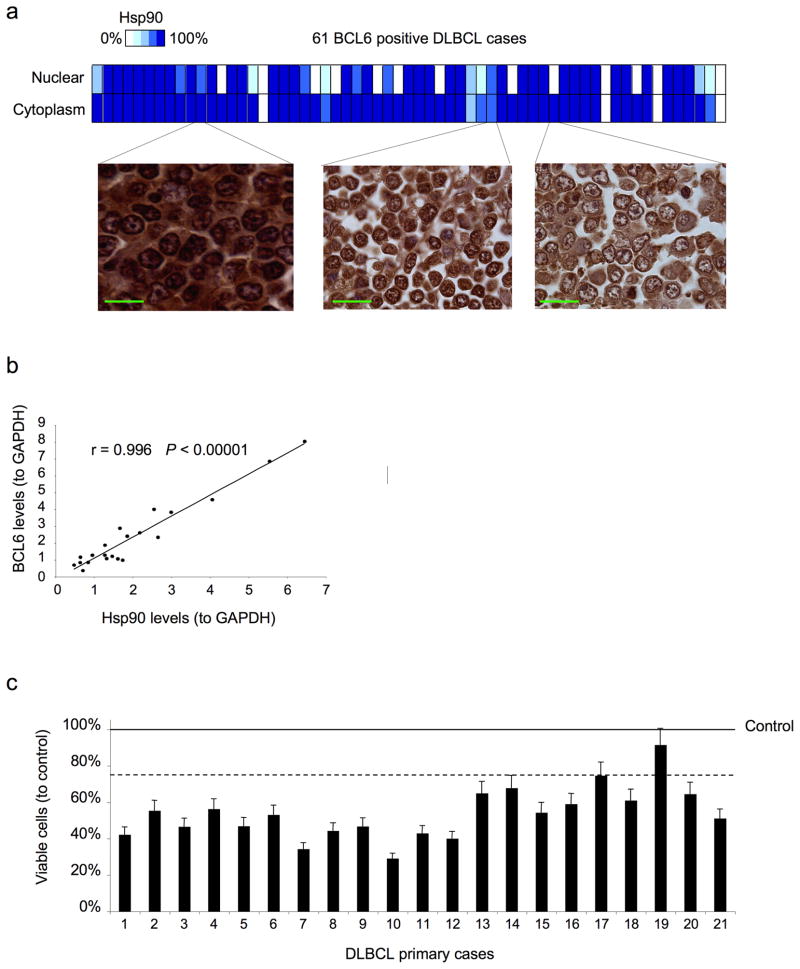
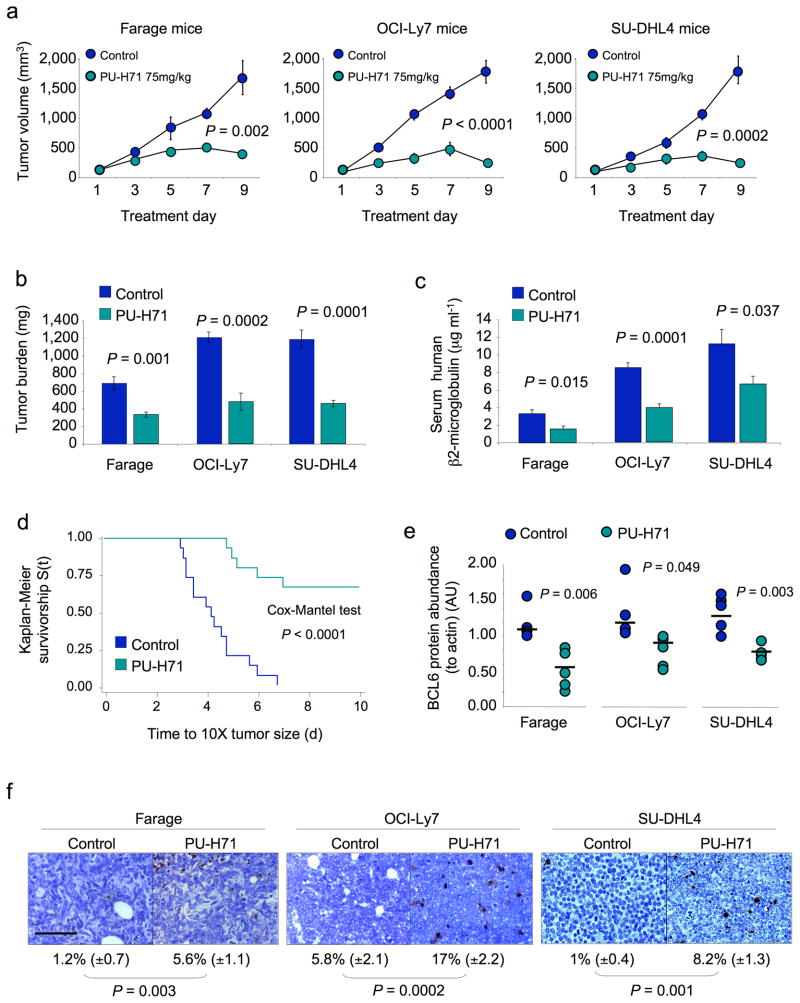
We report that heat shock protein 90 (Hsp90) inhibitors selectively kill diffuse large B cell lymphomas (DLBCLs) that depend on the BCL-6 transcriptional repressor. We found that endogenous Hsp90 interacts with BCL-6 in DLBCL cells and can stabilize BCL-6 mRNA and protein. Hsp90 formed a complex with BCL-6 at its target promoters, and Hsp90 inhibitors derepressed BCL-6 target genes. A stable mutant of BCL-6 rescued DLBCL cells from Hsp90 inhibitor-induced apoptosis. BCL-6 and Hsp90 were almost invariantly coexpressed in the nuclei of primary DLBCL cells, suggesting that their interaction is relevant in this disease. We examined the pharmacokinetics, toxicity and efficacy of PU-H71, a recently developed purine-derived Hsp90 inhibitor. PU-H71 preferentially accumulated in lymphomas compared to normal tissues and selectively suppressed BCL-6-dependent DLBCLs in vivo, inducing reactivation of key BCL-6 target genes and apoptosis. PU-H71 also induced cell death in primary human DLBCL specimens.
我们报告称,热休克蛋白90(Hsp90)抑制剂可选择性杀死依赖BCL-6转录抑制因子的弥漫性大B细胞淋巴瘤(DLBCL)。我们发现内源性Hsp90在DLBCL细胞中与BCL-6相互作用,并能稳定BCL-6的mRNA和蛋白质。Hsp90在其靶启动子处与BCL-6形成复合物,而Hsp90抑制剂可解除对BCL-6靶基因的抑制。BCL-6的稳定突变体可使DLBCL细胞免受Hsp90抑制剂诱导的凋亡。BCL-6和Hsp90在原发性DLBCL细胞核中几乎总是共表达,表明它们的相互作用与这种疾病相关。我们研究了最近开发的嘌呤衍生的Hsp90抑制剂PU-H71的药代动力学、毒性和疗效。与正常组织相比,PU-H71优先在淋巴瘤中蓄积,并在体内选择性抑制依赖BCL-6的DLBCL,诱导关键BCL-6靶基因的重新激活和凋亡。PU-H71还可诱导原发性人DLBCL标本中的细胞死亡。