Vector Control Reference Unit, National Institute for Communicable Diseases of the NHLS, Private Bag X4, Sandringham, Johannesburg 2131, South Africa.
Malar J. 2009 Dec 9;8:282. doi: 10.1186/1475-2875-8-282.
The malaria vector and non-vector species of the Anopheles funestus group are morphologically very similar and accurate identification is required as part of effective control strategies. In the past, this has relied on morphological and cytogenetic methods but these have been largely superseded by a robust allele-specific PCR (AS-PCR). One disadvantage of AS-PCR is the requirement for post-PCR processing by gel electrophoresis of PCR products. In this study, three new high-throughput 'closed-tube' assays were developed and compared with the previously described AS-PCR technique.
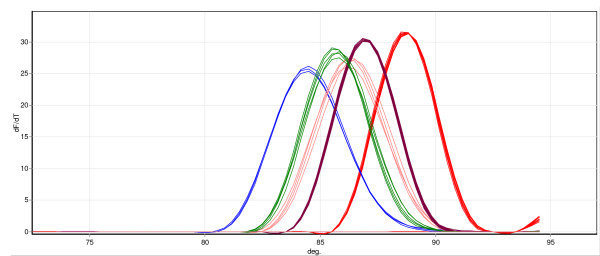
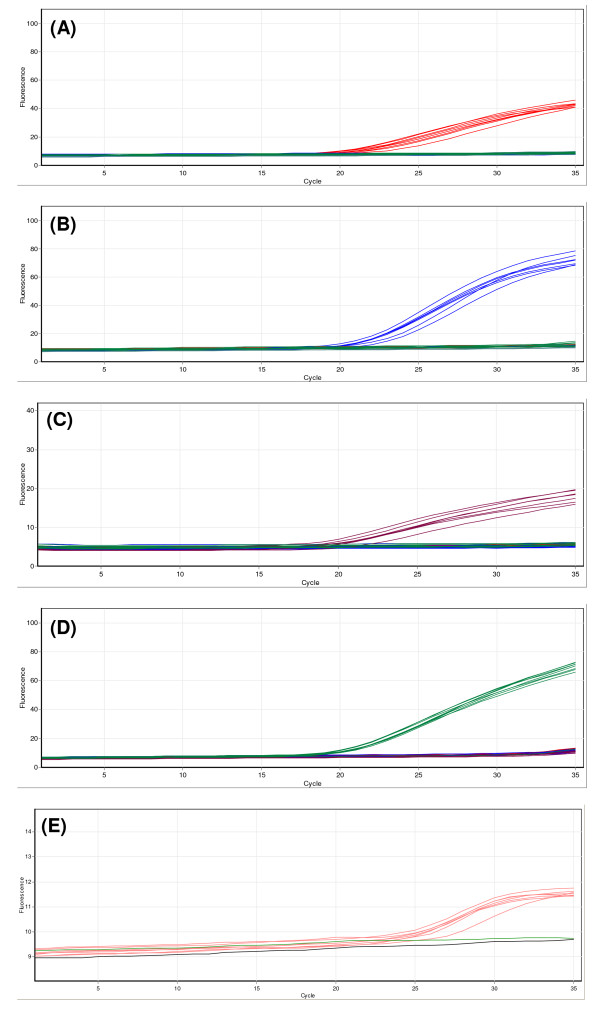
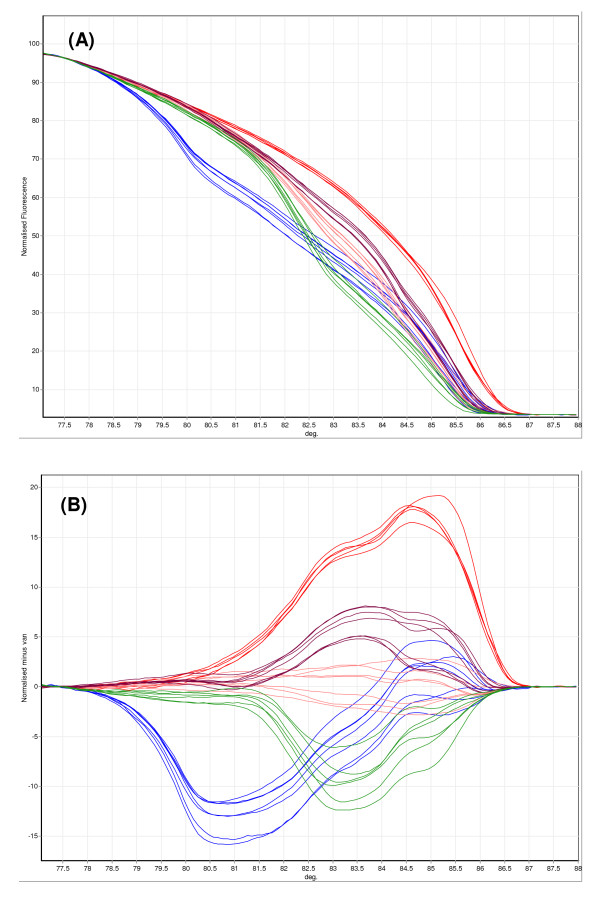
Protocols for three fluorescence-based assays based on Melt Curve Analysis (MCA), High Resolution Melt (HRM) and TaqMan SNP genotyping were developed to detect and discriminate Anopheles parensis, Anopheles leesoni, Anopheles vaneedeni, Anopheles rivulorum and An. funestus s.s. The sensitivity and specificity of these assays were compared with the widely used AS-PCR in a blind trial using DNA extracted from wild-caught mosquitoes.
The TaqMan assay proved to be the most sensitive and specific of the three new assays. The MCA and HRM assays initially gave promising results, but were more sensitive to both DNA quality and quantity and consequently showed a higher rate of incorrect identifications.
The TaqMan assay proved to be the most robust of the three protocols tested in this study. This assay very effectively identified all five members of the An. funestus group using fluorescently-labeled probes with distinct emission and excitation spectra allowing their independent detection in a single reaction. This method is at least as sensitive and specific as the gold standard AS-PCR approach and because it has no requirement for post-PCR processing is simpler and more rapid to run. The one disadvantage of the TaqMan assay is the cost of this assay, both in terms of initial capital outlay and running cost per sample, which is higher than AS-PCR. However, the cost of both the real-time PCR machine and fluorescently labelled probes required is falling and in the future the cost of this assay is likely to become closer to that of standard PCR.
疟疾病媒和非疟疾病媒按蚊组的物种在形态上非常相似,因此准确识别是有效控制策略的一部分。过去,这依赖于形态学和细胞遗传学方法,但这些方法在很大程度上已被强大的等位基因特异性 PCR (AS-PCR)所取代。AS-PCR 的一个缺点是需要对 PCR 产物进行凝胶电泳等 PCR 后处理。在这项研究中,开发了三种新的高通量“闭管”检测方法,并与先前描述的 AS-PCR 技术进行了比较。
开发了三种基于熔解曲线分析 (MCA)、高分辨率熔解 (HRM) 和 TaqMan SNP 基因分型的荧光检测方法,用于检测和区分嗜人按蚊、雷氏按蚊、微小按蚊、山原按蚊和致倦库蚊。在一项使用从野外捕获的蚊子提取的 DNA 的盲法试验中,比较了这些检测方法与广泛使用的 AS-PCR 的灵敏度和特异性。
TaqMan 检测法是三种新检测法中最敏感和最特异的。MCA 和 HRM 检测法最初给出了有希望的结果,但对 DNA 质量和数量更敏感,因此错误识别率更高。
在本研究中测试的三种方案中,TaqMan 检测法被证明是最稳健的。该检测法非常有效地识别了按蚊组的所有五个成员,使用具有独特发射和激发光谱的荧光标记探针,允许在单个反应中独立检测。这种方法至少与金标准 AS-PCR 方法一样敏感和特异,并且由于不需要 PCR 后处理,因此更简单、更快速。TaqMan 检测法的一个缺点是该检测法的成本,无论是初始资本支出还是每个样本的运行成本,都高于 AS-PCR。然而,实时 PCR 仪和荧光标记探针的成本都在下降,在未来,该检测法的成本可能会更接近标准 PCR。