NIH Chemical Genomics Center, National Institutes of Health, Bethesda, MD 20892-3370, USA.
Mol Cancer. 2009 Dec 9;8:117. doi: 10.1186/1476-4598-8-117.
Hypoxia-inducible factor-1 (HIF-1) is the major hypoxia-regulated transcription factor that regulates cellular responses to low oxygen environments. HIF-1 is composed of two subunits: hypoxia-inducible HIF-1alpha and constitutively-expressed HIF-1beta. During hypoxic conditions, HIF-1alpha heterodimerizes with HIF-1beta and translocates to the nucleus where the HIF-1 complex binds to the hypoxia-response element (HRE) and activates expression of target genes implicated in cell growth and survival. HIF-1alpha protein expression is elevated in many solid tumors, including those of the cervix and brain, where cells that are the greatest distance from blood vessels, and therefore the most hypoxic, express the highest levels of HIF-1alpha. Therapeutic blockade of the HIF-1 signaling pathway in cancer cells therefore provides an attractive strategy for development of anticancer drugs. To identify small molecule inhibitors of the HIF-1 pathway, we have developed a cell-based reporter gene assay and screened a large compound library by using a quantitative high-throughput screening (qHTS) approach.
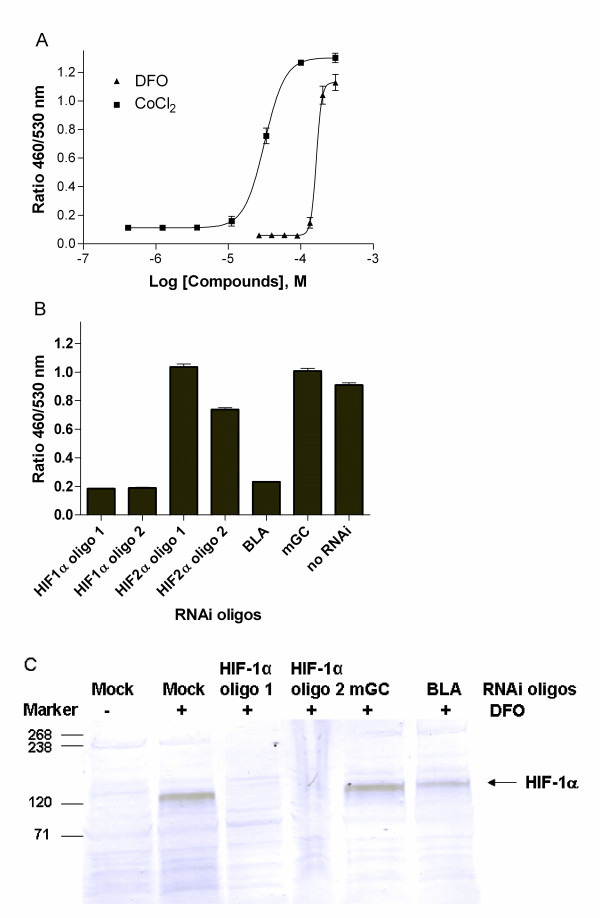
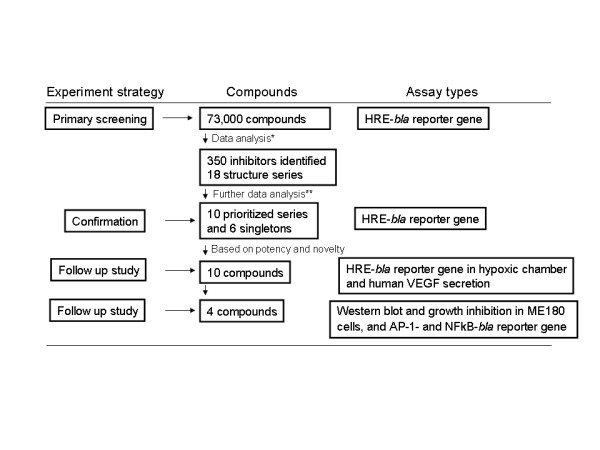
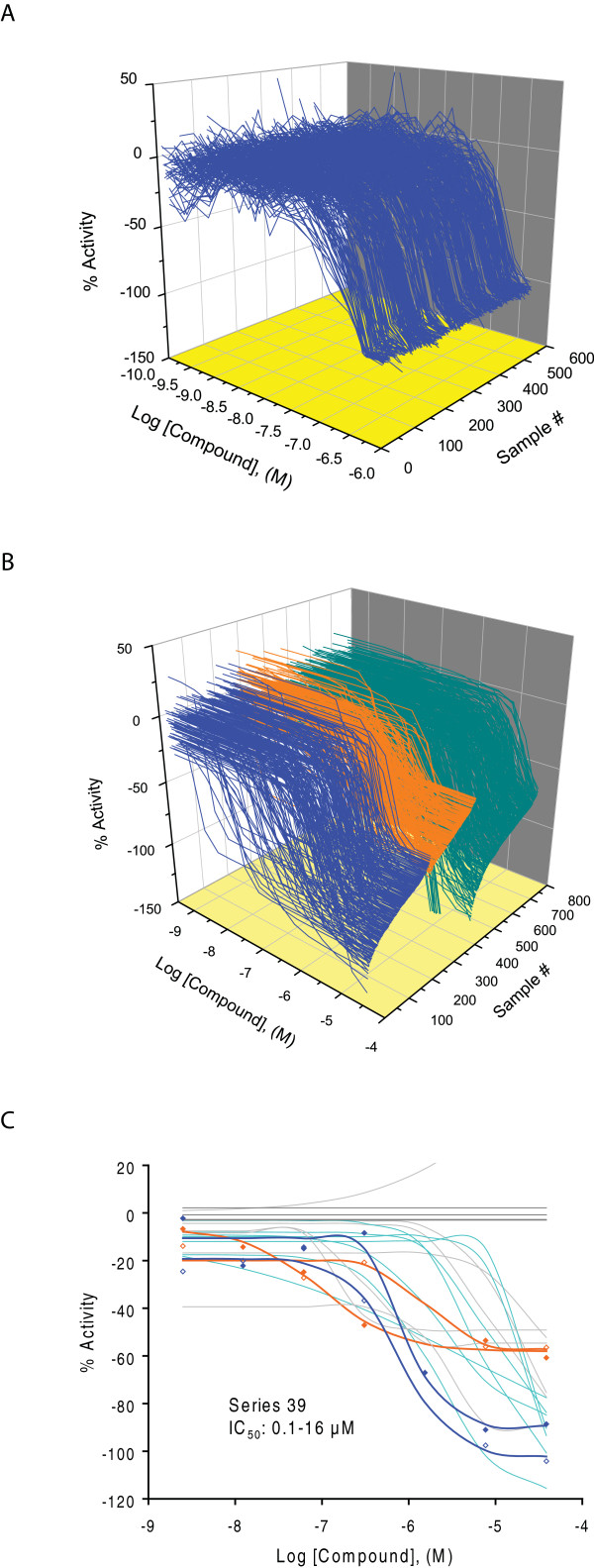
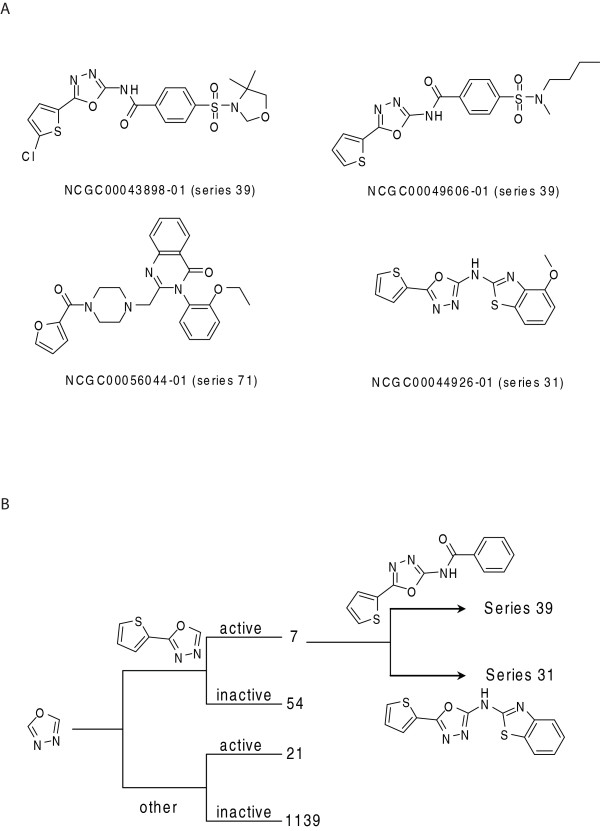
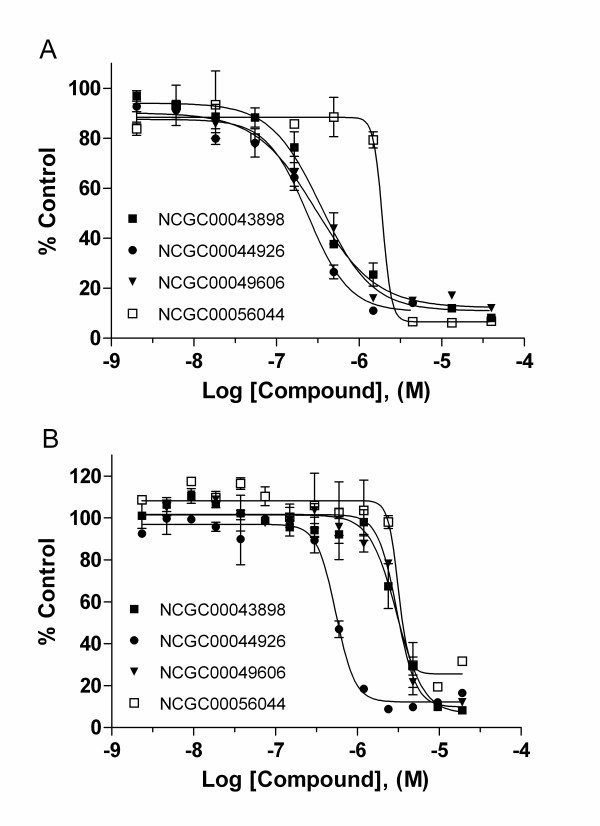
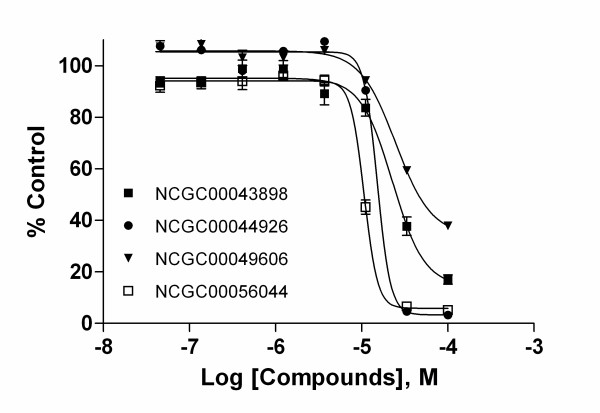
The assay is based upon a beta-lactamase reporter under the control of a HRE. We have screened approximate 73,000 compounds by qHTS, with each compound tested over a range of seven to fifteen concentrations. After qHTS we have rapidly identified three novel structural series of HIF-1 pathway Inhibitors. Selected compounds in these series were also confirmed as inhibitors in a HRE beta-lactamase reporter gene assay induced by low oxygen and in a VEGF secretion assay. Three of the four selected compounds tested showed significant inhibition of hypoxia-induced HIF-1alpha accumulation by western blot analysis.
The use of beta-lactamase reporter gene assays, in combination with qHTS, enabled the rapid identification and prioritization of inhibitors specific to the hypoxia induced signaling pathway.
缺氧诱导因子-1(HIF-1)是主要的缺氧调节转录因子,调节细胞对低氧环境的反应。HIF-1 由两个亚基组成:缺氧诱导的 HIF-1α和组成型表达的 HIF-1β。在缺氧条件下,HIF-1α与 HIF-1β异二聚化并易位到核内,HIF-1 复合物结合到缺氧反应元件(HRE)并激活与细胞生长和存活相关的靶基因的表达。在许多实体瘤中,包括宫颈癌和脑肿瘤,HIF-1α蛋白表达升高,在这些肿瘤中,距离血管最远的细胞,因此缺氧程度最高,表达最高水平的 HIF-1α。因此,抑制癌细胞中的 HIF-1 信号通路为开发抗癌药物提供了一种有吸引力的策略。为了鉴定 HIF-1 通路的小分子抑制剂,我们开发了一种基于细胞的报告基因检测,并通过定量高通量筛选(qHTS)方法筛选了大型化合物文库。
该检测基于受 HRE 控制的β-内酰胺酶报告基因。我们通过 qHTS 筛选了大约 73000 种化合物,每种化合物在 7 到 15 个浓度范围内进行测试。qHTS 后,我们迅速确定了三种新型 HIF-1 通路抑制剂的结构系列。这些系列中的选定化合物也在低氧诱导的 HREβ-内酰胺酶报告基因检测和 VEGF 分泌检测中被证实为抑制剂。在四种测试的化合物中,有三种明显抑制了缺氧诱导的 HIF-1α积累。
β-内酰胺酶报告基因检测与 qHTS 相结合,能够快速鉴定和优先选择针对缺氧诱导信号通路的特异性抑制剂。