Department of Chemical Engineering, Tsinghua University, One Tsinghua Garden Road, Beijing 100084, PR China.
Microb Cell Fact. 2009 Dec 15;8:66. doi: 10.1186/1475-2859-8-66.
Xylose is a second most abundant sugar component of lignocellulose besides glucose. Efficient fermentation of xylose is important for the economics of biomass-based biorefineries. However, sugar mixtures are sequentially consumed in xylose co-fermentation with glucose due to carbon catabolite repression (CCR) in microorganisms. As xylose transmembrance transport is one of the steps repressed by CCR, it is therefore of interest to develop a transporter that is less sensitive to the glucose inhibition or CCR.
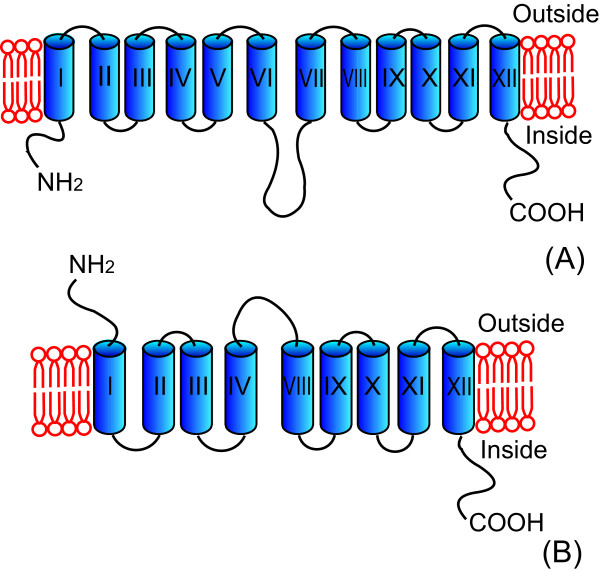
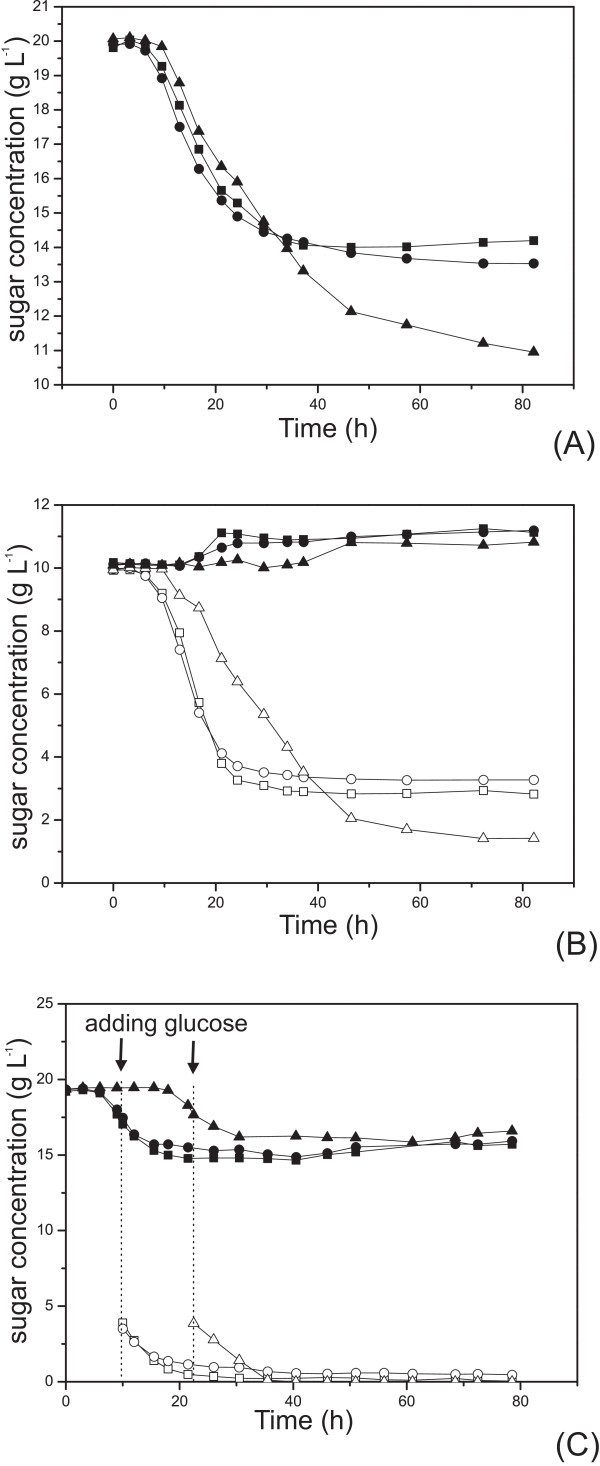
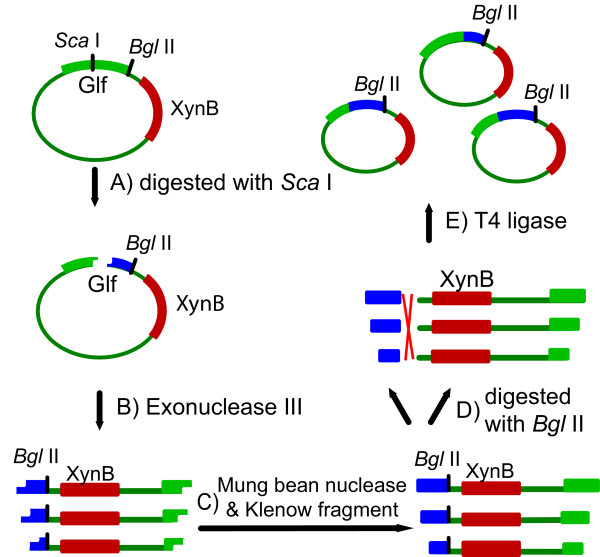
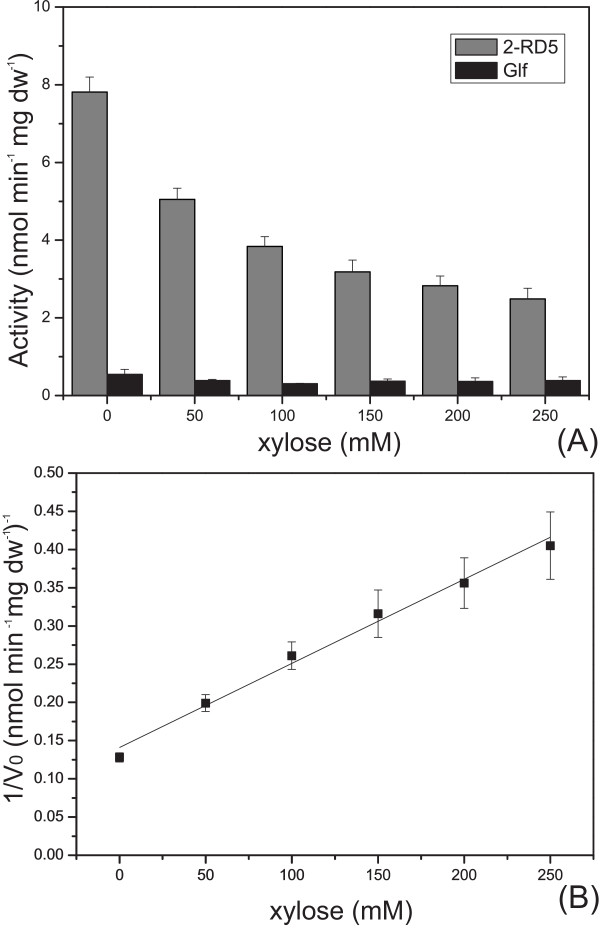
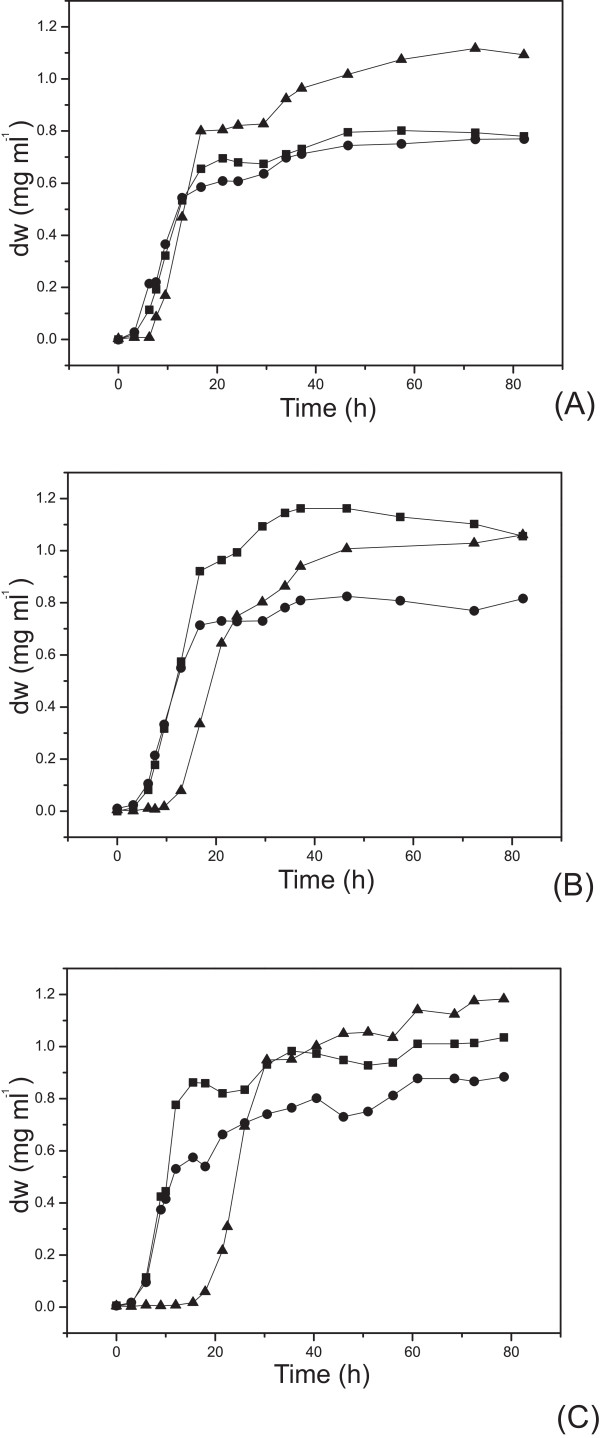
The glucose facilitator protein Glf transporter from Zymomonas mobilis, also an efficient transporter for xylose, was chosen as the target transporter for engineering to eliminate glucose inhibition on xylose uptake. The evolution of Glf transporter was carried out with a mixture of glucose and xylose in E. coli. Error-prone PCR and random deletion were employed respectively in two rounds of evolution. Aided by a high-throughput screening assay using xylose analog p-nitrophenyl-beta-D-xylopyranoside (pNPX) in 96-well plates, a best mutant 2-RD5 was obtained that contains several mutations, and a deletion of 134 residues (about 28% of total residues), or three fewer transmembrane sections (TMSs). It showed a 10.8-fold improvement in terms of pNPX transport activity in the presence of glucose. The fermentation performance results showed that this mutant improved xylose consumption by 42% with M9 minimal medium containing 20 g L-1 xylose only, while with the mixture sugar of xylose and glucose, 28% more glucose was consumed, but no obvious co-utilization of xylose was observed. Further glucose fed-batch experiments suggested that the intracellular metabolism of xylose was repressed by glucose.
Through random mutagenesis and partial deletion coupled with high-throughput screening, a mutant of the Glf transporter (2-RD5) was obtained that relieved the inhibition of xylose transport by glucose. The fermentation tests revealed that 2-RD5 was advantageous in xylose and glucose uptakes, while no obvious advantage was seen for xylose co-consumption when co-fermented with glucose. Further efforts could focus on reducing CCR-mediated repression of intracellular metabolism of xylose. Glf should also serve as a useful model to further exploit the molecular mechanism of xylose transport and the CCR-mediated inhibition.
木糖是木质纤维素中除葡萄糖外第二丰富的糖成分。木糖的高效发酵对于基于生物质的生物炼制厂的经济性很重要。然而,由于微生物中的碳分解代谢物阻遏(CCR),糖混合物在木糖与葡萄糖的共发酵中是依次消耗的。由于木糖跨膜运输是 CCR 抑制的步骤之一,因此开发一种对葡萄糖抑制或 CCR 敏感性较低的转运蛋白很有意义。
从运动发酵单胞菌中选择葡萄糖协同转运蛋白 Glf 作为目标转运蛋白进行工程改造,以消除葡萄糖对木糖摄取的抑制。在大肠杆菌中,用葡萄糖和木糖的混合物进行 Glf 转运蛋白的进化。在两轮进化中,分别使用易错 PCR 和随机缺失。借助 96 孔板中使用木糖类似物对硝基苯-β-D-木吡喃糖苷(pNPX)的高通量筛选测定法,获得了一个最佳突变体 2-RD5,该突变体含有几个突变,并且缺失了 134 个残基(约总残基的 28%)或三个跨膜区(TMS)。它在葡萄糖存在的情况下,pNPX 转运活性提高了 10.8 倍。发酵性能结果表明,该突变体在仅含 20 g/L 木糖的 M9 最小培养基中提高了木糖消耗 42%,而在含有木糖和葡萄糖的混合糖中,消耗了 28%更多的葡萄糖,但没有观察到明显的木糖共利用。进一步的葡萄糖补料分批实验表明,葡萄糖抑制了木糖的细胞内代谢。
通过随机诱变和部分缺失与高通量筛选相结合,获得了 Glf 转运蛋白(2-RD5)的突变体,该突变体缓解了葡萄糖对木糖转运的抑制。发酵试验表明,2-RD5 在木糖和葡萄糖的摄取方面具有优势,而在与葡萄糖共发酵时,木糖的共消耗没有明显优势。进一步的努力可以集中在降低 CCR 介导的木糖细胞内代谢的抑制上。Glf 还应作为一个有用的模型,以进一步探索木糖转运的分子机制和 CCR 介导的抑制。