Department of Biology and Evolutionary Ecology Laboratories, Brigham Young University, Provo, UT 84602, USA.
BMC Genomics. 2009 Dec 15;10:609. doi: 10.1186/1471-2164-10-609.
The success of a biological control agent depends on key traits, particularly reproductive potential, environmental tolerance, and ability to be cultured. These traits can deteriorate rapidly when the biological control agent is reared in culture. Trait deterioration under laboratory conditions has been widely documented in the entomopathogenic nematode (EPN) Heterorhabditis bacteriophora (Hb) but the specific mechanisms behind these genetic processes remain unclear. This research investigates the molecular mechanisms of trait deterioration of two experimental lines of Hb, an inbred line (L5M) and its original parental line (OHB). We generated transcriptional profiles of two experimental lines of Hb, identified the differentially expressed genes (DEGs) and validated their differential expression in the deteriorated line.
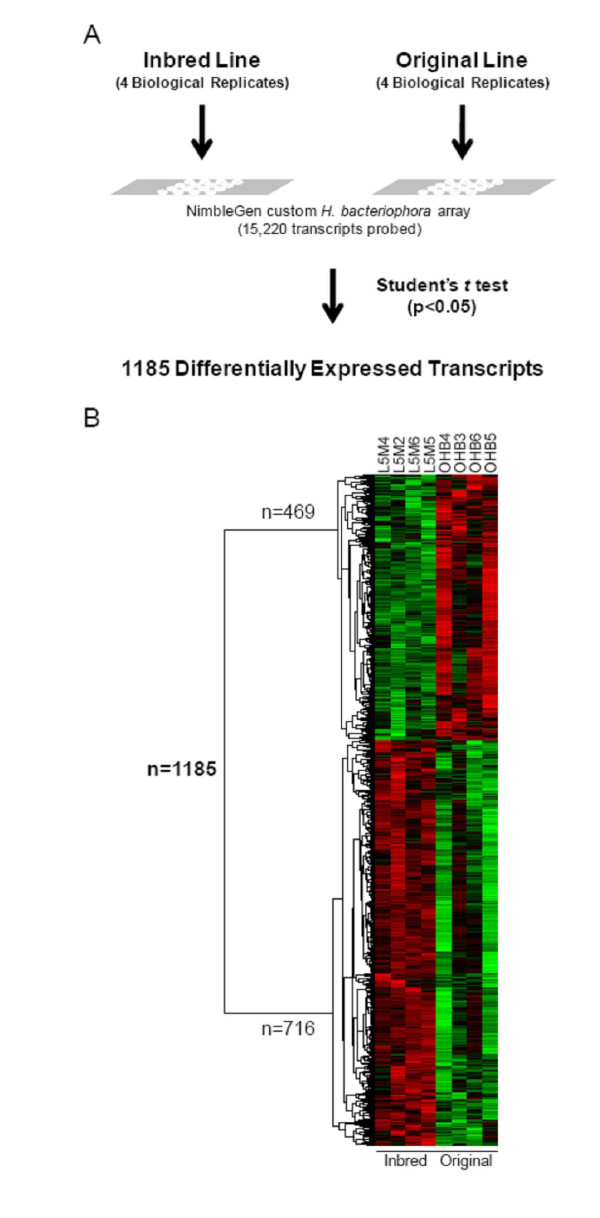
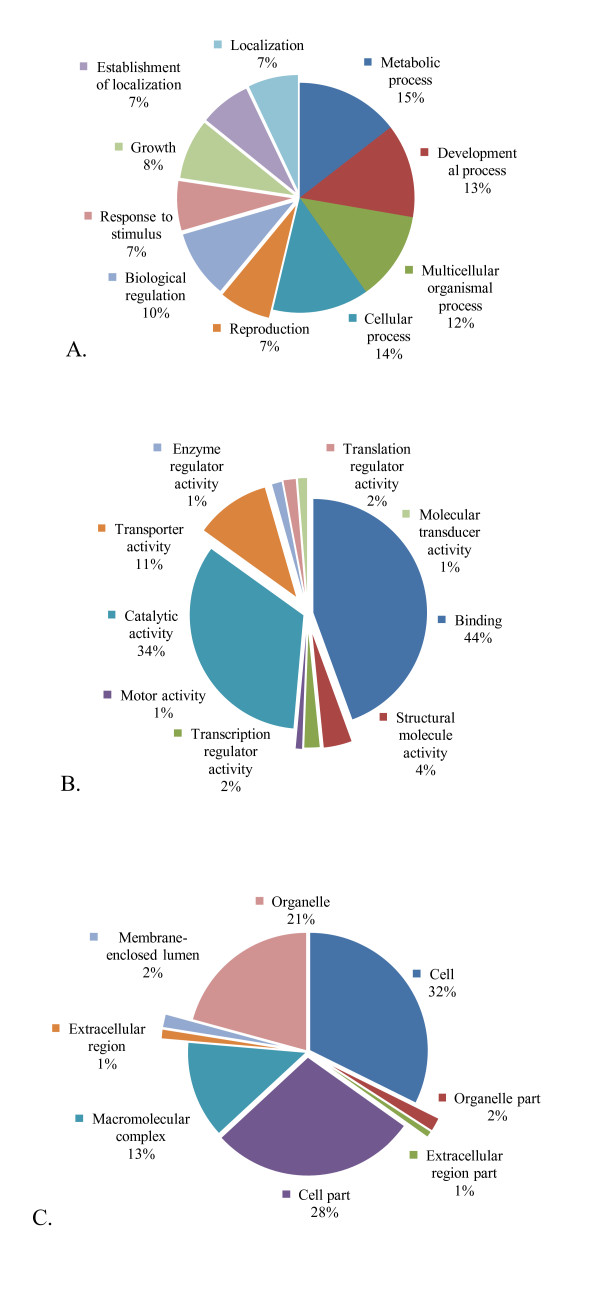
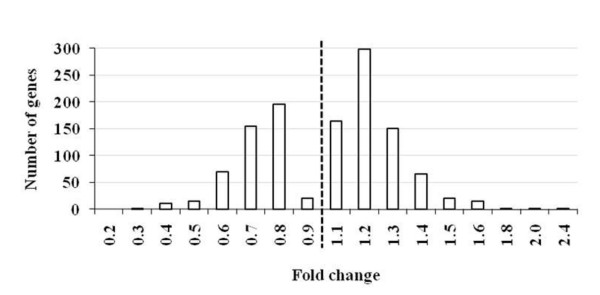
An expression profiling study was performed between experimental lines L5M and OHB of Hb with probes for 15,220 ESTs from the Hb transcriptome. Microarray analysis showed 1,185 DEGs comprising of 469 down- and 716 up-regulated genes in trait deteriorated nematodes. Analysis of the DEGs showed that trait deterioration involves massive changes of the transcripts encoding enzymes involved in metabolism, signal transduction, virulence and longevity. We observed a pattern of reduced expression of enzymes related to primary metabolic processes and induced secondary metabolism. Expression of sixteen DEGs in trait deteriorated nematodes was validated by quantitative reverse transcription-PCR (qRT-PCR) which revealed similar expression kinetics for all the genes tested as shown by microarray.
As the most closely related major entomopathogen to C. elegans, Hb provides an attractive near-term application for using a model organism to better understand interspecies interactions and to enhance our understanding of the mechanisms underlying trait deterioration in biological control agents. This information could also be used to improve the beneficial traits of biological control agents and better understand fundamental aspects of nematode parasitism and mutualism.
生物防治剂的成功取决于关键特性,特别是繁殖潜力、环境耐受性和可培养性。当生物防治剂在培养中饲养时,这些特性会迅速恶化。在昆虫病原线虫(EPN)异小杆线虫(Hb)中,实验室条件下的特性恶化已得到广泛记录,但这些遗传过程背后的具体机制仍不清楚。本研究调查了两个 Hb 实验品系(一个近交系(L5M)及其原始亲本系(OHB))特性恶化的分子机制。我们生成了两个 Hb 实验系的转录谱,鉴定了差异表达基因(DEGs),并验证了其在退化系中的差异表达。
对 Hb 的两个实验系 L5M 和 OHB 进行了表达谱研究,使用 Hb 转录组中的 15220 个 EST 探针。微阵列分析显示,在特性恶化线虫中,有 1185 个 DEGs,包括 469 个下调和 716 个上调基因。对 DEGs 的分析表明,特性恶化涉及到大量参与代谢、信号转导、毒力和寿命的转录本编码酶的变化。我们观察到与初级代谢过程相关的酶表达减少,而次级代谢被诱导。通过定量逆转录 PCR(qRT-PCR)验证了 16 个在特性恶化线虫中表达的 DEG,微阵列显示所有测试基因的表达动力学相似。
作为与 C. elegans 最密切相关的主要昆虫病原,Hb 为使用模式生物更好地理解种间相互作用以及增强对生物防治剂特性恶化机制的理解提供了一个有吸引力的短期应用。这些信息还可以用于提高生物防治剂的有益特性,并更好地理解线虫寄生和共生的基本方面。