Departament de Bioquimica i Biologia Molecular, Facultat de Biologia, Institut de Biomedicina at Universitat de Barcelona IBUB and IDIBAPS Hospital Clinic, Barcelona, Catalunya, Spain.
PLoS Comput Biol. 2009 Dec;5(12):e1000619. doi: 10.1371/journal.pcbi.1000619. Epub 2009 Dec 24.
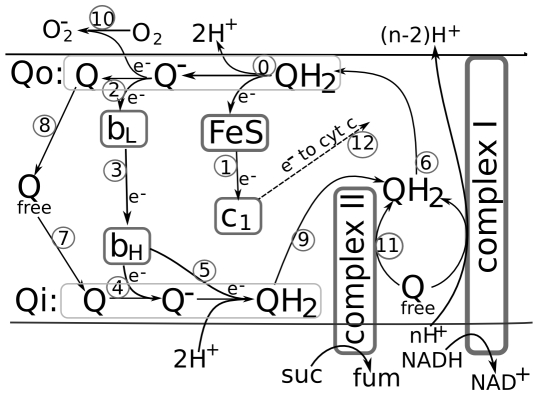
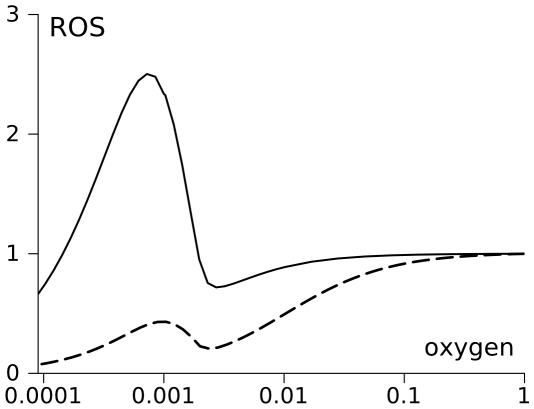
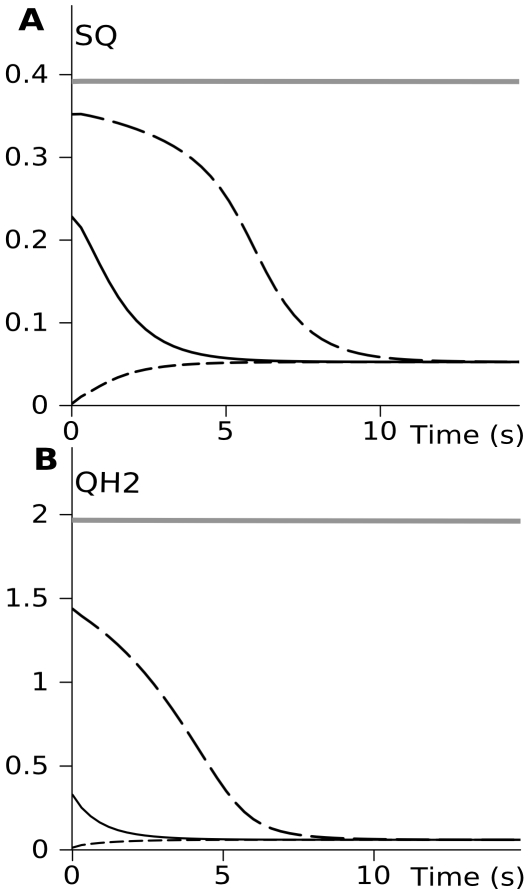
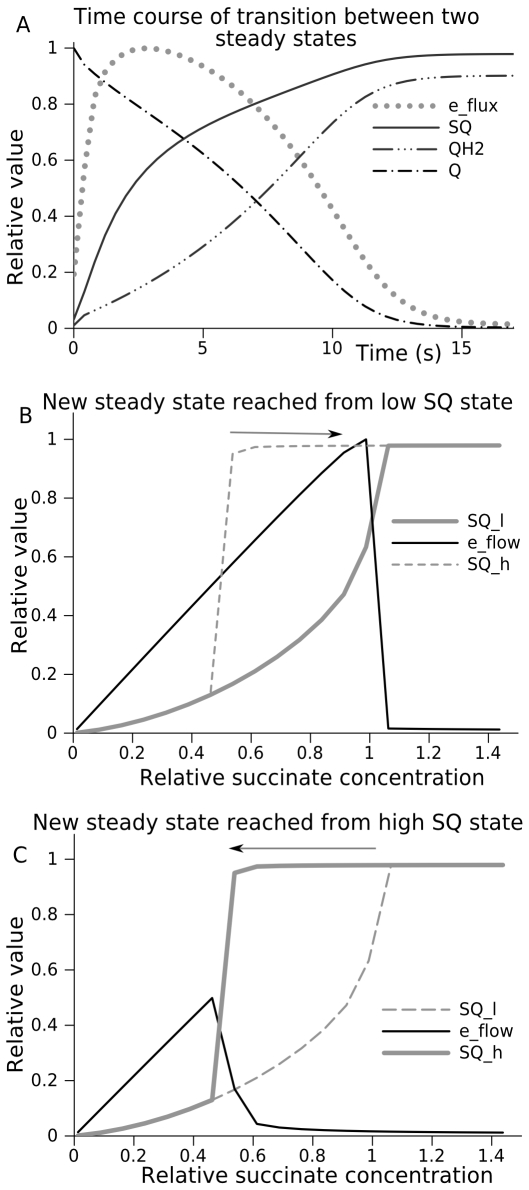
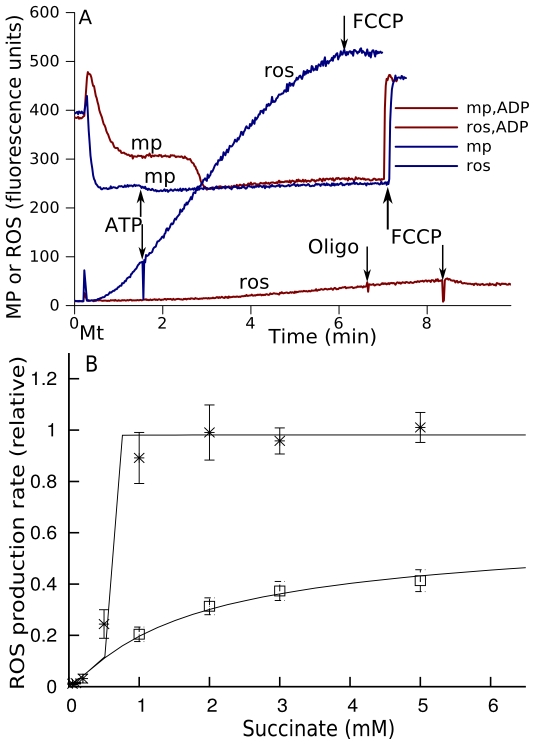
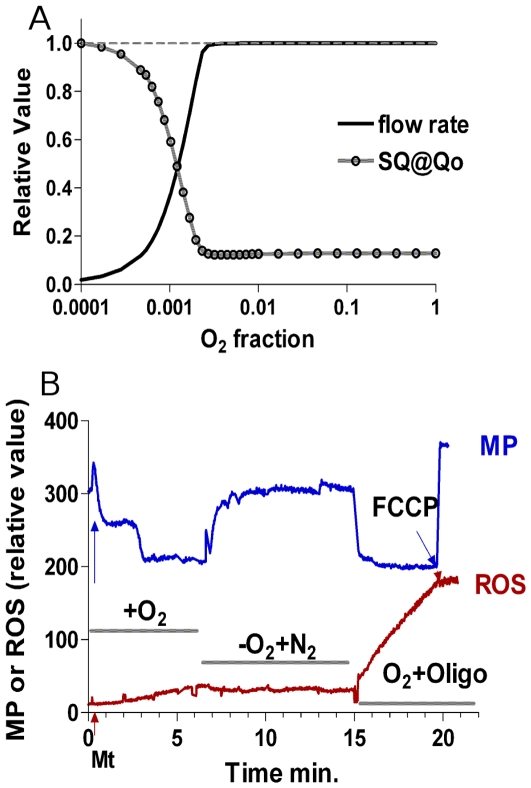
Increased production of reactive oxygen species (ROS) in mitochondria underlies major systemic diseases, and this clinical problem stimulates a great scientific interest in the mechanism of ROS generation. However, the mechanism of hypoxia-induced change in ROS production is not fully understood. To mathematically analyze this mechanism in details, taking into consideration all the possible redox states formed in the process of electron transport, even for respiratory complex III, a system of hundreds of differential equations must be constructed. Aimed to facilitate such tasks, we developed a new methodology of modeling, which resides in the automated construction of large sets of differential equations. The detailed modeling of electron transport in mitochondria allowed for the identification of two steady state modes of operation (bistability) of respiratory complex III at the same microenvironmental conditions. Various perturbations could induce the transition of respiratory chain from one steady state to another. While normally complex III is in a low ROS producing mode, temporal anoxia could switch it to a high ROS producing state, which persists after the return to normal oxygen supply. This prediction, which we qualitatively validated experimentally, explains the mechanism of anoxia-induced cell damage. Recognition of bistability of complex III operation may enable novel therapeutic strategies for oxidative stress and our method of modeling could be widely used in systems biology studies.
线粒体中活性氧(ROS)的产生增加是多种系统性疾病的基础,这一临床问题激发了人们对 ROS 产生机制的极大科学兴趣。然而,缺氧诱导 ROS 产生变化的机制尚不完全清楚。为了详细地对这一机制进行数学分析,需要考虑电子传递过程中形成的所有可能的氧化还原状态,即使对于呼吸复合物 III,也必须构建一个包含数百个微分方程的系统。为了便于完成此类任务,我们开发了一种新的建模方法,其特点是自动构建大量微分方程。对线粒体中电子传递的详细建模,确定了在相同微环境条件下呼吸复合物 III 的两种稳态操作模式(双稳性)。各种扰动都可以诱导呼吸链从一种稳态向另一种稳态转变。通常情况下,复合物 III 处于低 ROS 产生模式,短暂缺氧会使其转变为高 ROS 产生状态,而在恢复正常氧供应后,这种状态仍会持续。这一预测我们通过实验进行了定性验证,它解释了缺氧诱导细胞损伤的机制。识别复合物 III 操作的双稳性可能会为氧化应激提供新的治疗策略,并且我们的建模方法可以广泛应用于系统生物学研究。