Institute for Advanced Biosciences, Keio University, Fujisawa, 252-8520, Japan.
BMC Genomics. 2009 Dec 30;10:640. doi: 10.1186/1471-2164-10-640.
Due to their bi-directional replication machinery starting from a single finite origin, bacterial genomes show characteristic nucleotide compositional bias between the two replichores, which can be visualised through GC skew or (C-G)/(C+G). Although this polarisation is used for computational prediction of replication origins in many bacterial genomes, the degree of GC skew visibility varies widely among different species, necessitating a quantitative measurement of GC skew strength in order to provide confidence measures for GC skew-based predictions of replication origins.
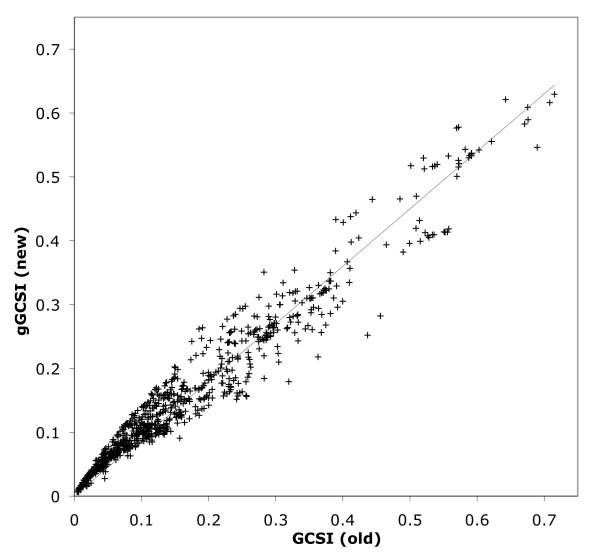
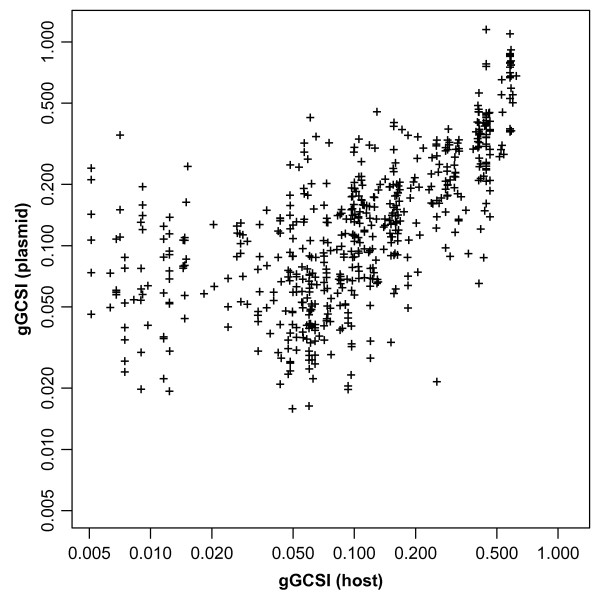
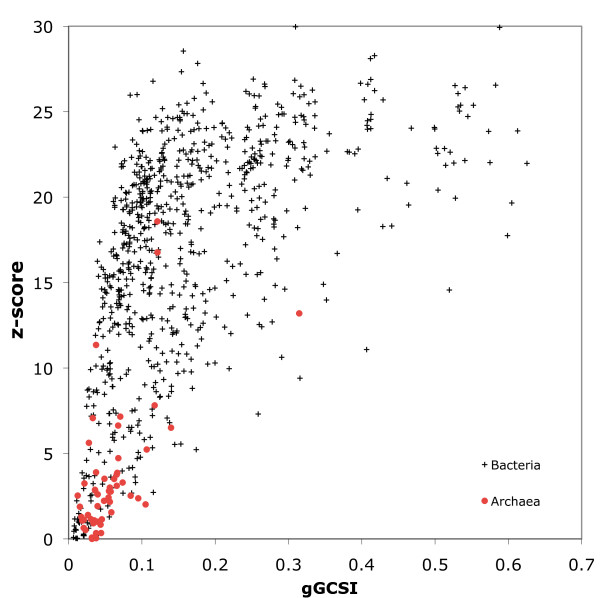
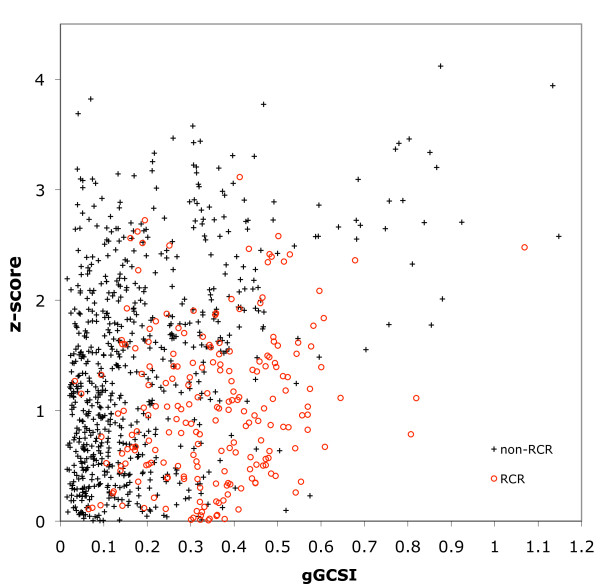
Here we discuss a quantitative index for the measurement of GC skew strength, named the generalised GC skew index (gGCSI), which is applicable to genomes of any length, including bacterial chromosomes and plasmids. We demonstrate that gGCSI is independent of the window size and can thus be used to compare genomes with different sizes, such as bacterial chromosomes and plasmids. It can suggest the existence of different replication mechanisms in archaea and of rolling-circle replication in plasmids. Correlation of gGCSI values between plasmids and their corresponding host chromosomes suggests that within the same strain, these replicons have reproduced using the same replication machinery and thus exhibit similar strengths of replication strand skew.
gGCSI can be applied to genomes of any length and thus allows comparative study of replication-related mutation and selection pressures in genomes of different lengths such as bacterial chromosomes and plasmids. Using gGCSI, we showed that replication-related mutation or selection pressure is similar for replicons with similar machinery.
由于细菌基因组的双向复制机制从单个有限的原点开始,因此在两个复制叉之间存在特征性的核苷酸组成偏向,可以通过 GC 偏斜或 (C-G)/(C+G) 来观察到。尽管这种极化被用于许多细菌基因组中复制起点的计算预测,但不同物种之间 GC 偏斜可见度差异很大,因此需要定量测量 GC 偏斜强度,以便为基于 GC 偏斜的复制起点预测提供置信度度量。
在这里,我们讨论了一种用于测量 GC 偏斜强度的定量指标,称为广义 GC 偏斜指数(gGCSI),它适用于任何长度的基因组,包括细菌染色体和质粒。我们证明 gGCSI 与窗口大小无关,因此可用于比较具有不同大小的基因组,例如细菌染色体和质粒。它可以提示古菌中存在不同的复制机制和质粒中的滚环复制。质粒与其相应宿主染色体之间的 gGCSI 值的相关性表明,在同一菌株中,这些复制子使用相同的复制机制进行了复制,因此表现出相似的复制链偏斜强度。
gGCSI 可适用于任何长度的基因组,因此允许对不同长度的基因组(如细菌染色体和质粒)中的复制相关突变和选择压力进行比较研究。使用 gGCSI,我们表明,具有相似机制的复制子之间的复制相关突变或选择压力相似。