Immunology Program, Garvan Institute of Medical Research, Darlinghurst, NSW 2010, Australia.
J Exp Med. 2010 Jan 18;207(1):155-71. doi: 10.1084/jem.20091706. Epub 2010 Jan 4.
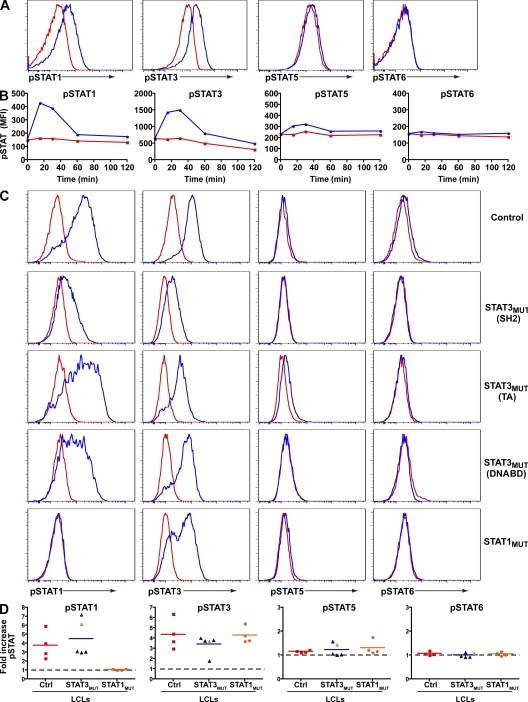
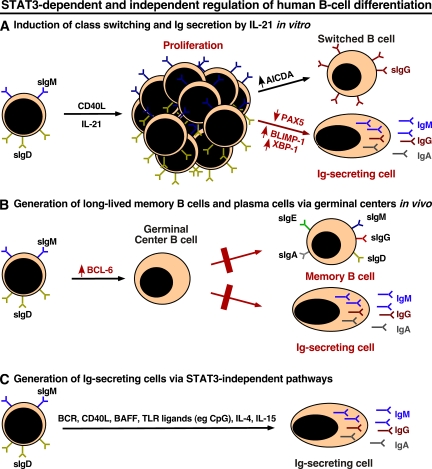
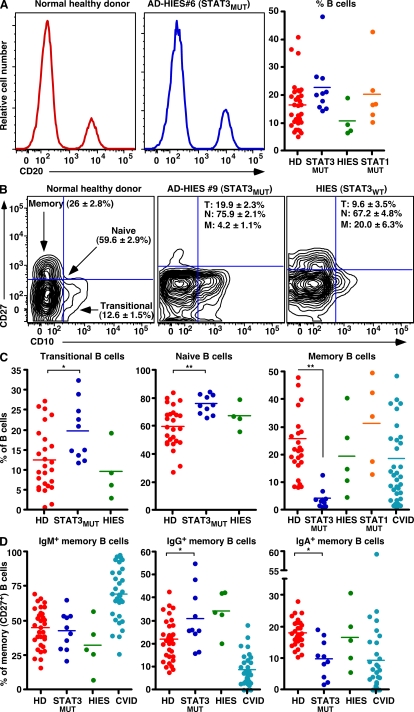
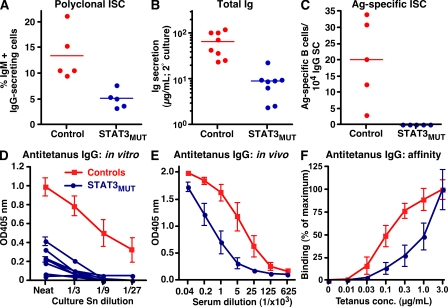
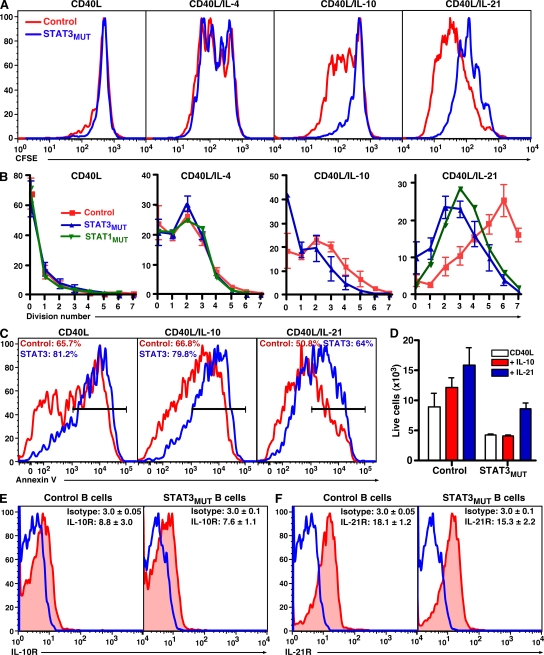
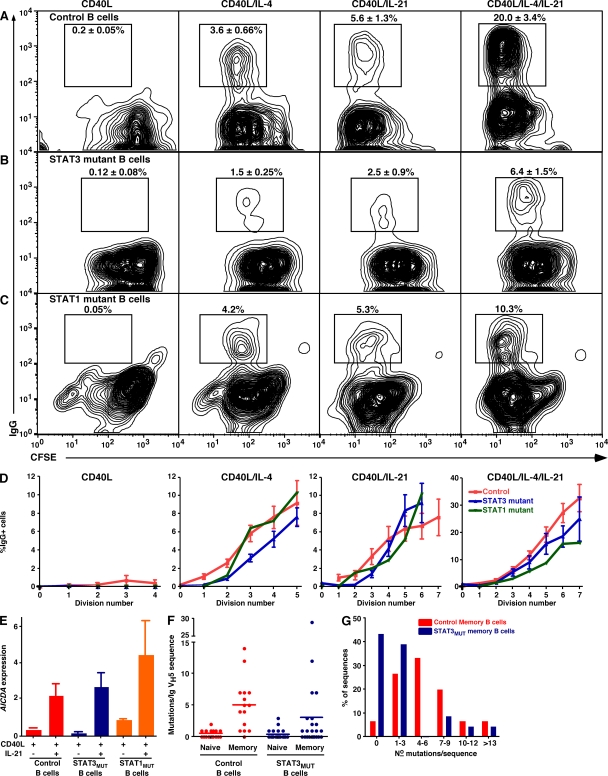
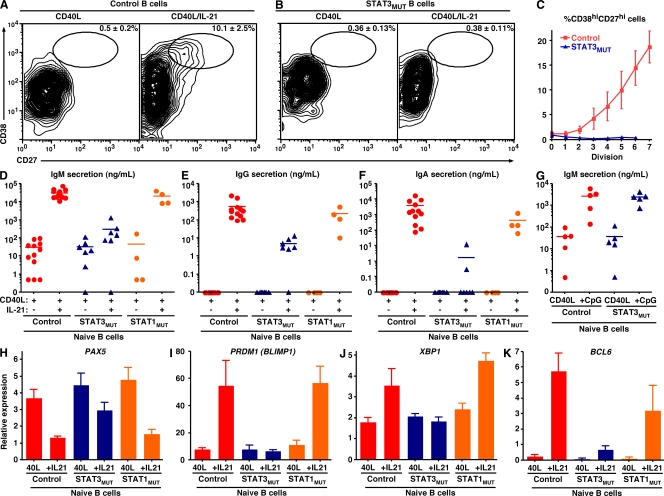
Engagement of cytokine receptors by specific ligands activate Janus kinase-signal transducer and activator of transcription (STAT) signaling pathways. The exact roles of STATs in human lymphocyte behavior remain incompletely defined. Interleukin (IL)-21 activates STAT1 and STAT3 and has emerged as a potent regulator of B cell differentiation. We have studied patients with inactivating mutations in STAT1 or STAT3 to dissect their contribution to B cell function in vivo and in response to IL-21 in vitro. STAT3 mutations dramatically reduced the number of functional, antigen (Ag)-specific memory B cells and abolished the ability of IL-21 to induce naive B cells to differentiate into plasma cells (PCs). This resulted from impaired activation of the molecular machinery required for PC generation. In contrast, STAT1 deficiency had no effect on memory B cell formation in vivo or IL-21-induced immunoglobulin secretion in vitro. Thus, STAT3 plays a critical role in generating effector B cells from naive precursors in humans. STAT3-activating cytokines such as IL-21 thus underpin Ag-specific humoral immune responses and provide a mechanism for the functional antibody deficit in STAT3-deficient patients.
细胞因子受体与特定配体的结合激活了 Janus 激酶-信号转导子和转录激活子(STAT)信号通路。STAT 在人类淋巴细胞行为中的确切作用仍未完全确定。白细胞介素(IL)-21 激活 STAT1 和 STAT3,已成为 B 细胞分化的有效调节剂。我们研究了 STAT1 或 STAT3 失活突变的患者,以剖析它们对体内 B 细胞功能以及体外对 IL-21 反应的贡献。STAT3 突变显著减少了功能性抗原(Ag)特异性记忆 B 细胞的数量,并消除了 IL-21 诱导幼稚 B 细胞分化为浆细胞(PC)的能力。这是由于产生 PC 所需的分子机制的激活受损。相比之下,STAT1 缺乏对体内记忆 B 细胞形成或体外 IL-21 诱导的免疫球蛋白分泌没有影响。因此,STAT3 在人类中从幼稚前体产生效应 B 细胞中起关键作用。因此,IL-21 等激活 STAT3 的细胞因子为 Ag 特异性体液免疫反应提供了基础,并为 STAT3 缺陷患者的功能性抗体缺陷提供了一种机制。