Division of General Internal Medicine and Hypertension, Department of Medicine, University of Mississippi Medical Center, Jackson, MS 39216, USA.
Int J Endocrinol. 2010;2010:579640. doi: 10.1155/2010/579640. Epub 2009 Nov 10.
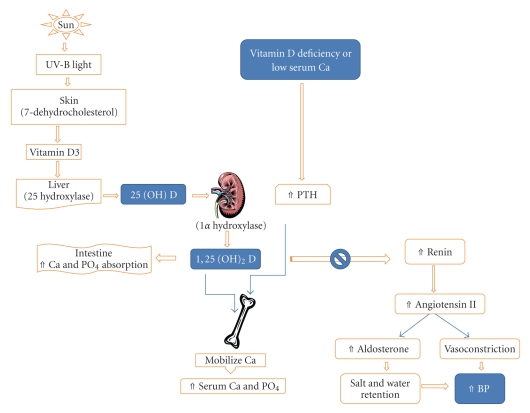
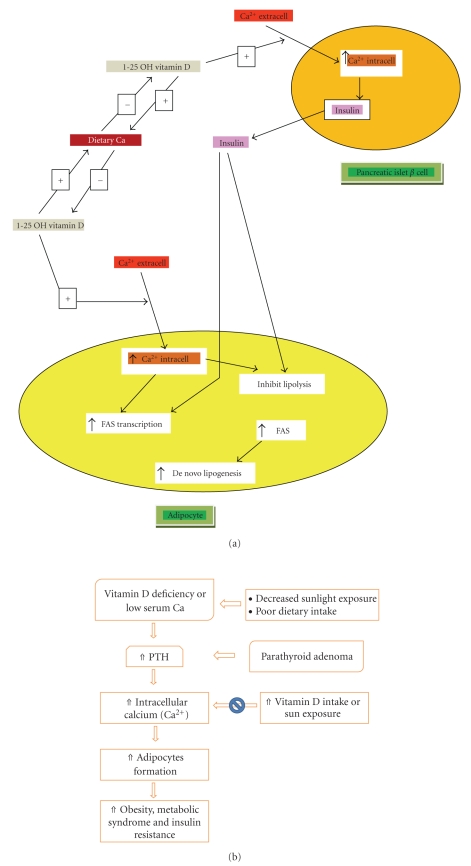
Vitamin D deficiency is widely prevalent across all ages, races, geographical regions, and socioeconomic strata. In addition to its important role in skeletal development and calcium homeostasis, several recent studies suggest its association with diabetes, hypertension, cardiovascular disease, certain types of malignancy, and immunologic dysfunction. Here, we review the current evidence regarding an association between vitamin D deficiency and hypertension in clinical and epidemiological studies. We also look into plausible biological explanations for such an association with the renin-angiotensin-aldosterone system and insulin resistance playing potential roles. Taken together, it appears that more studies in more homogeneous study populations are needed before a firm conclusion can be reached as to whether vitamin D deficiency causes or aggravates hypertension and whether vitamin D supplementation is safe and exerts cardioprotective effects. The potential problems with bias and confounding factors present in previous epidemiological studies may be overcome or minimized by well designed randomized controlled trials in the future.
维生素 D 缺乏症广泛存在于各个年龄段、种族、地理区域和社会经济阶层。除了在骨骼发育和钙平衡中的重要作用外,最近的几项研究表明,维生素 D 与糖尿病、高血压、心血管疾病、某些类型的恶性肿瘤和免疫功能障碍有关。在这里,我们回顾了临床和流行病学研究中维生素 D 缺乏与高血压之间关联的现有证据。我们还探讨了这种与肾素-血管紧张素-醛固酮系统和胰岛素抵抗相关的关联的可能生物学解释,这些系统可能发挥潜在作用。总的来说,在得出关于维生素 D 缺乏是否导致或加重高血压以及维生素 D 补充是否安全并具有心脏保护作用的确切结论之前,似乎需要在更同质的研究人群中进行更多的研究。未来,设计良好的随机对照试验可能会克服或最小化以前流行病学研究中存在的偏倚和混杂因素的潜在问题。