Byrd Alzheimer's Institute, Tampa, Florida, United States of America.
PLoS One. 2010 Jan 1;5(1):e8556. doi: 10.1371/journal.pone.0008556.
Alzheimer's disease (AD) is a chronic neurodegenerative disorder and the most common form of dementia. The major molecular risk factor for late-onset AD is expression of the epsilon-4 allele of apolipoprotein E (apoE), the major cholesterol transporter in the brain. The low-density lipoprotein receptor (LDLR) has the highest affinity for apoE and plays an important role in brain cholesterol metabolism.
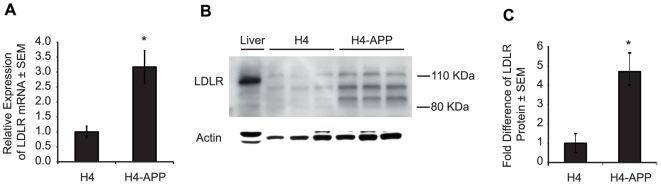
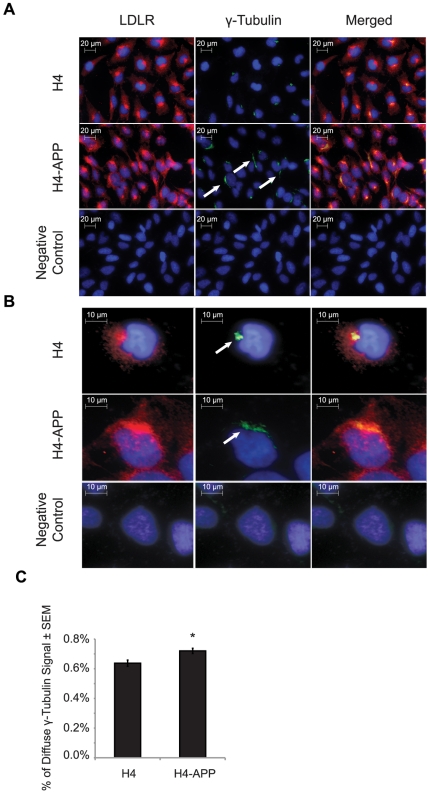
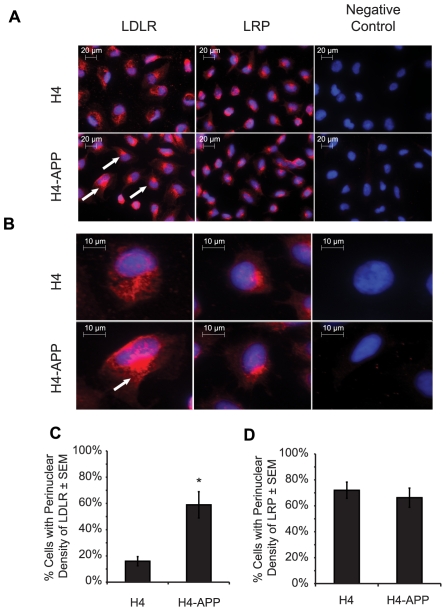
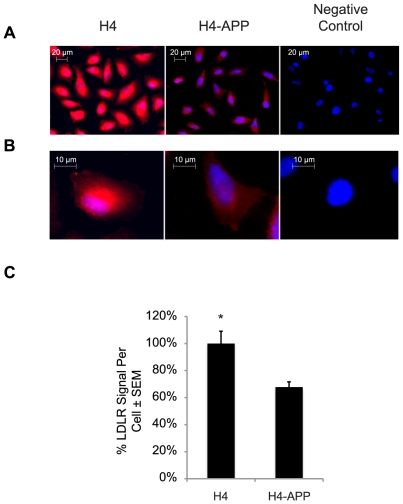
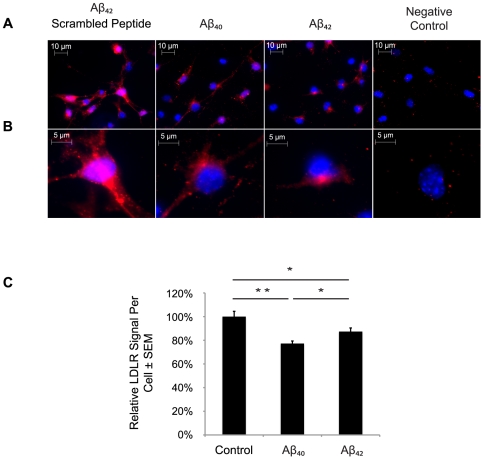
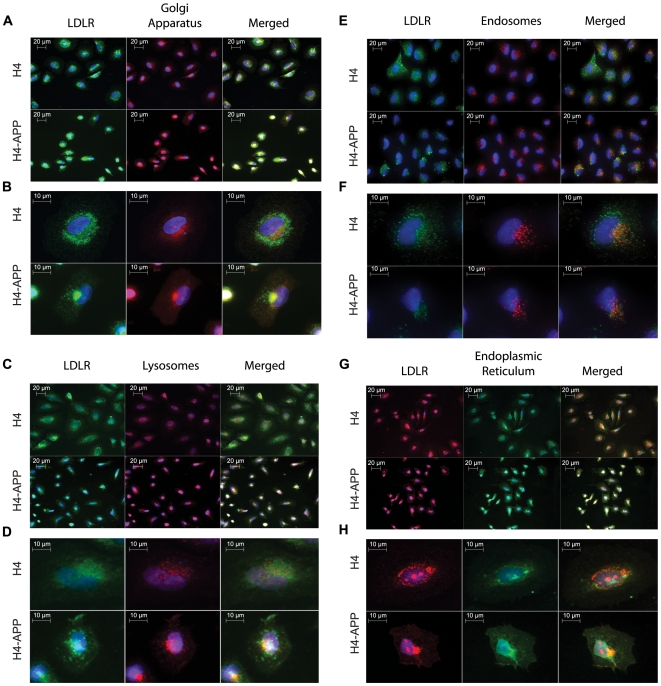
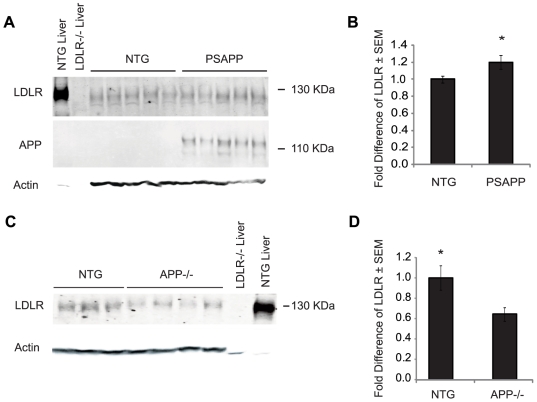
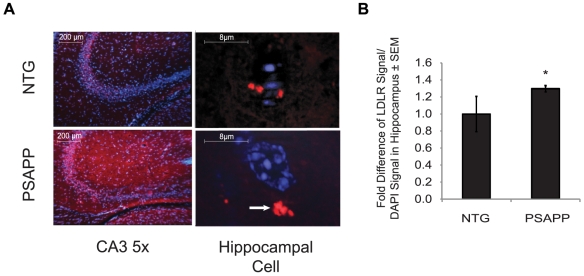
METHODOLOGY/PRINCIPAL FINDINGS: Using RT-PCR and western blotting techniques we found that over-expression of APP caused increases in both LDLR mRNA and protein levels in APP transfected H4 neuroglioma cells compared to H4 controls. Furthermore, immunohistochemical experiments showed aberrant localization of LDLR in H4-APP neuroglioma cells, Abeta-treated primary neurons, and in the PSAPP transgenic mouse model of AD. Finally, immunofluorescent staining of LDLR and of gamma- and alpha-tubulin showed a change in LDLR localization preferentially away from the plasma membrane that was paralleled by and likely the result of a disruption of the microtubule-organizing center and associated microtubule network.
CONCLUSIONS/SIGNIFICANCE: These data suggest that increased APP expression and Abeta exposure alters microtubule function, leading to reduced transport of LDLR to the plasma membrane. Consequent deleterious effects on apoE uptake and function will have implications for AD pathogenesis and/or progression.
阿尔茨海默病(AD)是一种慢性神经退行性疾病,也是最常见的痴呆症形式。晚发性 AD 的主要分子风险因素是载脂蛋白 E(apoE)的 ε-4 等位基因表达,apoE 是大脑中主要的胆固醇转运蛋白。低密度脂蛋白受体(LDLR)对 apoE 具有最高亲和力,在脑胆固醇代谢中发挥重要作用。
方法/主要发现:使用 RT-PCR 和 Western blot 技术,我们发现与 H4 对照相比,APP 转染的 H4 神经胶质瘤细胞中 APP 的过表达导致 LDLR mRNA 和蛋白水平均增加。此外,免疫组织化学实验显示 LDLR 在 H4-APP 神经胶质瘤细胞、Abeta 处理的原代神经元以及 PSAPP 转基因 AD 小鼠模型中的异常定位。最后,LDLR 和 γ-和 α-微管蛋白的免疫荧光染色显示 LDLR 定位的变化主要远离质膜,这与微管组织中心及其相关微管网络的破坏相平行,可能是其结果。
结论/意义:这些数据表明,APP 表达增加和 Abeta 暴露改变了微管功能,导致 LDLR 向质膜的转运减少。apoE 摄取和功能的随后的有害影响将对 AD 的发病机制和/或进展产生影响。