Department of Biotechnology and Biosciences, University of Milano-Bicocca, Milan, Italy.
PLoS One. 2010 Jan 5;5(1):e8575. doi: 10.1371/journal.pone.0008575.
Neural stem cells (NSCs) represent an optimal tool for studies and therapy of neurodegenerative diseases. We recently established a v-myc immortalized human NSC (IhNSC) line, which retains stem properties comparable to parental cells. Oxygen concentration is one of the most crucial environmental conditions for cell proliferation and differentiation both in vitro and in vivo. In the central nervous system, physiological concentrations of oxygen range from 0.55 to 8% oxygen. In particular, in the in the subventricular zone niche area, it's estimated to be 2.5 to 3%.
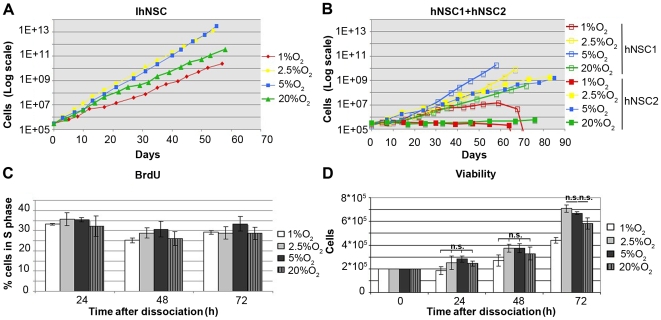
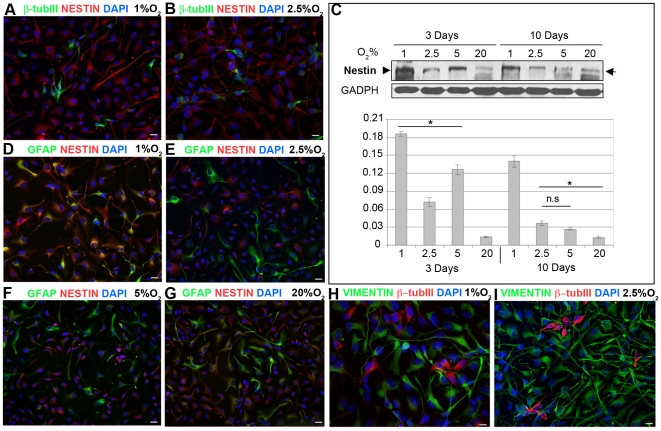
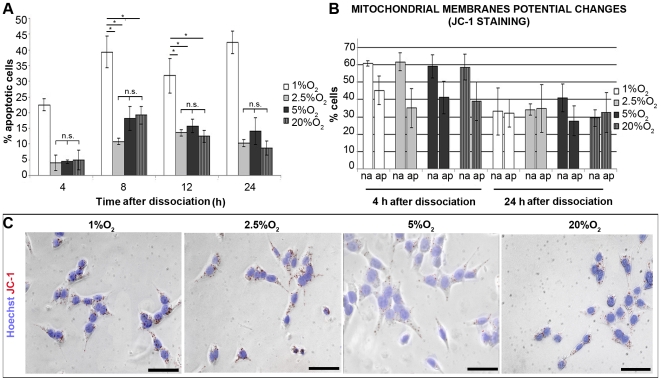
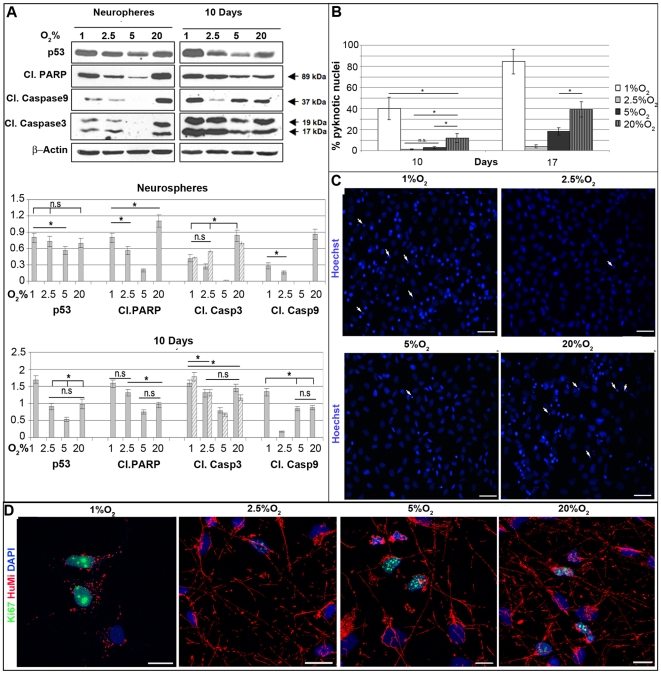
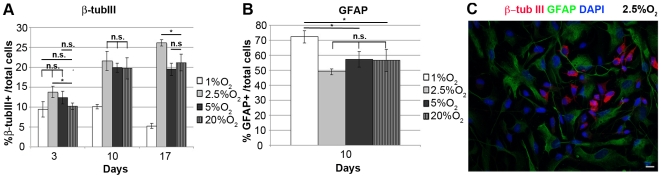
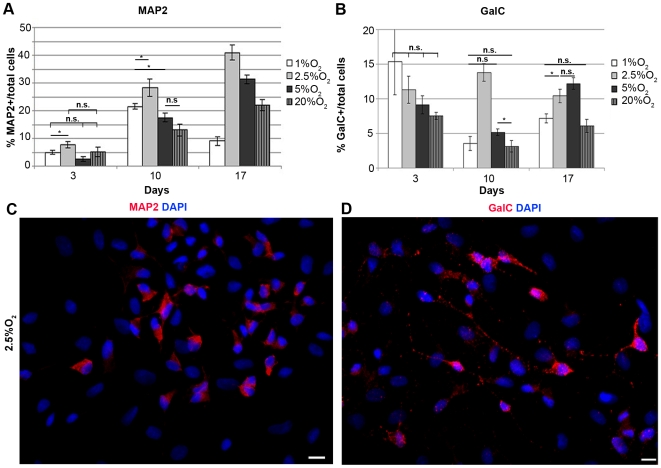
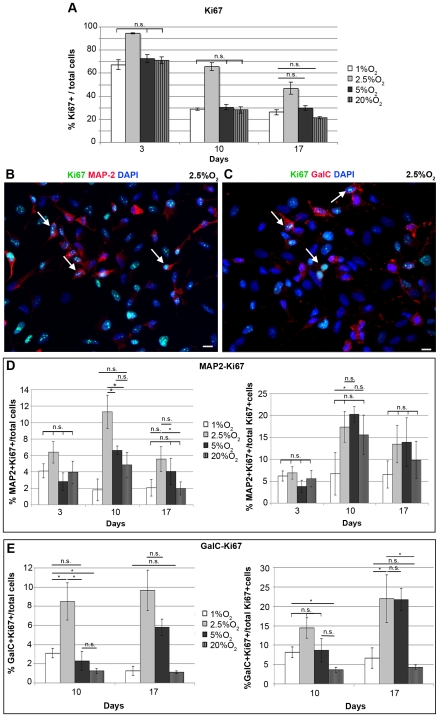
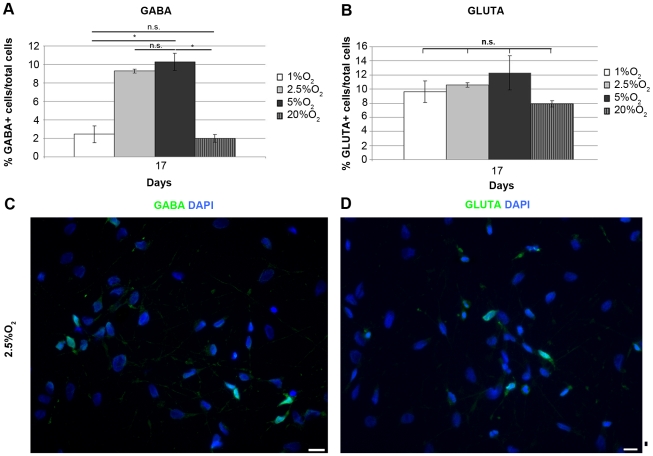
METHODOLOGY/PRINCIPAL FINDINGS: We investigated in vitro the effects of 1, 2.5, 5, and 20% oxygen concentrations on IhNSCs both during proliferation and differentiation. The highest proliferation rate, evaluated through neurosphere formation assay, was obtained at 2.5 and 5% oxygen, while 1% oxygen was most noxious for cell survival. The differentiation assays showed that the percentages of beta-tubIII+ or MAP2+ neuronal cells and of GalC+ oligodendrocytes were significantly higher at 2.5% compared with 1, 5, or 20% oxygen at 17 days in vitro. Mild hypoxia (2.5 to 5% oxygen) promoted differentiation into neuro-oligodendroglial progenitors as revealed by the higher percentage of MAP2+/Ki67+ and GalC+/Ki67+ residual proliferating progenitors, and enhanced the yield of GABAergic and slightly of glutamatergic neurons compared to 1% and 20% oxygen where a significant percentage of GFAP+/nestin+ cells were still present at 17 days of differentiation.
CONCLUSIONS/SIGNIFICANCE: These findings raise the possibility that reduced oxygen levels occurring in neuronal disorders like cerebral ischemia transiently lead to NSC remaining in a state of quiescence. Conversely, mild hypoxia favors NSC proliferation and neuronal and oligodendroglial differentiation, thus providing an important advance and a useful tool for NSC-mediated therapy of ischemic stroke and neurodegenerative diseases like Parkinson's disease, multiple sclerosis, and Alzheimer's disease.
神经干细胞(NSC)是研究和治疗神经退行性疾病的理想工具。我们最近建立了一个 v-myc 永生化的人 NSC(IhNSC)系,该系保留了与亲本细胞相当的干细胞特性。氧浓度是体外和体内细胞增殖和分化的最关键环境条件之一。在中枢神经系统中,生理氧浓度范围为 0.55 至 8%的氧气。特别是在侧脑室下区(SVZ)的生态位区域,估计为 2.5 至 3%。
方法/主要发现:我们研究了 1%、2.5%、5%和 20%氧浓度对 IhNSC 在增殖和分化过程中的体外影响。通过神经球形成测定评估,增殖率最高的是在 2.5%和 5%氧气下,而 1%氧气对细胞存活最有害。分化实验表明,与 1%、5%或 20%氧气相比,在体外 17 天,β-tubIII+或 MAP2+神经元细胞和 GalC+少突胶质细胞的百分比在 2.5%氧气下显著更高。轻度缺氧(2.5%至 5%氧气)促进向神经-少突胶质祖细胞分化,这表现为 MAP2+/Ki67+和 GalC+/Ki67+残留增殖祖细胞的百分比更高,并与 1%和 20%氧气相比,增强了 GABA 能和轻微的谷氨酸能神经元的产量,其中在分化 17 天时仍存在显著百分比的 GFAP+/nestin+细胞。
结论/意义:这些发现提出了一种可能性,即脑缺血等神经元疾病中发生的氧水平降低会导致 NSC 暂时处于静止状态。相反,轻度缺氧有利于 NSC 的增殖以及神经元和少突胶质分化,从而为 NSC 介导的缺血性中风和帕金森病、多发性硬化症和阿尔茨海默病等神经退行性疾病的治疗提供了重要的进展和有用的工具。