Centre for Applied Biomedical Engineering Research (CABER), Department of Mechanical & Aeronautical Engineering, and Materials and Surface Science Institute (MSSI), University of Limerick, Limerick, Ireland.
Int J Mol Sci. 2009 Nov 20;10(10):4375-4417. doi: 10.3390/ijms10104375.
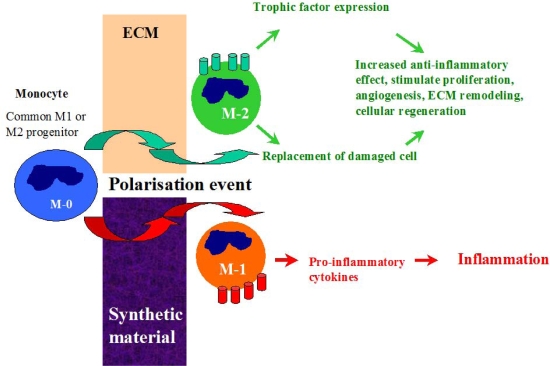
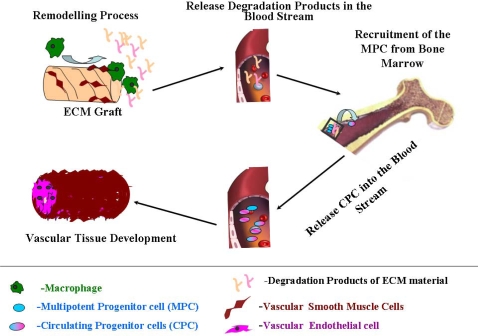
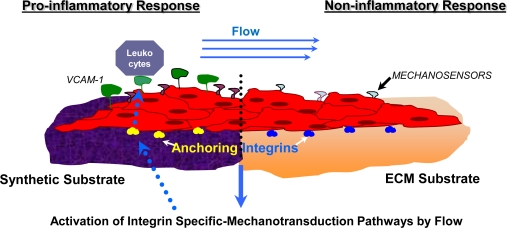
The in vivo healing process of vascular grafts involves the interaction of many contributing factors. The ability of vascular grafts to provide an environment which allows successful accomplishment of this process is extremely difficult. Poor endothelisation, inflammation, infection, occlusion, thrombosis, hyperplasia and pseudoaneurysms are common issues with synthetic grafts in vivo. Advanced materials composed of decellularised extracellular matrices (ECM) have been shown to promote the healing process via modulation of the host immune response, resistance to bacterial infections, allowing re-innervation and reestablishing homeostasis in the healing region. The physiological balance within the newly developed vascular tissue is maintained via the recreation of correct biorheology and mechanotransduction factors including host immune response, infection control, homing and the attraction of progenitor cells and infiltration by host tissue. Here, we review the progress in this tissue engineering approach, the enhancement potential of ECM materials and future prospects to reach the clinical environment.
血管移植物的体内愈合过程涉及许多因素的相互作用。血管移植物提供允许成功完成此过程的环境的能力极其困难。在体内,合成移植物常见的问题有内皮化不良、炎症、感染、闭塞、血栓形成、增生和假性动脉瘤。由去细胞细胞外基质 (ECM) 组成的先进材料已被证明可通过调节宿主免疫反应、抵抗细菌感染、允许再神经支配和在愈合区域重新建立体内平衡来促进愈合过程。通过重新创建正确的生物流变学和机械转导因子,包括宿主免疫反应、感染控制、归巢和祖细胞的吸引以及宿主组织的浸润,在新开发的血管组织内维持生理平衡。在这里,我们回顾了这种组织工程方法的进展、ECM 材料的增强潜力以及达到临床环境的未来前景。