Division of Cellular and Molecular Medicine, Centre For Infection, St George's University of London, London SW17 0RE, UK.
Malar J. 2010 Jan 11;9:10. doi: 10.1186/1475-2875-9-10.
Zoonotic malaria caused by Plasmodium knowlesi is an important, but newly recognized, human pathogen. For the first time, post-mortem findings from a fatal case of knowlesi malaria are reported here.
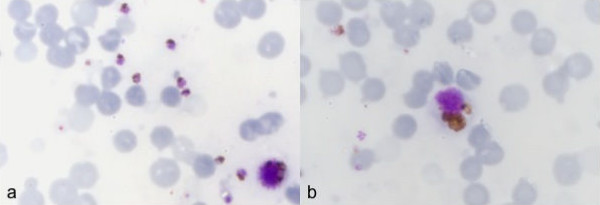
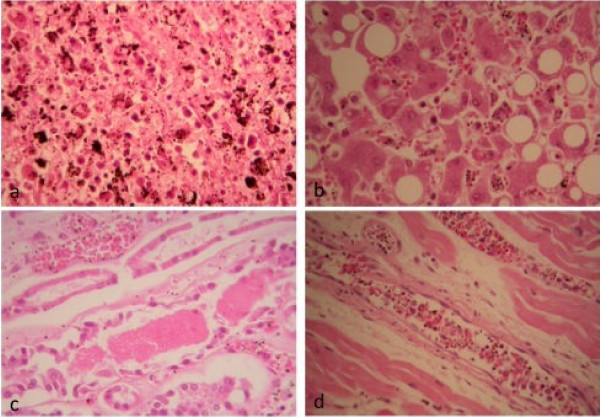
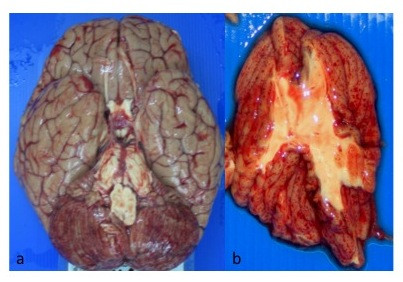
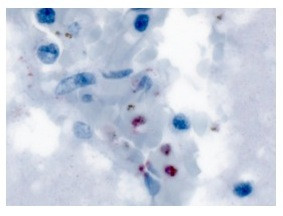
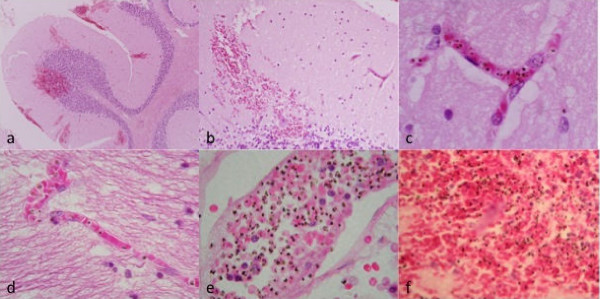
A formerly healthy 40 year-old male became symptomatic 10 days after spending time in the jungle of North Borneo. Four days later, he presented to hospital in a state of collapse and died within two hours. He was hyponatraemic and had elevated blood urea, potassium, lactate dehydrogenase and amino transferase values; he was also thrombocytopenic and eosinophilic. Dengue haemorrhagic shock was suspected and a post-mortem examination performed. Investigations for dengue virus were negative. Blood for malaria parasites indicated hyperparasitaemia and single species P. knowlesi infection was confirmed by nested-PCR. Macroscopic pathology of the brain and endocardium showed multiple petechial haemorrhages, the liver and spleen were enlarged and lungs had features consistent with ARDS. Microscopic pathology showed sequestration of pigmented parasitized red blood cells in the vessels of the cerebrum, cerebellum, heart and kidney without evidence of chronic inflammatory reaction in the brain or any other organ examined. Brain sections were negative for intracellular adhesion molecule-1. The spleen and liver had abundant pigment containing macrophages and parasitized red blood cells. The kidney had evidence of acute tubular necrosis and endothelial cells in heart sections were prominent.
The overall picture in this case was one of systemic malaria infection that fit the WHO classification for severe malaria. Post-mortem findings in this case were unexpectedly similar to those that define fatal falciparum malaria, including cerebral pathology. There were important differences including the absence of coma despite petechial haemorrhages and parasite sequestration in the brain. These results suggest that further study of knowlesi malaria will aid the interpretation of, often conflicting, information on malaria pathophysiology in humans.
由疟原虫引起的动物源性疟疾是一种重要的、但新出现的人类病原体。本文首次报道了首例致命性疟原虫感染的尸检结果。
一名 40 岁的健康男性在北婆罗洲的丛林中度过 10 天后出现症状。4 天后,他因病情恶化而到医院就诊,两小时内死亡。他出现低钠血症,血尿素、钾、乳酸脱氢酶和氨基转移酶水平升高,血小板减少和嗜酸性粒细胞增多。怀疑为登革热出血性休克,并进行了尸检。登革热病毒检测为阴性。疟原虫血液检查提示高疟原虫血症,巢式 PCR 证实为单一物种疟原虫感染。大脑和心内膜的宏观病理学显示多发性瘀点出血,肝脏和脾脏肿大,肺部表现符合 ARDS 特征。显微镜病理学显示大脑、小脑、心脏和肾脏血管中有被染成褐色的寄生红细胞的局灶性嵌塞,未发现大脑或任何其他检查器官有慢性炎症反应。脑切片内细胞间黏附分子-1 为阴性。脾和肝中有大量含色素的吞噬细胞和寄生红细胞。肾脏有急性肾小管坏死的证据,心脏切片中的内皮细胞明显突出。
本例的总体情况是全身疟疾感染,符合世界卫生组织对严重疟疾的分类。本例的尸检结果出人意料地与定义致命性恶性疟的结果相似,包括脑病理学。存在重要差异,包括尽管有瘀点出血和脑内寄生虫嵌塞,但没有昏迷。这些结果表明,对疟原虫的进一步研究将有助于解释人类疟疾病理生理学中经常出现的相互矛盾的信息。