Department of Physiology & Pharmacology, Wake Forest University School of Medicine, Medical Center Blvd, 546 NRC, Winston-Salem, NC 27157-1083, USA.
Psychopharmacology (Berl). 2010 Mar;208(4):585-92. doi: 10.1007/s00213-009-1756-4.
Studies in socially housed monkeys have demonstrated an influence of position in the social dominance hierarchy on brain dopamine D2 receptors and the reinforcing effects of cocaine that dissipates after long-term cocaine self-administration.
The aims of the study were to examine the effects of abstinence from cocaine on D2 receptors in socially housed monkeys and to extend behavioral characterizations to measures of reactivity to a novel object.
Twelve socially housed male cynomolgus monkeys with extensive cocaine self-administration experience were used (average lifetime intakes ∼270 and 215 mg/kg for dominant and subordinate monkeys, respectively). Abstinence lasted for approximately 8 months, after which D2 receptor availability was assessed using positron emission tomography and the D2 ligand [18F]fluoroclebopride. Reaction to novelty was also assessed in these subjects as well as nine individually housed monkeys.
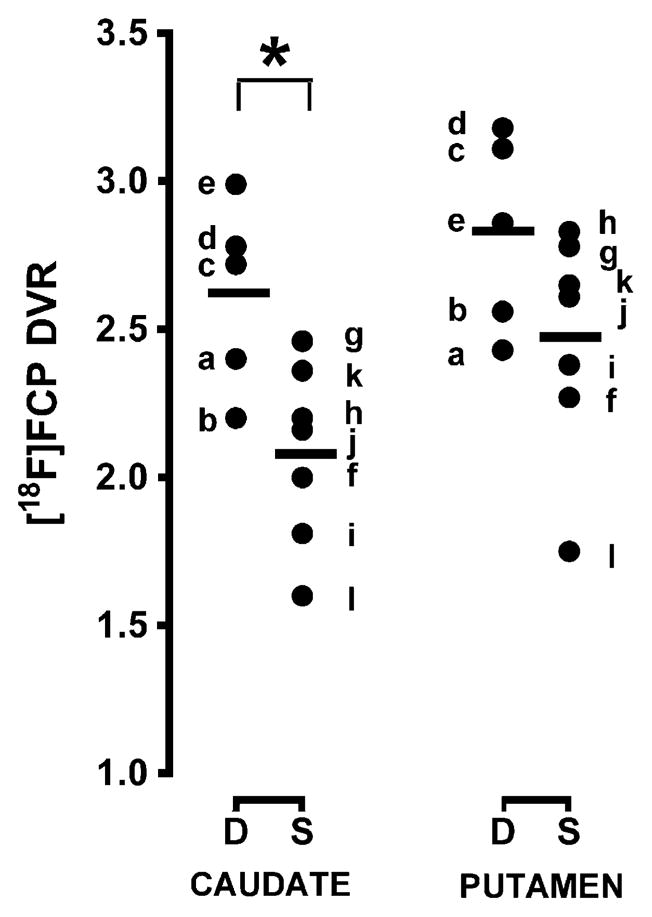
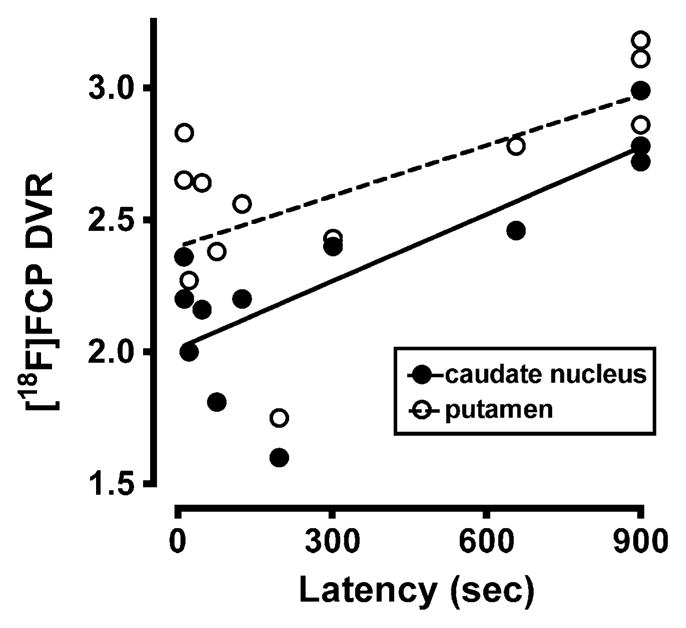
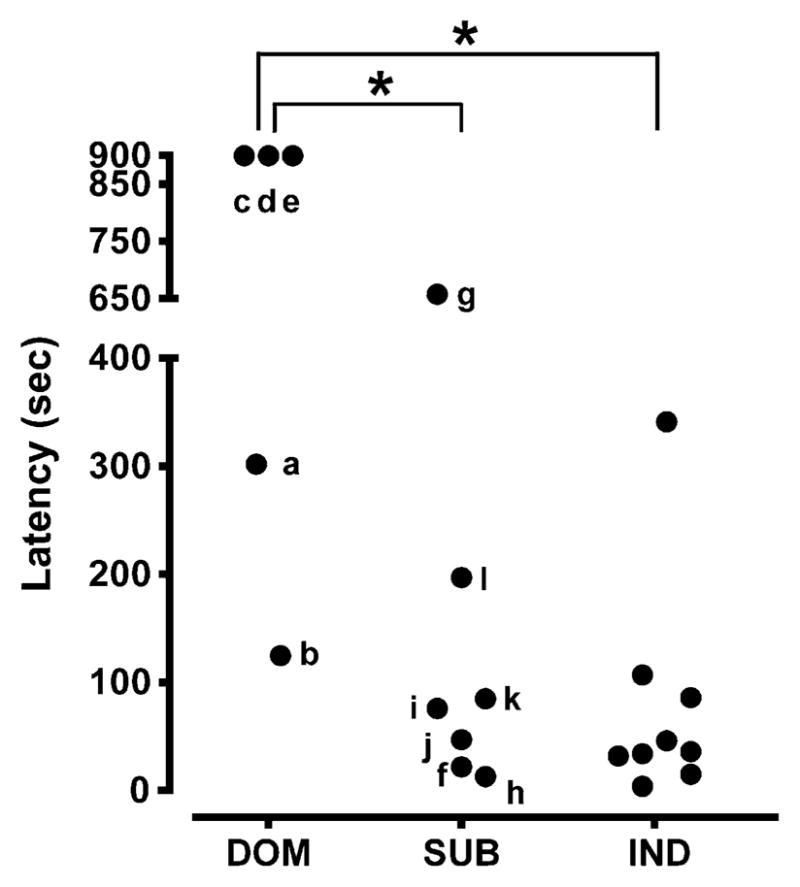
During abstinence, D2 receptor availability in the caudate nucleus was significantly higher in dominant versus subordinate monkeys. Average latency to touch a novel object was also significantly higher in dominant monkeys compared to subordinates or individually housed monkeys. In socially experienced monkeys, a significant positive correlation was observed between caudate nucleus D2 receptor availability and latencies to touch the novel object.
Although chronic cocaine self-administration blunts the ability of social dominance to alter D2 receptor availability and sensitivity to the reinforcing effects of cocaine, this influence reemerges during abstinence. In addition, the data suggest that prior experience with social dominance can lead to longer latencies in reaction to novelty--a personality trait associated with low vulnerability to cocaine abuse.
在社会性饲养的猴子中进行的研究表明,社会等级中地位的高低会影响大脑多巴胺 D2 受体以及可卡因的强化作用,而这种作用在长期可卡因自我给药后会消失。
本研究旨在探讨可卡因戒断对社会性饲养猴子中 D2 受体的影响,并将行为特征扩展到对新物体反应的测量。
使用了 12 只具有丰富可卡因自我给药经验的社会性饲养雄性食蟹猴(优势和劣势猴子的平均终生摄入量分别约为 270 和 215mg/kg)。戒断持续了大约 8 个月,之后使用正电子发射断层扫描和 D2 配体[18F]氟比洛芬评估 D2 受体的可用性。这些被试以及 9 只单独饲养的猴子也进行了对新奇事物的反应测试。
在戒断期间,尾状核中的 D2 受体可用性在优势猴子中明显高于劣势猴子。与劣势猴子或单独饲养的猴子相比,优势猴子触摸新物体的平均潜伏期也明显更长。在有社会经验的猴子中,尾状核 D2 受体的可用性与触摸新物体的潜伏期之间存在显著的正相关。
尽管慢性可卡因自我给药会削弱社会等级对改变 D2 受体可用性和对可卡因强化作用的敏感性,但这种影响会在戒断期间重新出现。此外,数据表明,先前的社会优势经验可能导致对新奇事物的反应时间延长——这是与可卡因滥用易感性低相关的个性特征。