Tuite Ashleigh, Fisman David N, Kwong Jeffrey C, Greer Amy
Dalla Lana School of Public Health, University of Toronto; Institute for Clinical Evaluative Sciences, Toronto, Ontario, Canada and Public Health Agency of Canada.
PLoS Curr. 2009 Dec 11;1:RRN1143. doi: 10.1371/currents.rrn1143.
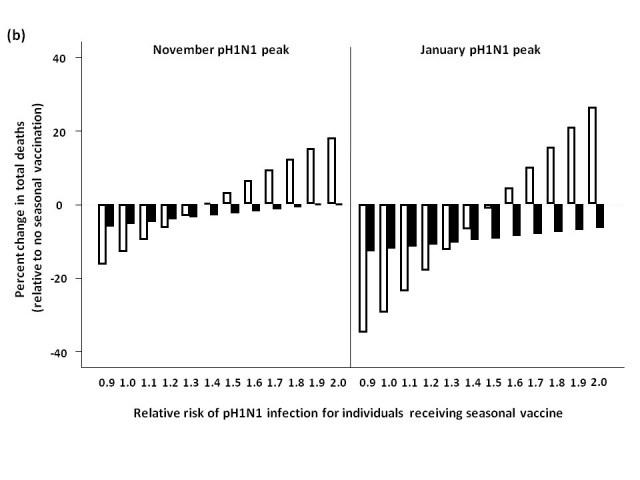
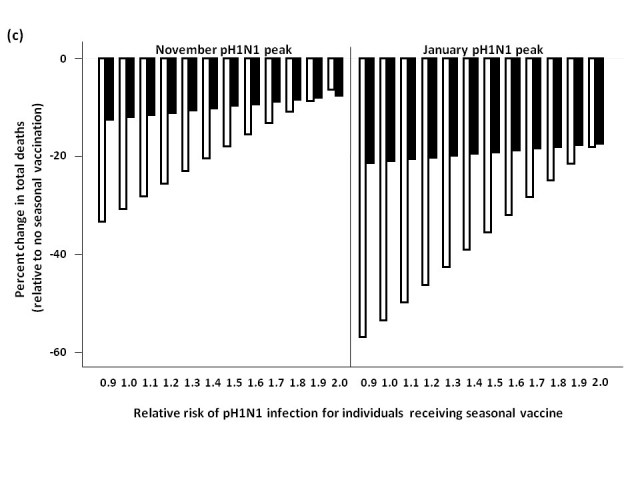
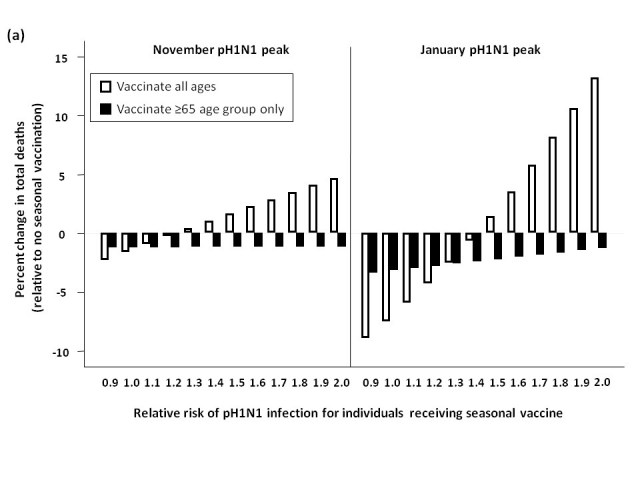
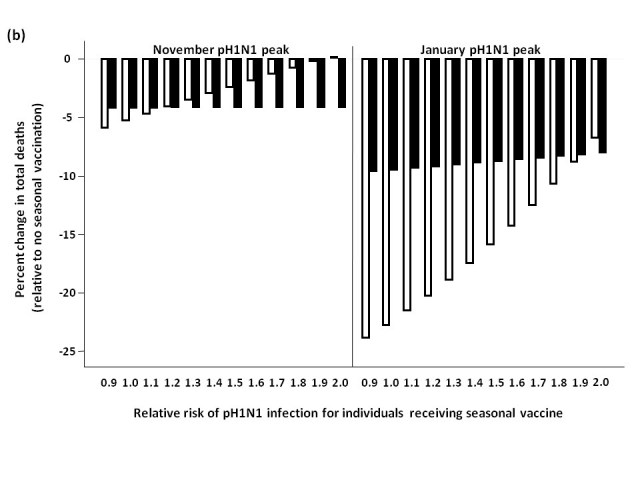
Emerging data suggest that receipt of the seasonal influenza vaccine may be associated with an enhanced risk of infection with pandemic (H1N1) 2009 (pH1N1). We sought to evaluate different seasonal vaccination strategies during a pandemic in the presence of varying levels of pH1N1 infection risk following seasonal influenza vaccine receipt.
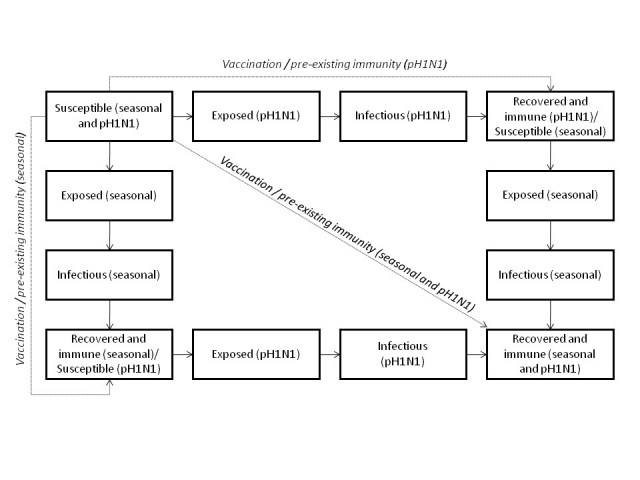
We developed a deterministic, age-structured compartmental model of influenza transmission in the presence of two circulating strains (pH1N1 and seasonal). We examined the effect of different seasonal vaccination strategies on total influenza-attributable mortality in the Canadian population for the 2009-2010 influenza season.
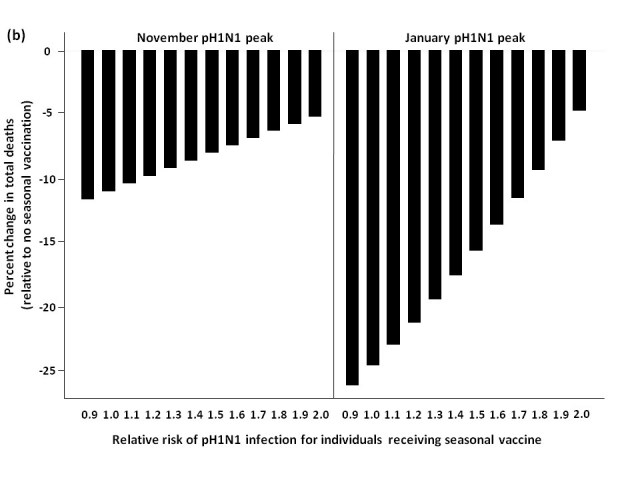
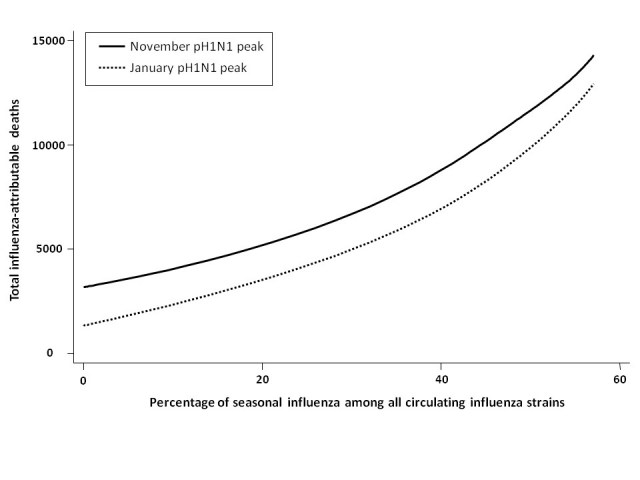
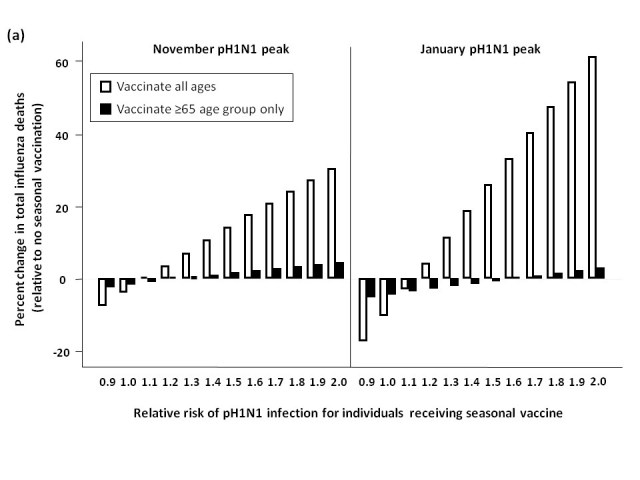
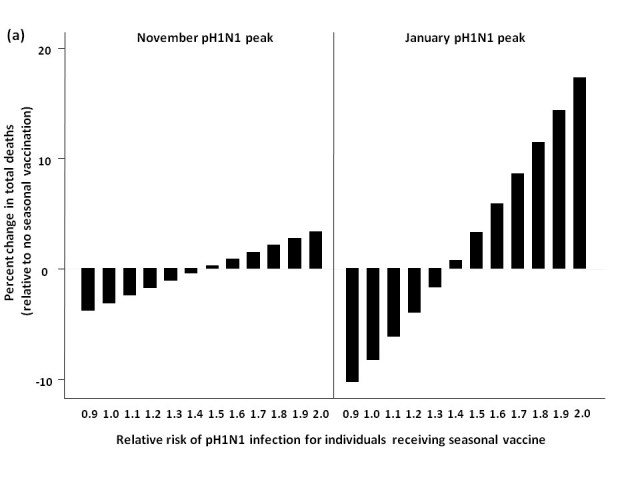
Seasonal vaccination strategies that focused on individuals aged >/=65 or delayed seasonal vaccine delivery until January tended to minimize mortality. In the presence of low levels (<2%) of co-circulating seasonal influenza, mortality estimates were sensitive to the seasonal vaccine-associated relative risk (RR), with small increases in RR resulting in enhanced mortality compared to the no seasonal vaccination option. Timing of the peak of pH1N1 activity and the amount of circulating seasonal influenza modified the impact of enhanced risk on total mortality.
In the presence of uncertainty surrounding enhanced risk of pH1N1 acquisition with seasonal vaccine receipt, delaying seasonal vaccine delivery or restricting vaccine to individuals aged >/=65 may reduce overall influenza-attributable mortality in the Canadian population.
新出现的数据表明,接种季节性流感疫苗可能与2009年甲型H1N1流感大流行(pH1N1)感染风险增加有关。我们试图评估在季节性流感疫苗接种后,在不同水平的pH1N1感染风险下,大流行期间的不同季节性疫苗接种策略。
我们建立了一个确定性的、按年龄分层的流感传播分区模型,其中存在两种流行毒株(pH1N1和季节性流感毒株)。我们研究了不同季节性疫苗接种策略对2009 - 2010年流感季节加拿大人群中流感所致总死亡率的影响。
针对年龄≥65岁人群的季节性疫苗接种策略或推迟季节性疫苗接种至1月的策略往往能使死亡率降至最低。在同时流行的季节性流感水平较低(<2%)的情况下,死亡率估计对季节性疫苗相关相对风险(RR)敏感,与不接种季节性疫苗的选项相比,RR的小幅增加会导致死亡率上升。pH1N1活动高峰的时间和季节性流感的流行量改变了风险增加对总死亡率的影响。
鉴于接种季节性疫苗后获得pH1N1的风险增加存在不确定性,推迟季节性疫苗接种或仅对年龄≥65岁的人群接种疫苗可能会降低加拿大人群中流感所致的总体死亡率。