Department of Molecular and Medical Pharmacology, Institute of Molecular Medicine, University of California Los Angeles, Los Angeles, California 90095-1738, USA.
Prostate. 2010 May 1;70(6):675-88. doi: 10.1002/pros.21112.
Although most prostate cancers respond well to initial treatments, a fraction of prostate cancers are more aggressive and will recur and metastasize. At that point, there are few treatment options available. Significant efforts have been made to identify biomarkers that will identify these more aggressive cancers to tailor a more vigorous treatment in order to improve outcome. Polycomb Group protein enhancer of zeste 2 (EZH2) was found to be overexpressed in metastatic prostate tumors, and is considered an excellent candidate for such a biomarker. Scattered studies have found that EZH2 overexpression causes neoplastic transformation, invasion, and growth of prostate cells. However, these studies utilized different systems and cell lines, and so are difficult to correlate with one another.
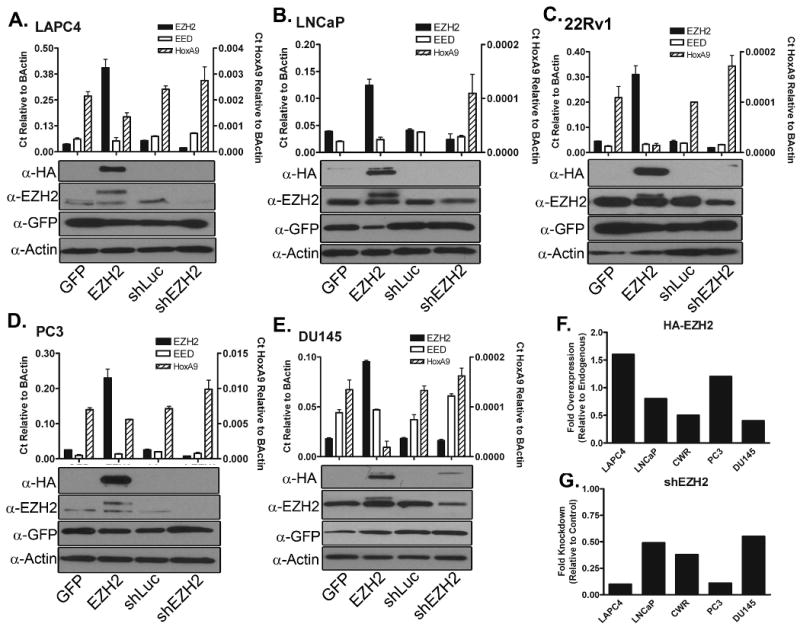
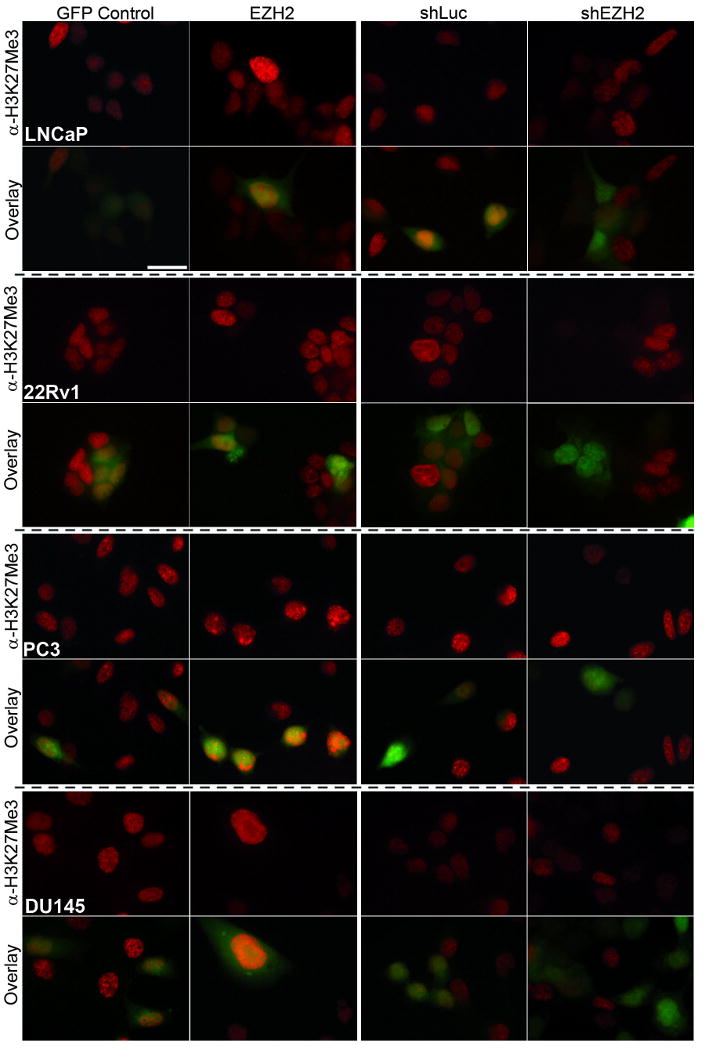
In this study, a comprehensive evaluation of the phenotypic effects of EZH2 in a panel of five prostate cancer cell lines was performed. By using multiple cell lines, and examining overexpression and knockdown of EZH2 concurrently, a broad view of EZH2's role in prostate cancer was achieved.
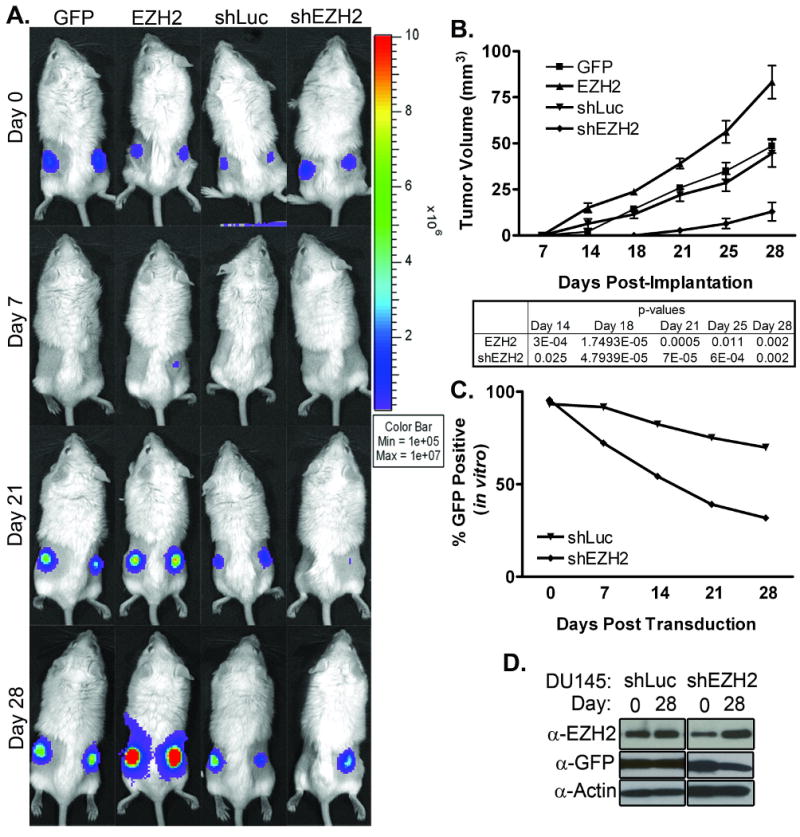
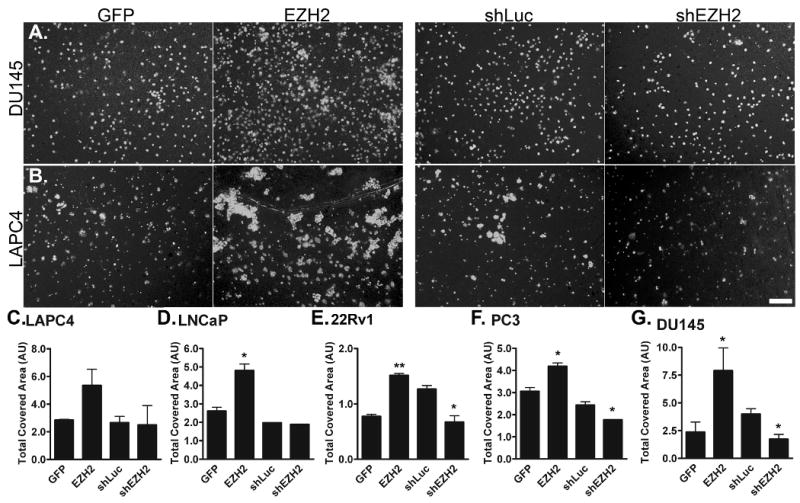
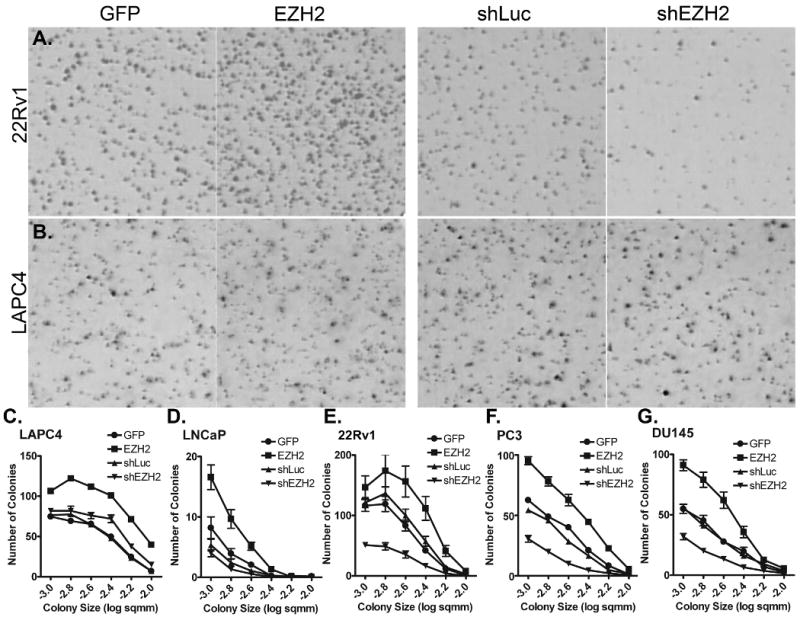
Overexpression of EZH2 led to more aggressive behaviors in all prostate cell lines tested. In contrast, downregulation of EZH2 reduced invasion and tumorigenicity of androgen-independent (AI) cell lines CWR22Rv1, PC3, and DU145, but not of androgen-dependent (AD) cell lines LAPC4 and LNCaP.
Findings from this study suggest that AI prostate tumors are more dependent on EZH2 expression than AD tumors. Our observations provide an explanation for the strong correlation between EZH2 overexpression and advanced stage, aggressive prostate cancers.
尽管大多数前列腺癌对初始治疗反应良好,但仍有一部分前列腺癌侵袭性更强,会复发和转移。此时,可供选择的治疗方案很少。人们已经做出了巨大的努力来识别生物标志物,以确定这些侵袭性更强的癌症,从而制定更积极的治疗方案,以改善治疗效果。多梳蛋白增强子 EZH2(EZH2)在转移性前列腺肿瘤中表达过高,被认为是此类生物标志物的理想候选物。一些分散的研究发现,EZH2 过表达会导致前列腺细胞发生肿瘤转化、侵袭和生长。然而,这些研究使用了不同的系统和细胞系,因此很难相互关联。
在这项研究中,对 5 种前列腺癌细胞系中的 EZH2 表型效应进行了综合评估。通过使用多种细胞系,并同时检测 EZH2 的过表达和敲低,实现了对 EZH2 在前列腺癌中作用的广泛观察。
EZH2 的过表达导致所有测试的前列腺癌细胞系表现出更具侵袭性的行为。相比之下,下调 EZH2 降低了雄激素非依赖性(AI)细胞系 CWR22Rv1、PC3 和 DU145 的侵袭性和致瘤性,但对雄激素依赖性(AD)细胞系 LAPC4 和 LNCaP 没有影响。
这项研究的结果表明,AI 前列腺肿瘤比 AD 肿瘤更依赖于 EZH2 的表达。我们的观察结果为 EZH2 过表达与晚期、侵袭性前列腺癌之间的强相关性提供了一种解释。