Department of Biochemistry and Molecular Biology, Oklahoma State University, Stillwater, OK 74078, USA.
BMC Genomics. 2010 Jan 20;11:52. doi: 10.1186/1471-2164-11-52.
In eukaryotes, microRNAs (miRNAs) have emerged as critical regulators of gene expression. The Silkworm (Bombyx mori L.) is one of the most suitable lepidopteran insects for studying the molecular aspects of metamorphosis because of its large size, availability of mutants and genome sequence. Besides, this insect also has been amply studied from a physiological and biochemical perspective. Deep sequencing of small RNAs isolated from different stages of silkworm is a powerful tool not only for measuring the changes in miRNA profile but also for discovering novel miRNAs.
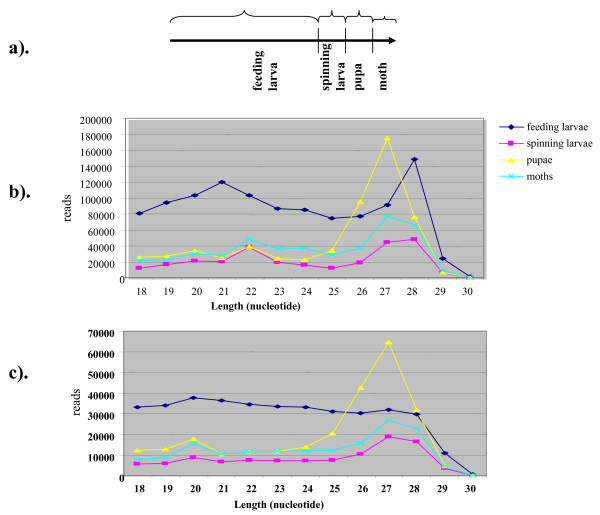
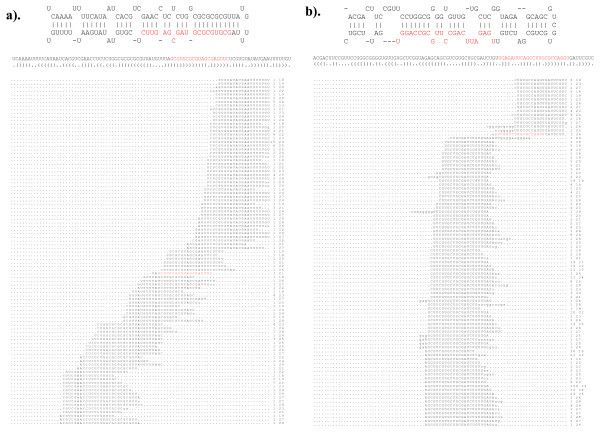
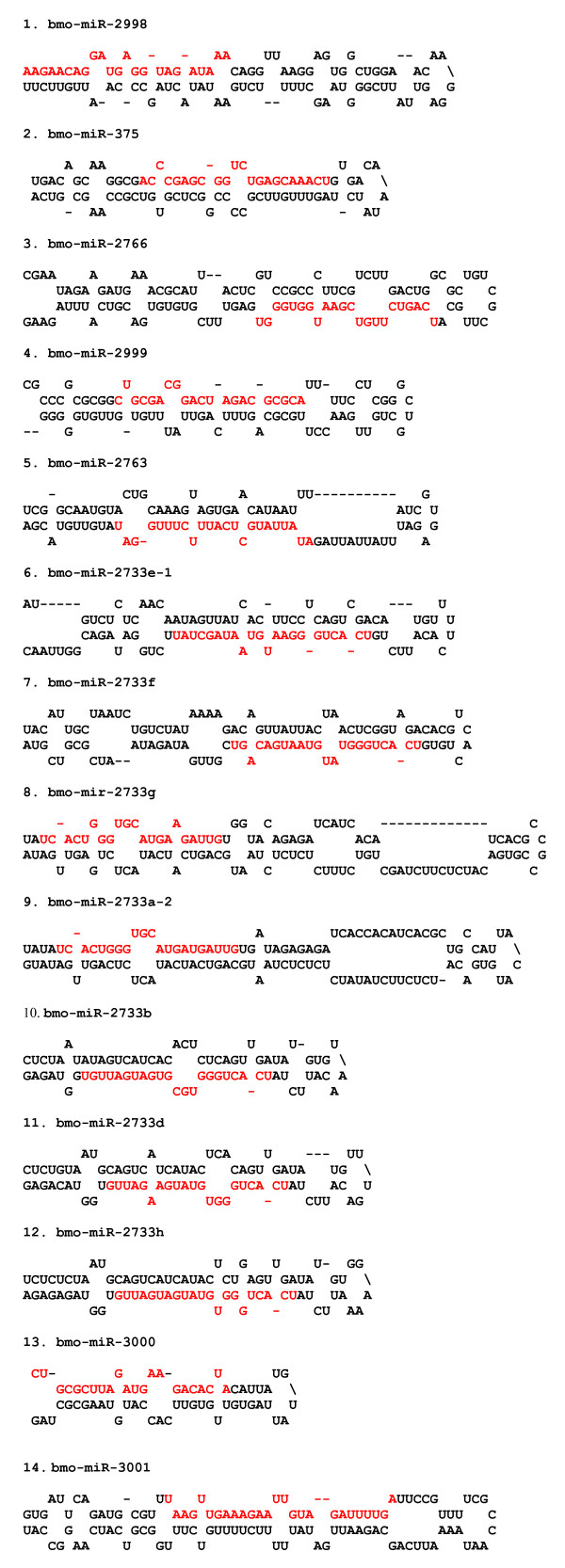
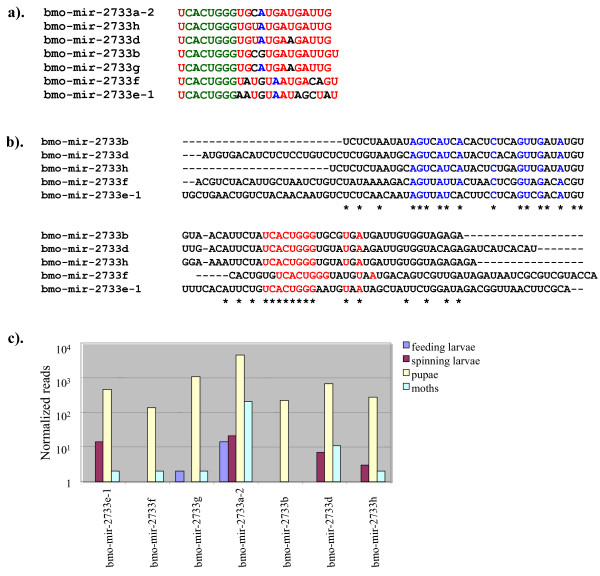
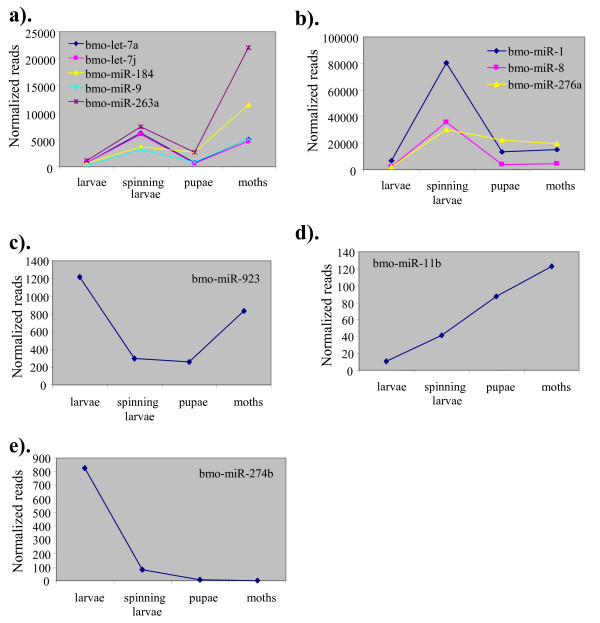
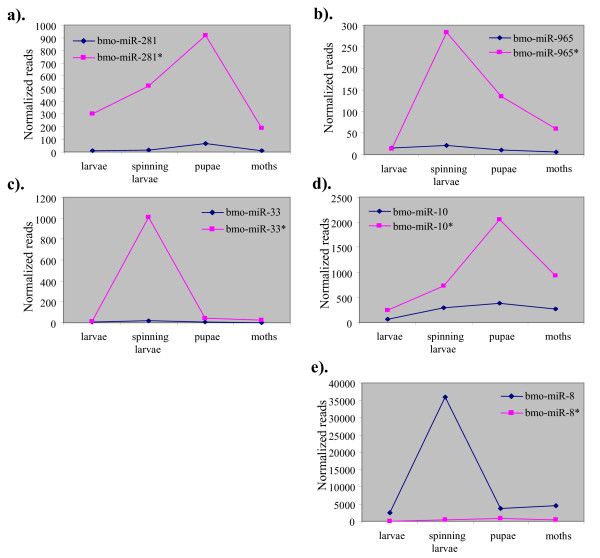
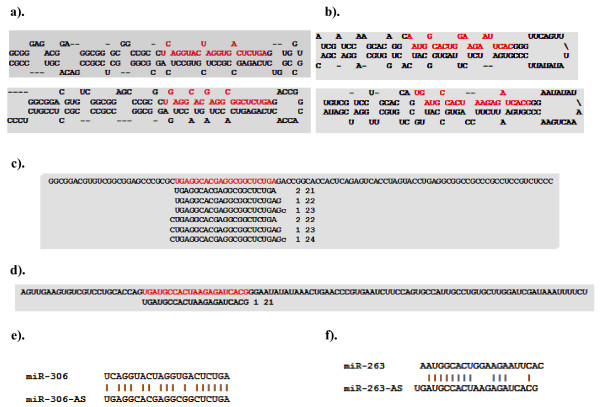
We generated small RNA libraries from feeding larvae, spinning larvae, pupae and adults of B. mori and obtained approximately 2.5 million reads of 18-30 nt. Sequence analysis identified 14 novel and 101 conserved miRNAs. Most novel miRNAs are preferentially expressed in pupae, whereas more than 95% of the conserved miRNAs are dynamically regulated during different developmental stages. Remarkably, the miRNA-star (miR*) of four miRNAs are expressed at much higher levels than their corresponding miRNAs, and their expression profiles are distinct from their corresponding miRNA profiles during different developmental stages. Additionally, we detected two antisense miRNA loci (miR-263-S and miR-263-AS; miR-306-S and miR-306-AS) that are expressed in sense and antisense directions. Interestingly, miR-263 and miR-306 are preferentially and abundantly expressed in pupae and adults, respectively.
We identified 101 homologs of conserved miRNAs, 14 species-specific and two antisense miRNAs in the silkworm. Our results provided deeper insights into changes in conserved and novel miRNA and miRNA* accumulation during development.
在真核生物中,microRNAs(miRNAs)已成为基因表达的关键调控因子。家蚕(Bombyx mori L.)是研究变态分子机制的最适鳞翅目昆虫之一,因为其体型较大、具有丰富的突变体资源和基因组序列。此外,从生理生化角度对该昆虫也进行了充分研究。从小蚕、吐丝幼虫、蛹和成虫中分离的小 RNA 的深度测序不仅是衡量 miRNA 谱变化的有力工具,也是发现新 miRNA 的有力工具。
我们从小蚕的取食幼虫、吐丝幼虫、蛹和成虫中生成了小 RNA 文库,获得了约 250 万个 18-30nt 的读段。序列分析鉴定了 14 个新的和 101 个保守的 miRNA。大多数新的 miRNA 优先在蛹中表达,而超过 95%的保守 miRNA 在不同发育阶段呈动态调节。值得注意的是,四个 miRNA 的 miRNA*-star(miR*)的表达水平明显高于其对应的 miRNA,其表达谱在不同发育阶段与相应 miRNA 谱明显不同。此外,我们检测到两个反义 miRNA 基因座(miR-263-S 和 miR-263-AS;miR-306-S 和 miR-306-AS),它们以正反义方向表达。有趣的是,miR-263 和 miR-306 分别在蛹和成虫中优先和丰富地表达。
我们在家蚕中鉴定了 101 个保守 miRNA 的同源物、14 个种特异性 miRNA 和两个反义 miRNA。我们的结果更深入地了解了在发育过程中保守和新的 miRNA 及其 miRNA*积累的变化。