Institute for Biology of Stem Cells, Department of Biomolecular Engineering, University of California Santa Cruz, Santa Cruz, California, United States of America.
PLoS One. 2010 Jan 20;5(1):e8785. doi: 10.1371/journal.pone.0008785.
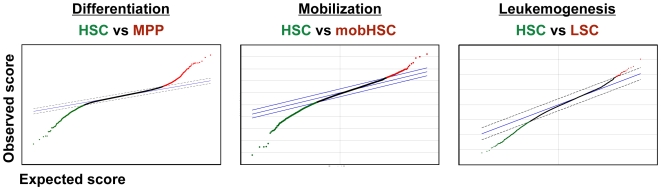
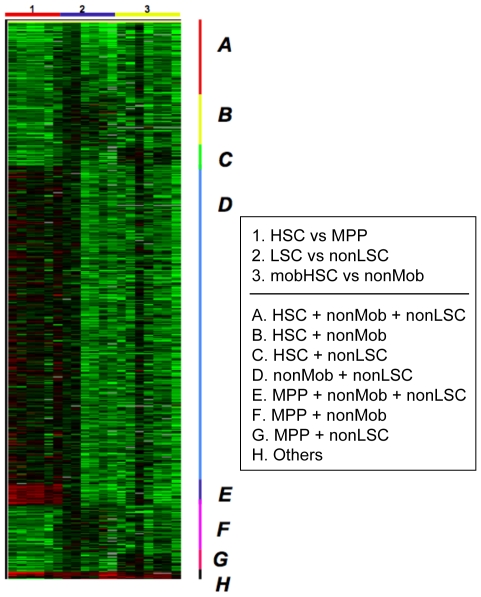
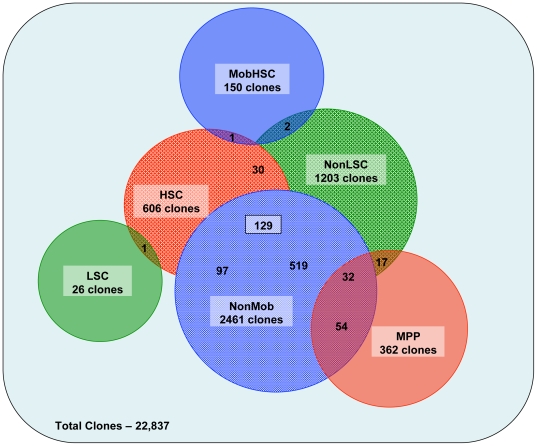
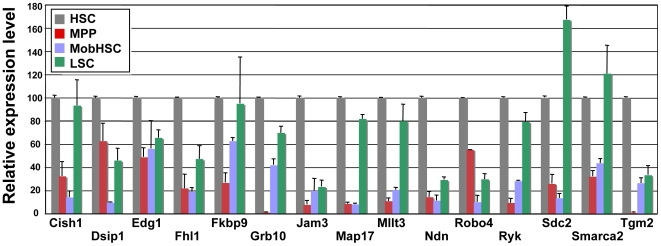
Hematopoietic stem cells (HSC) are rare, multipotent cells capable of generating all specialized cells of the blood system. Appropriate regulation of HSC quiescence is thought to be crucial to maintain their lifelong function; however, the molecular pathways controlling stem cell quiescence remain poorly characterized. Likewise, the molecular events driving leukemogenesis remain elusive. In this study, we compare the gene expression profiles of steady-state bone marrow HSC to non-self-renewing multipotent progenitors; to HSC treated with mobilizing drugs that expand the HSC pool and induce egress from the marrow; and to leukemic HSC in a mouse model of chronic myelogenous leukemia. By intersecting the resulting lists of differentially regulated genes we identify a subset of molecules that are downregulated in all three circumstances, and thus may be particularly important for the maintenance and function of normal, quiescent HSC. These results identify potential key regulators of HSC and give insights into the clinically important processes of HSC mobilization for transplantation and leukemic development from cancer stem cells.
造血干细胞(HSC)是一种稀有、多能的细胞,能够生成所有血液系统的特化细胞。适当调节 HSC 的静止状态被认为对维持其终身功能至关重要;然而,控制干细胞静止的分子途径仍未被充分描述。同样,驱动白血病发生的分子事件仍然难以捉摸。在这项研究中,我们将稳态骨髓 HSC 的基因表达谱与非自我更新的多能祖细胞进行比较;与用动员药物处理的 HSC 进行比较,这些药物可扩大 HSC 池并诱导其从骨髓中移出;并与慢性粒细胞白血病小鼠模型中的白血病 HSC 进行比较。通过交叉比较差异调节基因的列表,我们确定了一组在所有三种情况下都下调的分子,因此它们可能对维持和功能正常、静止的 HSC 特别重要。这些结果确定了 HSC 的潜在关键调节因子,并深入了解了临床上重要的 HSC 动员过程,用于移植和癌症干细胞来源的白血病发展。