Burgess Daniel, Zhang Yan, Siefker Ed, Vaca Ryan, Kuracha Murali R, Reneker Lixing, Overbeek Paul A, Govindarajan Venkatesh
Department of Surgery, 2500 California Plaza, Creighton University, Omaha, NE 68178, USA.
BMC Dev Biol. 2010 Jan 27;10:13. doi: 10.1186/1471-213X-10-13.
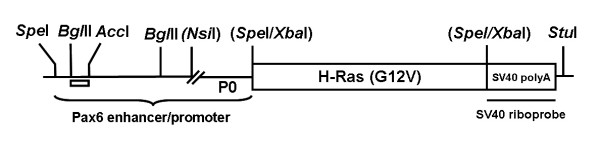
Mammalian Ras genes regulate diverse cellular processes including proliferation and differentiation and are frequently mutated in human cancers. Tumor development in response to Ras activation varies between different tissues and the molecular basis for these variations are poorly understood. The murine lens and cornea have a common embryonic origin and arise from adjacent regions of the surface ectoderm. Activation of the fibroblast growth factor (FGF) signaling pathway induces the corneal epithelial cells to proliferate and the lens epithelial cells to exit the cell cycle. The molecular mechanisms that regulate the differential responses of these two related tissues have not been defined. We have generated transgenic mice that express a constitutively active version of human H-Ras in their lenses and corneas.
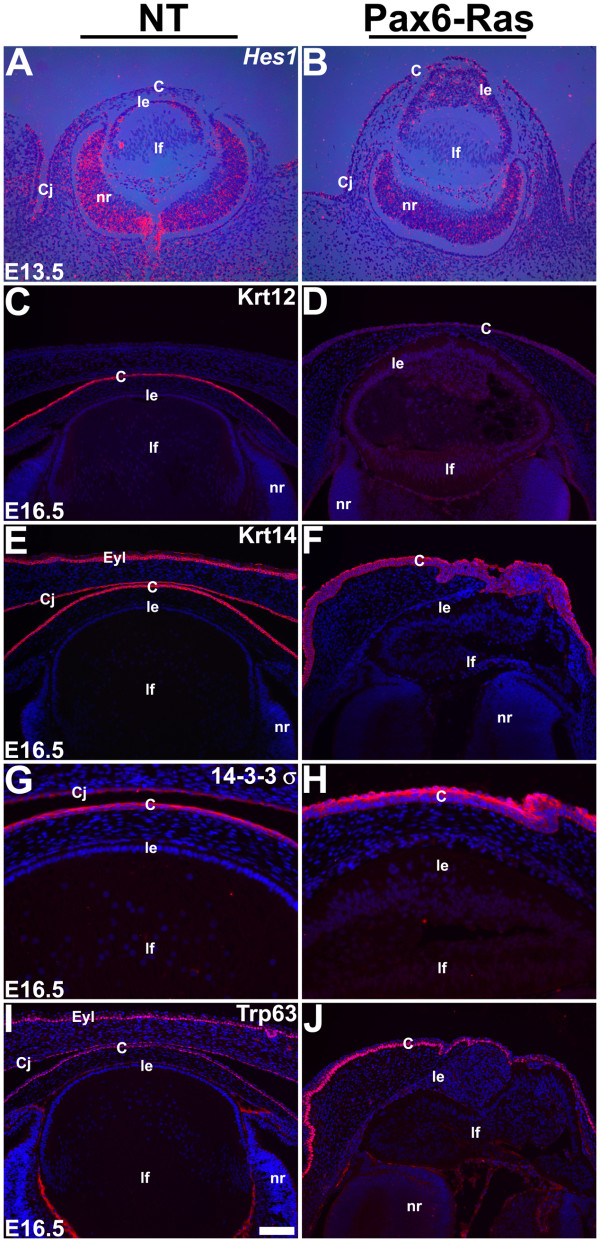
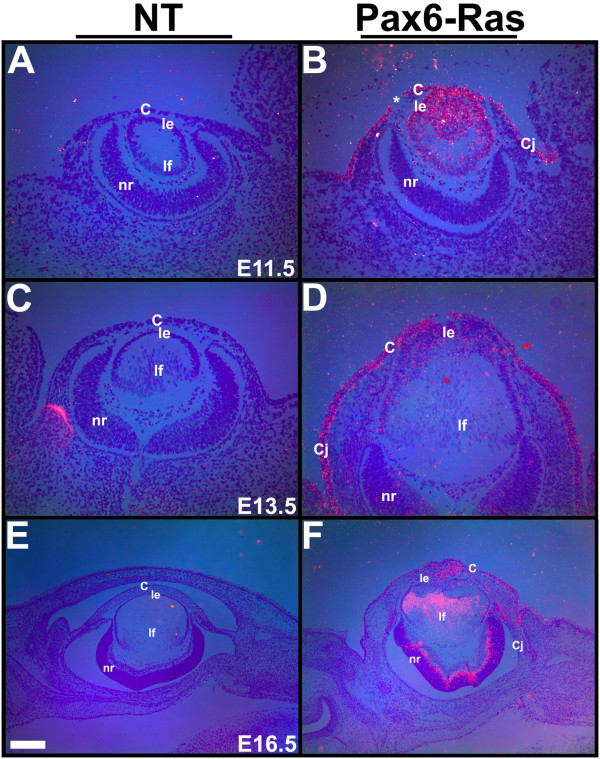
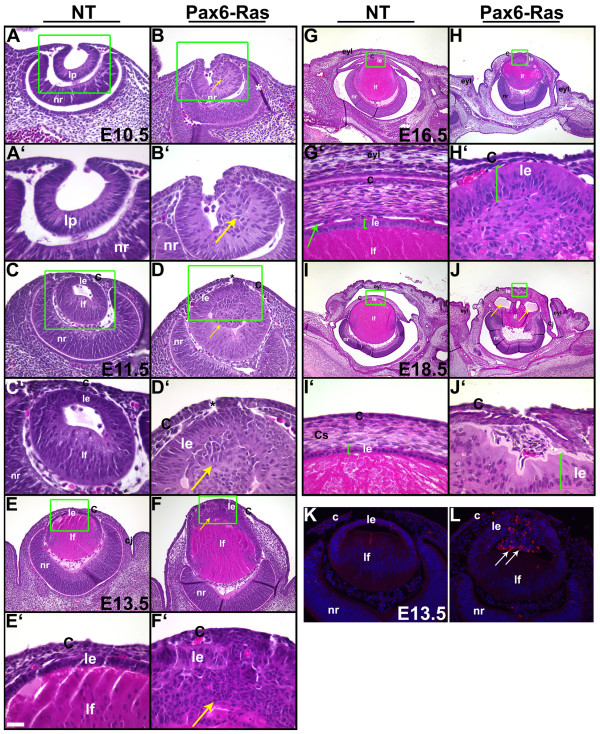
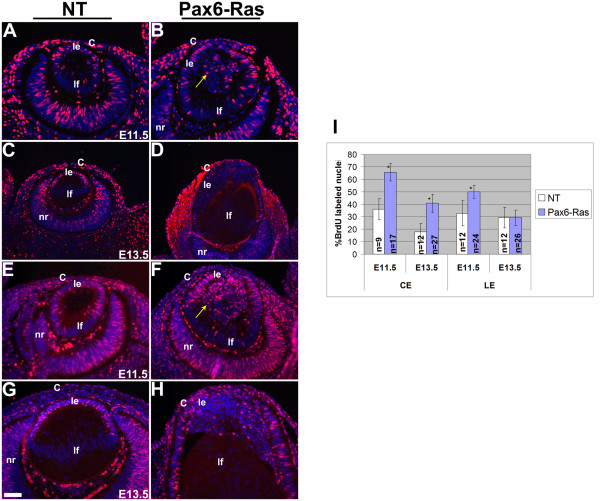
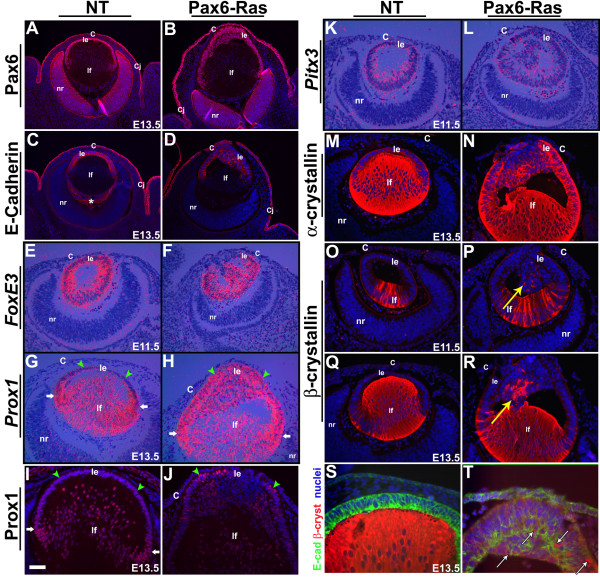
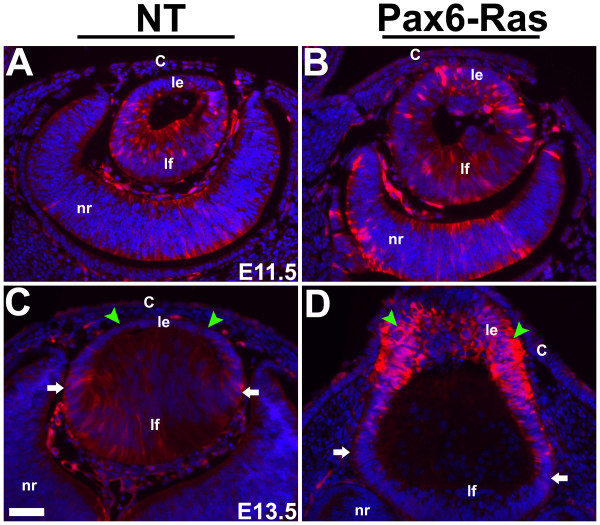
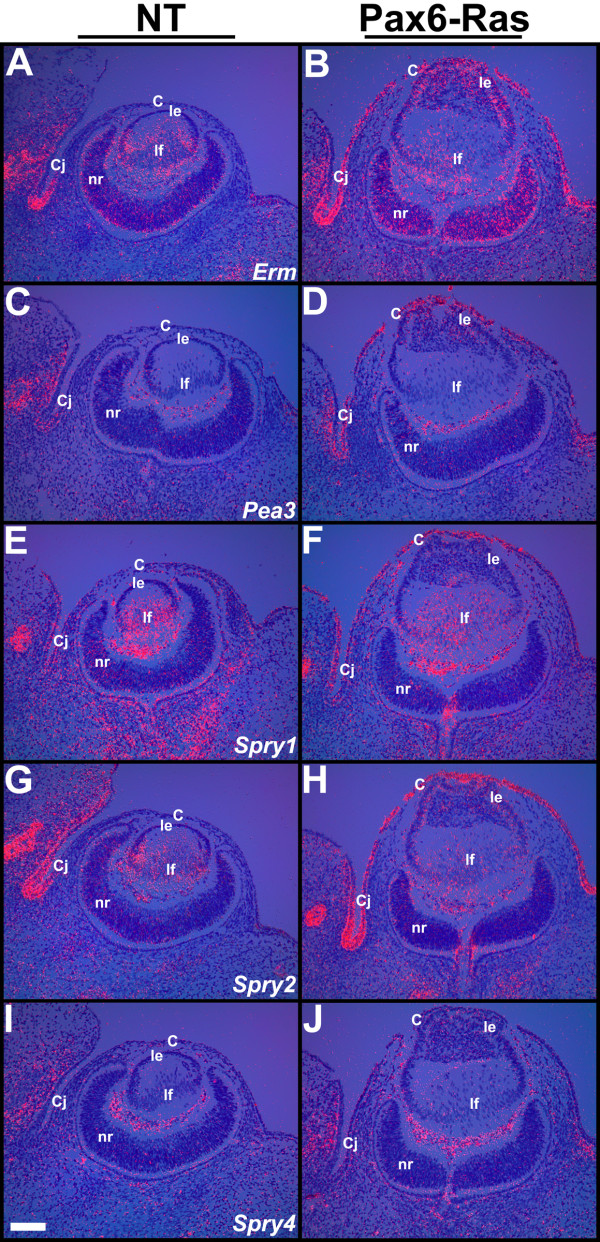
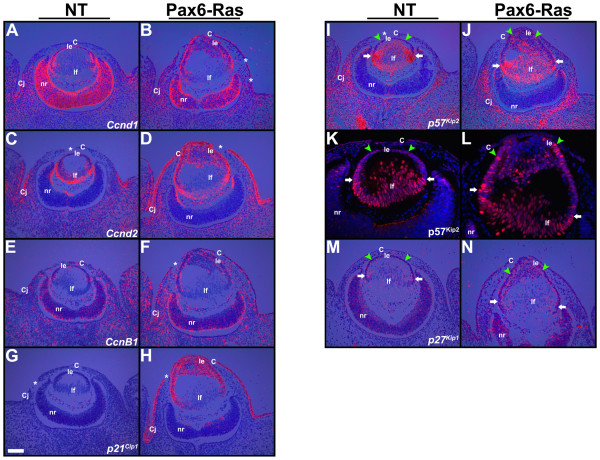
Ras transgenic lenses and corneal epithelial cells showed increased proliferation with concomitant increases in cyclin D1 and D2 expression. This initial increase in proliferation is sustained in the cornea but not in the lens epithelial cells. Coincidentally, cdk inhibitors p27Kip1 and p57Kip2 were upregulated in the Ras transgenic lenses but not in the corneas. Phospho-Erk1 and Erk2 levels were elevated in the lens but not in the cornea and Spry 1 and Spry 2, negative regulators of Ras-Raf-Erk signaling, were upregulated more in the corneal than in the lens epithelial cells. Both lens and corneal differentiation programs were sensitive to Ras activation. Ras transgenic embryos showed a distinctive alteration in the architecture of the lens pit. Ras activation, though sufficient for upregulation of Prox1, a transcription factor critical for cell cycle exit and initiation of fiber differentiation, is not sufficient for induction of terminal fiber differentiation. Expression of Keratin 12, a marker of corneal epithelial differentiation, was reduced in the Ras transgenic corneas.
Collectively, these results suggest that Ras activation a) induces distinct sets of downstream targets in the lens and cornea resulting in distinct cellular responses and b) is sufficient for initiation but not completion of lens fiber differentiation.
哺乳动物Ras基因调节多种细胞过程,包括增殖和分化,并且在人类癌症中经常发生突变。不同组织对Ras激活的肿瘤发展反应各不相同,而这些差异的分子基础尚不清楚。小鼠晶状体和角膜具有共同的胚胎起源,起源于表面外胚层的相邻区域。成纤维细胞生长因子(FGF)信号通路的激活诱导角膜上皮细胞增殖,而晶状体上皮细胞退出细胞周期。调节这两个相关组织不同反应的分子机制尚未明确。我们已生成在晶状体和角膜中表达组成型活性人H-Ras的转基因小鼠。
Ras转基因晶状体和角膜上皮细胞显示增殖增加,同时细胞周期蛋白D1和D2表达增加。这种增殖的初始增加在角膜中持续存在,但在晶状体上皮细胞中则不然。巧合的是,细胞周期蛋白依赖性激酶抑制剂p27Kip1和p57Kip2在Ras转基因晶状体中上调,但在角膜中未上调。磷酸化的Erk1和Erk2水平在晶状体中升高,但在角膜中未升高,并且Ras-Raf-Erk信号的负调节因子Spry 1和Spry 2在角膜上皮细胞中的上调程度高于晶状体上皮细胞。晶状体和角膜分化程序均对Ras激活敏感。Ras转基因胚胎在晶状体窝的结构上显示出独特的改变。Ras激活虽然足以上调Prox1(一种对细胞周期退出和纤维分化起始至关重要的转录因子),但不足以诱导终末纤维分化。角膜上皮分化标志物角蛋白12的表达在Ras转基因角膜中降低。
总体而言,这些结果表明,Ras激活a)在晶状体和角膜中诱导不同的下游靶点集,导致不同的细胞反应,并且b)足以启动但不能完成晶状体纤维分化。