Department of Pediatrics, Children's Hospital of Michigan, Wayne State University School of Medicine, Detroit, MI 48201, USA.
Semin Perinatol. 2010 Feb;34(1):39-45. doi: 10.1053/j.semperi.2009.10.004.
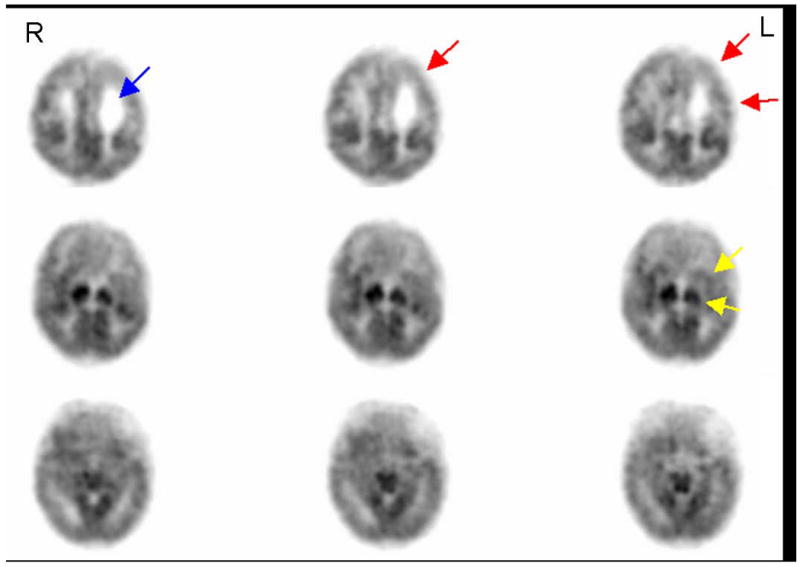
Positron emission tomography (PET) is a relatively noninvasive imaging test that is able to detect abnormalities in different organs based on derangements in the chemical functions and/or receptor expression at the cellular level. PET imaging of the brain has been shown to be a powerful diagnostic tool for detecting neurochemical abnormalities associated with various neurologic disorders as well as to study normal brain development. Although its use in detecting neurological abnormalities has been well described in adults and pediatrics, its application in the newborn nursery has not been explored adequately. Early detection of brain injury secondary to intrauterine and perinatal insults using PET imaging can provide new insight in prognosis and in instituting early therapy. In this review, the authors describe applications of PET imaging in the newborn nursery specifically related to the detection of metabolic changes seen in hypoxic ischemic encephalopathy, neonatal seizures, and neuroinflammation in the neonatal period.
正电子发射断层扫描(PET)是一种相对非侵入性的成像测试,能够根据细胞水平上的化学功能和/或受体表达的紊乱来检测不同器官的异常。脑 PET 成像已被证明是一种强大的诊断工具,可用于检测与各种神经障碍相关的神经化学异常,并研究正常的大脑发育。尽管其在检测成人和儿科神经异常方面的应用已得到充分描述,但它在新生儿病房中的应用尚未得到充分探索。使用 PET 成像早期检测宫内和围产期损伤引起的脑损伤,可以为预后和早期治疗提供新的见解。在这篇综述中,作者描述了 PET 成像在新生儿病房中的应用,特别是与缺氧缺血性脑病、新生儿癫痫和新生儿期神经炎症中所见的代谢变化的检测有关。