Division of Pulmonary, Allergy and Critical Care Medicine, Emory University School of Medicine, Atlanta, GA.
McKelvey Center for Lung Transplantation and Pulmonary Vascular Diseases, Emory University, Atlanta, GA.
Am J Transplant. 2010 Apr;10(4):900-907. doi: 10.1111/j.1600-6143.2009.02995.x. Epub 2010 Feb 1.
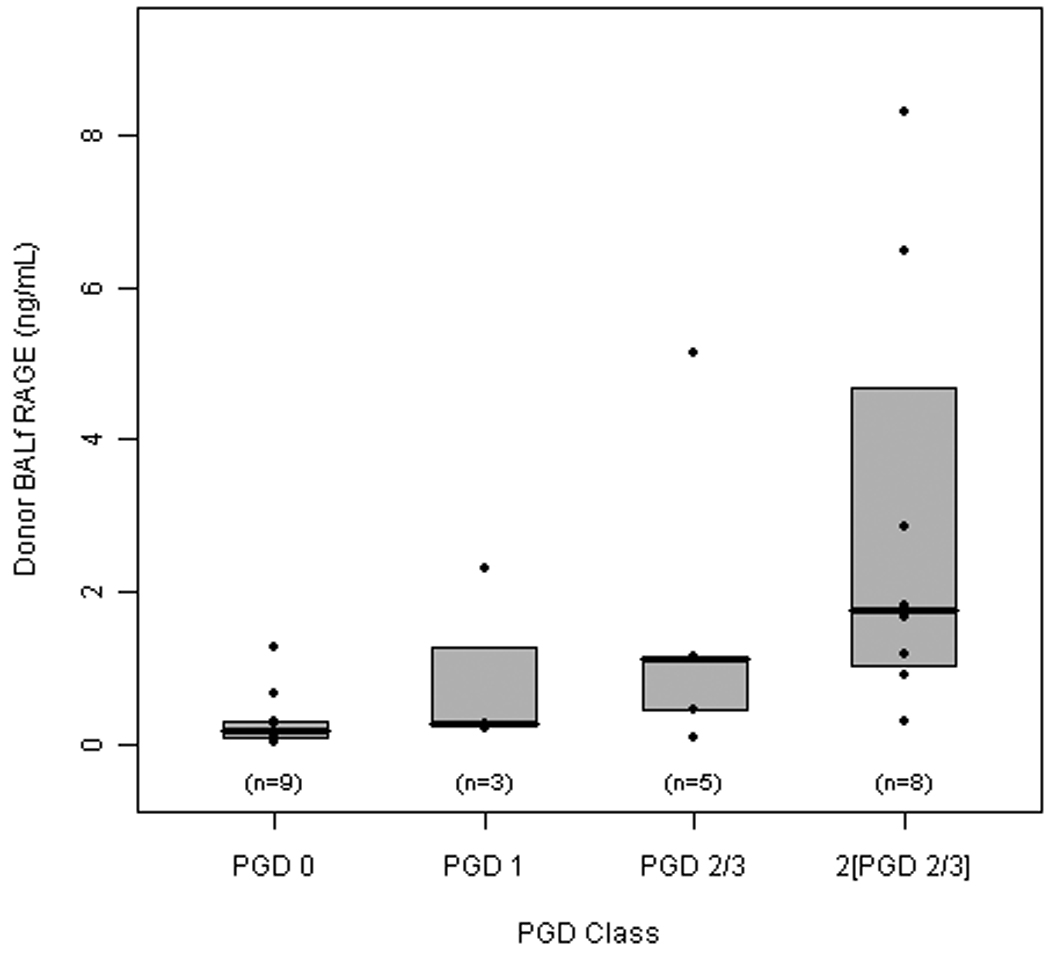
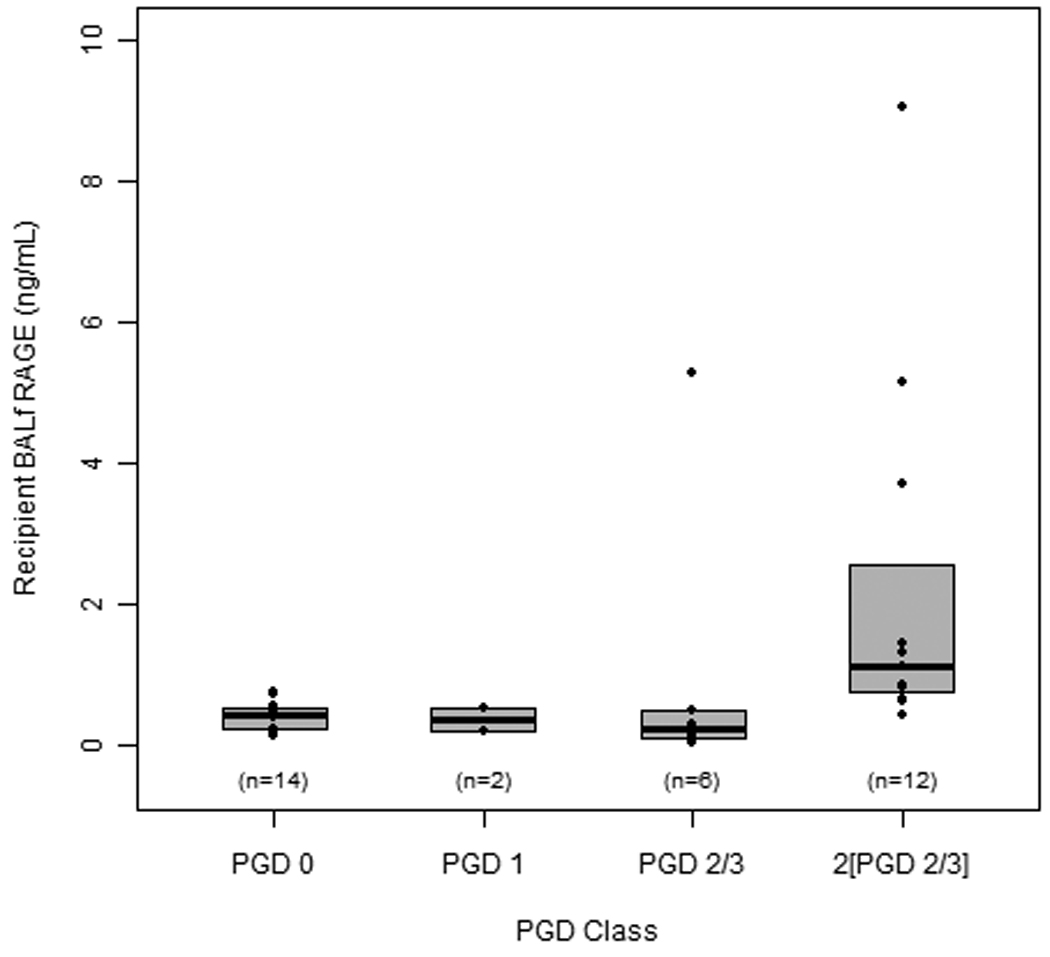
Development of primary graft dysfunction (PGD) is associated with poor outcomes after transplantation. We hypothesized that Receptor for Advanced Glycation End-products (RAGE) levels in donor lungs is associated with the development of PGD. Furthermore, we hypothesized that RAGE levels would be increased with PGD in recipients after transplantation. We measured RAGE in bronchoalveolar lavage fluid (BALf) from 25 donors and 34 recipients. RAGE was also detected in biopsies (transbronchial biopsy) from recipients with and without PGD. RAGE levels were significantly higher in donor lungs that subsequently developed sustained PGD versus transplanted lungs that did not display PGD. Donor RAGE level was a predictor of recipient PGD (odds ratio = 1.768 per 0.25 ng/mL increase in donor RAGE level). In addition, RAGE levels remained high for 14 days in those recipients that developed severe graft dysfunction. Recipients may be at higher risk for developing PGD if they receive transplanted organs that have higher levels of soluble RAGE prior to explantation. Moreover, the clinical and pathologic abnormalities associated with PGD posttransplantation are associated with increased RAGE expression. These findings also raise the possibility that targeting the RAGE signaling pathway could be a novel strategy for treatment and/or prevention of PGD.
原发性移植物功能障碍(PGD)的发展与移植后不良结局有关。我们假设供体肺中的晚期糖基化终产物受体(RAGE)水平与 PGD 的发生有关。此外,我们假设 RAGE 水平在移植后受体中 PGD 时会升高。我们测量了 25 名供体和 34 名受体的支气管肺泡灌洗液(BALf)中的 RAGE。还在有和没有 PGD 的受体活检(经支气管活检)中检测到了 RAGE。随后发生持续 PGD 的供体肺中的 RAGE 水平明显高于未显示 PGD 的移植肺中的 RAGE 水平。供体 RAGE 水平是受体 PGD 的预测因子(每增加 0.25ng/ml 供体 RAGE 水平,比值比=1.768)。此外,在发生严重移植物功能障碍的受者中,RAGE 水平在 14 天内仍保持升高。如果受体接受移植器官,在移植前有更高水平的可溶性 RAGE,则他们发生 PGD 的风险可能更高。此外,与移植后 PGD 相关的临床和病理异常与 RAGE 表达增加有关。这些发现还提出了一种可能性,即靶向 RAGE 信号通路可能是治疗和/或预防 PGD 的一种新策略。