Institute of Crop Sciences/National Key Facility for Crop Gene Resources and Genetic Improvement, Chinese Academy of Agricultural Sciences, Beijing 100081, PR China.
BMC Genomics. 2010 Feb 1;11:78. doi: 10.1186/1471-2164-11-78.
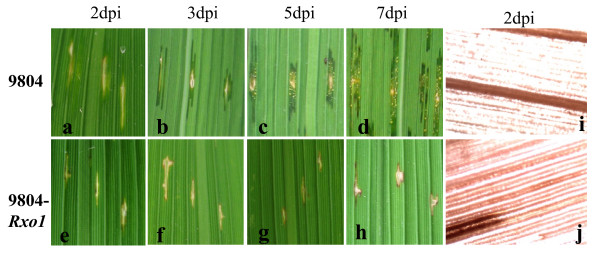
Non-host resistance in rice to its bacterial pathogen, Xanthomonas oryzae pv. oryzicola (Xoc), mediated by a maize NBS-LRR type R gene, Rxo1 shows a typical hypersensitive reaction (HR) phenotype, but the molecular mechanism(s) underlying this type of non-host resistance remain largely unknown.
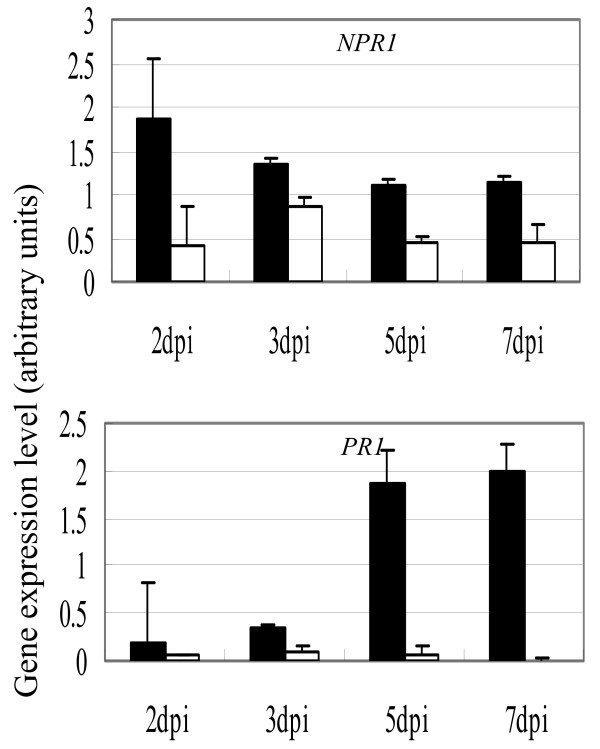
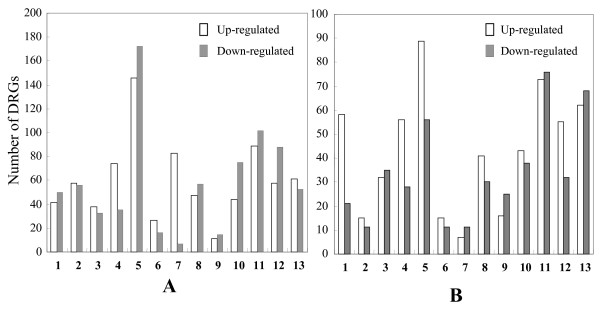
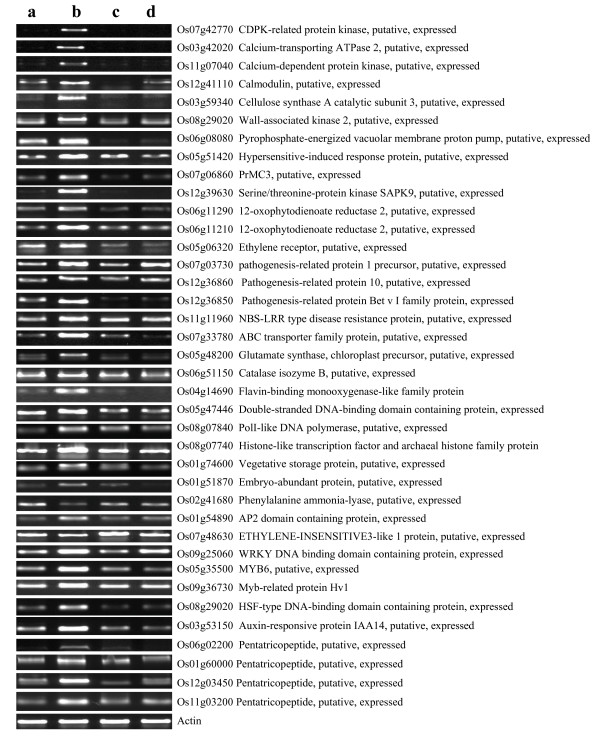
A microarray experiment was performed to reveal the molecular mechanisms underlying HR of rice to Xoc mediated by Rxo1 using a pair of transgenic and non-transgenic rice lines. Our results indicated that Rxo1 appeared to function in the very early step of the interaction between rice and Xoc, and could specifically activate large numbers of genes involved in signaling pathways leading to HR and some basal defensive pathways such as SA and ET pathways. In the former case, Rxo1 appeared to differ from the typical host R genes in that it could lead to HR without activating NDR1. In the latter cases, Rxo1 was able to induce a unique group of WRKY TF genes and a large set of genes encoding PPR and RRM proteins that share the same G-box in their promoter regions with possible functions in post-transcriptional regulation.
In conclusion, Rxo1, like most host R genes, was able to trigger HR against Xoc in the heterologous rice plants by activating multiple defensive pathways related to HR, providing useful information on the evolution of plant resistance genes. Maize non-host resistance gene Rxo1 could trigger the pathogen-specific HR in heterologous rice, and ultimately leading to a localized programmed cell death which exhibits the characteristics consistent with those mediated by host resistance genes, but a number of genes encoding pentatricopeptide repeat and RNA recognition motif protein were found specifically up-regulated in the Rxo1 mediated disease resistance. These results add to our understanding the evolution of plant resistance genes.
由玉米 NBS-LRR 型 R 基因 Rxo1 介导的水稻对其细菌性病原体稻黄单胞菌 pv.oryzicola(Xoc)的非寄主抗性表现出典型的过敏反应(HR)表型,但这种非寄主抗性的分子机制尚不清楚。
使用一对转基因和非转基因水稻品系,通过微阵列实验揭示了 Rxo1介导的水稻对 Xoc HR 的分子机制。我们的结果表明,Rxo1似乎在水稻与 Xoc 相互作用的早期阶段发挥作用,并且可以特异性激活大量参与导致 HR 的信号通路和一些基础防御通路(如 SA 和 ET 通路)的基因。在前一种情况下,Rxo1似乎与典型的宿主 R 基因不同,因为它可以在不激活 NDR1 的情况下导致 HR。在后一种情况下,Rxo1能够诱导一组独特的 WRKY TF 基因和一组大量编码 PPR 和 RRM 蛋白的基因,它们在启动子区域具有相同的 G 框,可能在转录后调控中具有功能。
总之,Rxo1 与大多数宿主 R 基因一样,能够通过激活与 HR 相关的多种防御途径,在异源水稻植物中触发针对 Xoc 的 HR,为植物抗性基因的进化提供了有用的信息。玉米非寄主抗性基因 Rxo1 能够在异源水稻中触发病原菌特异性 HR,并最终导致局部程序性细胞死亡,其特征与宿主抗性基因介导的特征一致,但发现一些编码五肽重复和 RNA 识别模体蛋白的基因在 Rxo1 介导的抗病性中特异性上调。这些结果增加了我们对植物抗性基因进化的理解。