Kong Sek Won, Hu Yong Wu, Ho Joshua W K, Ikeda Sadakatsu, Polster Sean, John Ranjit, Hall Jennifer L, Bisping Egbert, Pieske Burkert, dos Remedios Cristobal G, Pu William T
Department of Cardiology, Children's Hospital Boston, Mass, USA.
Circ Cardiovasc Genet. 2010 Apr;3(2):138-46. doi: 10.1161/CIRCGENETICS.109.904698. Epub 2010 Feb 2.
Alternative mRNA splicing is an important mechanism for regulation of gene expression. Altered mRNA splicing occurs in association with several types of cancer, and a small number of disease-associated changes in splicing have been reported in heart disease. However, genome-wide approaches have not been used to study splicing changes in heart disease. We hypothesized that mRNA splicing is different in diseased hearts compared with control hearts.
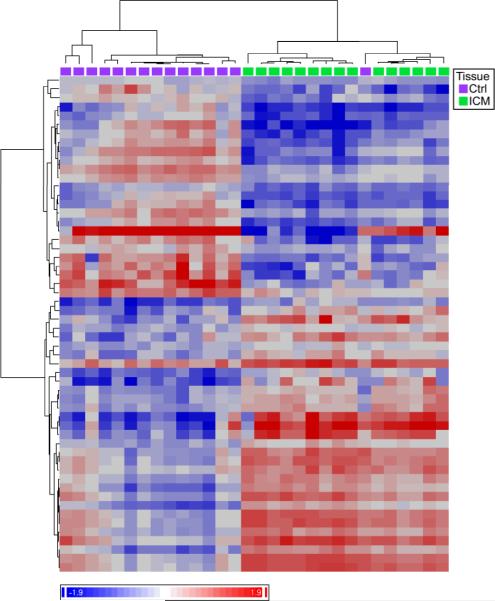
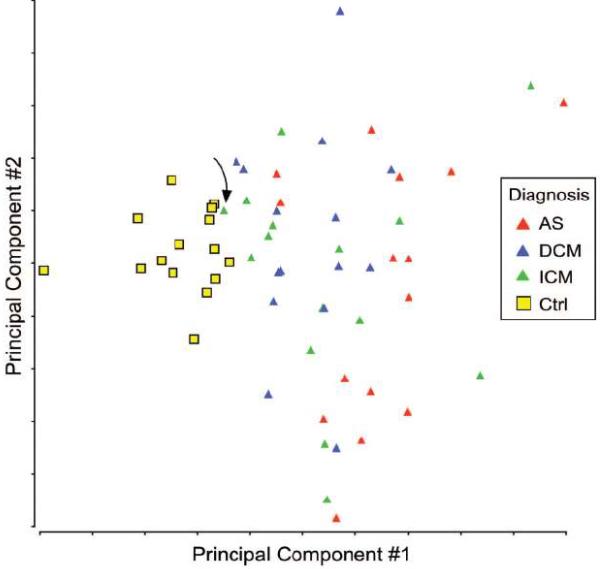
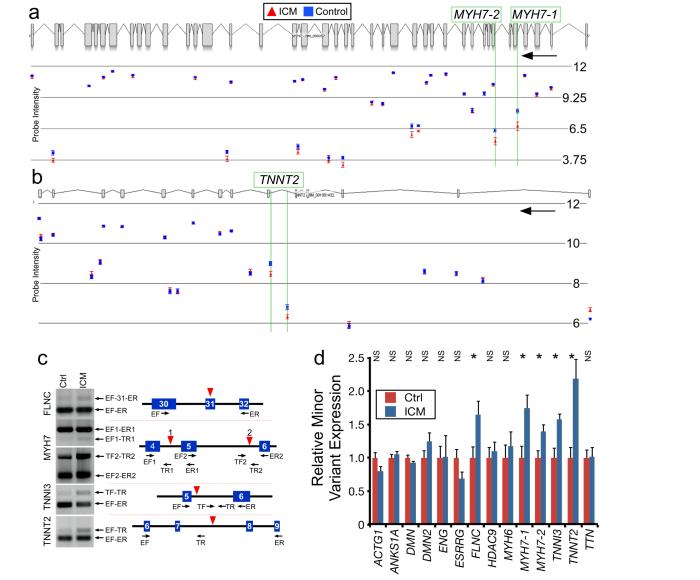
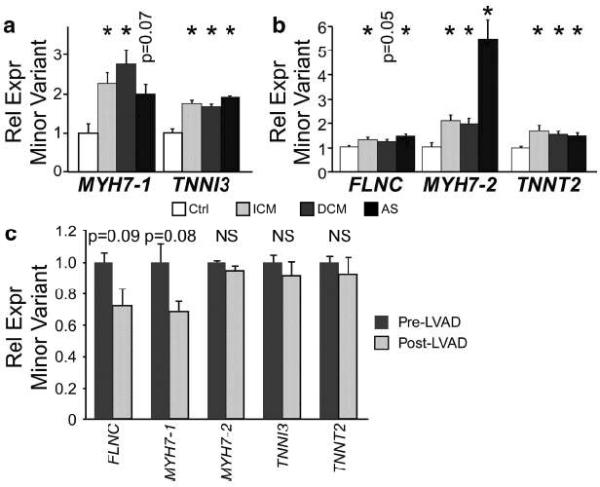
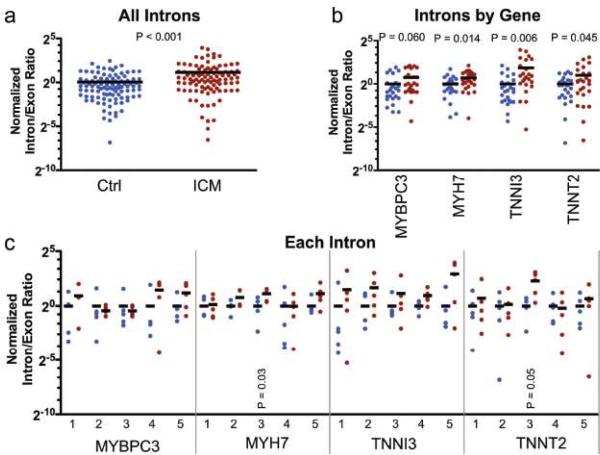
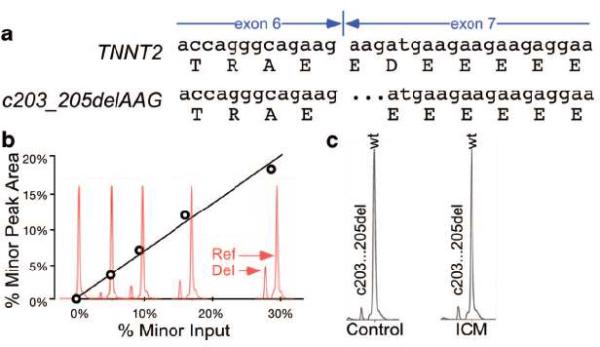
We used the Affymetrix Exon array to globally evaluate mRNA splicing in left ventricular myocardial RNA from controls (n=15) and patients with ischemic cardiomyopathy (n=15). We observed a broad and significant decrease in mRNA splicing efficiency in heart failure, which affected some introns to a greater extent than others. The profile of mRNA splicing separately clustered ischemic cardiomyopathy and control samples, suggesting distinct changes in mRNA splicing between groups. Reverse transcription-polymerase chain reaction validated 9 previously unreported alternative splicing events. Furthermore, we demonstrated that splicing of 4 key sarcomere genes, cardiac troponin T (TNNT2), cardiac troponin I (TNNI3), myosin heavy chain 7 (MYH7), and filamin C, gamma (FLNC), was significantly altered in ischemic cardiomyopathy and in dilated cardiomyopathy and aortic stenosis. In aortic stenosis samples, these differences preceded the onset of heart failure. Remarkably, the ratio of minor to major splice variants of TNNT2, MYH7, and FLNC classified independent test samples as control or disease with >98% accuracy.
Our data indicate that mRNA splicing is broadly altered in human heart disease and that patterns of aberrant RNA splicing accurately assign samples to control or disease classes.
可变mRNA剪接是基因表达调控的重要机制。可变mRNA剪接与多种癌症相关,并且在心脏病中也报道了少数与疾病相关的剪接变化。然而,尚未使用全基因组方法来研究心脏病中的剪接变化。我们假设与对照心脏相比,患病心脏中的mRNA剪接存在差异。
我们使用Affymetrix外显子芯片全面评估了对照组(n = 15)和缺血性心肌病患者(n = 15)左心室心肌RNA中的mRNA剪接情况。我们观察到心力衰竭时mRNA剪接效率广泛且显著降低,某些内含子受到的影响比其他内含子更大。mRNA剪接谱分别将缺血性心肌病和对照样本聚类,表明两组之间mRNA剪接存在明显变化。逆转录-聚合酶链反应验证了9个先前未报道的可变剪接事件。此外,我们证明了4个关键肌节基因,即心肌肌钙蛋白T(TNNT2)、心肌肌钙蛋白I(TNNI3)、肌球蛋白重链7(MYH7)和细丝蛋白Cγ(FLNC)的剪接在缺血性心肌病、扩张型心肌病和主动脉狭窄中发生了显著改变。在主动脉狭窄样本中,这些差异在心力衰竭发作之前就已出现。值得注意的是,TNNT2、MYH7和FLNC的次要剪接变体与主要剪接变体的比例将独立测试样本分类为对照或疾病的准确率>98%。
我们的数据表明,人类心脏病中mRNA剪接广泛改变,异常RNA剪接模式可准确地将样本分类为对照或疾病类别。