Bremen Institute for Prevention Research and Social Medicine, University of Bremen, Germany.
BMC Med Res Methodol. 2010 Feb 3;10:10. doi: 10.1186/1471-2288-10-10.
Primary prevention programmes are of increasing importance to reduce the impact of chronic diseases on the individual, institutional and societal level. However, most initiatives that develop and implement primary prevention programmes are not evaluated with scientific rigor. On the basis of three different projects we discuss necessary steps on the road to evidence-based primary prevention.
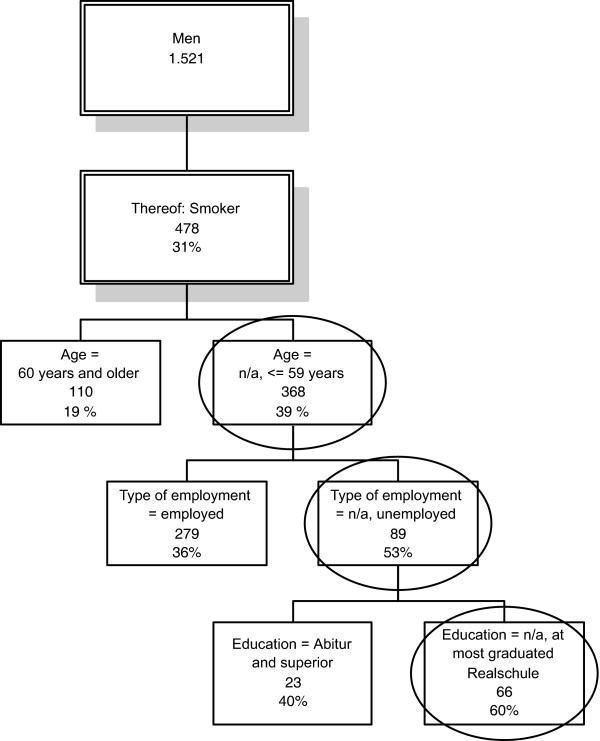
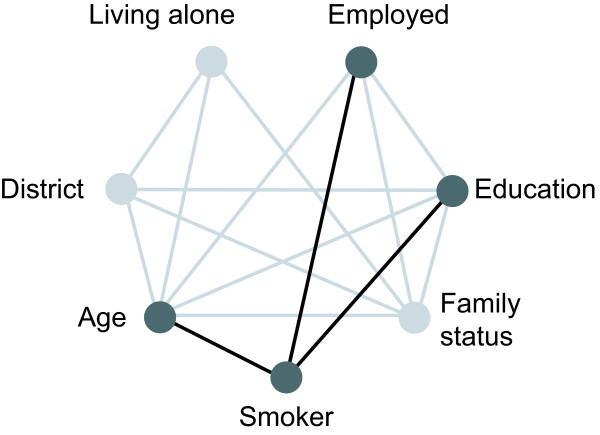
We first discuss how to identify suitable target groups exploiting sophisticated statistical methods. This is illustrated using data from a health survey conducted in a federal state of Germany. A literature review is the more typical approach to identify target groups that is demonstrated using a European project on the prevention of childhood obesity. In the next step, modifiable risk factors and realistic targets of the intervention have to be specified. These determine the outcome measures that in turn are used for effect evaluation. Both, the target groups and the outcome measures, lay the ground for the study design and the definition of comparison groups as can be seen in our European project. This project also illustrates the development and implementation of a prevention programme. These may require active involvement of participants which can be achieved by participatory approaches taking into account the socio-cultural and living environment. Evaluation is of utmost importance for any intervention to assess structure, process and outcome according to rigid scientific criteria. Different approaches used for this are discussed and illustrated by a methodological project developed within a health promotion programme in a deprived area. Eventually the challenge of transferring an evidence-based intervention into practice and to achieve its sustainability is addressed.
This article describes a general roadmap to primary prevention comprising (1) the identification of target groups and settings, (2) the identification of modifiable risk factors and endpoints, (3) the development and implementation of an intervention programme, (4) the evaluation of structure, process and outcome and (5) the transfer of an evidence-based intervention into practice.
初级预防计划对于减轻慢性病对个人、机构和社会层面的影响变得越来越重要。然而,大多数制定和实施初级预防计划的举措并没有经过严格的科学评估。基于三个不同的项目,我们讨论了走向基于证据的初级预防的必要步骤。
我们首先讨论如何利用复杂的统计方法来确定合适的目标群体。这是使用德国一个联邦州进行的健康调查数据来举例说明的。文献综述是识别目标群体的更为典型的方法,我们使用一个关于预防儿童肥胖的欧洲项目来说明这一点。在下一个步骤中,必须明确干预的可改变风险因素和现实目标。这些因素决定了干预效果的评估指标,反过来又用于效果评估。目标群体和结果测量为研究设计和对照组的定义奠定了基础,这在我们的欧洲项目中可以看到。该项目还说明了预防计划的制定和实施。这可能需要参与者的积极参与,可以通过考虑社会文化和生活环境的参与性方法来实现。评估对于任何干预措施都非常重要,以根据严格的科学标准评估结构、过程和结果。我们讨论并通过一个在贫困地区开展的健康促进计划中开发的方法学项目说明了用于此目的的不同方法。最终,我们还将解决将基于证据的干预措施转化为实践并实现其可持续性的挑战。
本文描述了一个包含(1)目标群体和环境的确定,(2)可改变风险因素和终点的确定,(3)干预计划的制定和实施,(4)结构、过程和结果的评估以及(5)基于证据的干预措施向实践的转化的初级预防的一般路线图。